Trump’s Beijing Gambit: Can a 'Taiwan Trade' Calm the Toman as Gold Coins Slide 1.8%?
قمار ترامپ در پکن؛ آیا «معامله تایوان» ترمز قیمتها را در بازار تهران میکشد؟
The Emami coin fell 1.8% today as markets reacted to a potential 'Grand Bargain' in Beijing. While USD hovered near 180,000, institutional investors pulled $1 billion from crypto, signaling a massive shift in global risk appetite.
At time of publishing
USD
180,000
Toman
Gold 18K
19.83M
Toman / gram
Bitcoin
$76,590
US Dollar
Tether
17,875
Toman
The Local Market Chill: Gold Leads the Retreat
Monday’s night session in Tehran closed with a palpable sense of caution, marked most notably by a sharp correction in the gold market. The Emami coin, often seen as the primary barometer for local retail sentiment, moved from 194,500,000 to 191,000,000 Toman, representing a significant 1.8% drop in just 24 hours. While the US Dollar remained relatively stable, moving from 180,400 to 180,000 Toman (-0.2%), the gold market’s disproportionate reaction suggests that the 'war premium'—the extra cost added to assets due to regional tension—might be starting to leak out of the system. For everyday Iranians, this price action is a double-edged sword: it offers a momentary reprieve for those looking to preserve wealth, but also signals a market that is holding its breath for a major geopolitical pivot.
This cooling in gold prices occurred despite 18k gold remaining virtually flat at 19,832,633 Toman. The divergence between the coin and the raw metal suggests that the 'bubble' or premium on minted coins is deflating faster than the underlying commodity. Local traders noted that the initial panic buying seen earlier this month has been replaced by a 'wait-and-see' approach, as the market digests news from the Far East. If the USD continues to hold the 180,000 level without breaking higher, we may see further consolidation in the gold sector, provided the regional security situation does not face a fresh escalation overnight.
The Beijing 'Grand Bargain': Trading Taiwan for Peace?
The most explosive news shaping today’s global sentiment comes from Beijing, where President Donald Trump is reportedly exploring a geopolitical trade of historic proportions. Speculation is mounting that the Trump administration may be willing to soften its stance on Taiwan in exchange for China’s help in ending the conflicts involving Iran and Russia. This 'Grand Bargain' theory, while unconfirmed, has sent ripples through the energy markets. China remains the primary financier and buyer of energy for the sanctioned bloc, and any shift in their diplomatic alignment could fundamentally alter the flow of oil and capital in the Middle East. For the Iranian economy, this could mean a radical shift in how sanctions are enforced or bypassed, directly impacting the long-term value of the Toman.
While critics call such a trade a betrayal of long-standing alliances, the market is viewing it through the lens of 'de-escalation.' If the U.S. and China can reach an understanding that reduces the threat of a wider regional war in the Middle East, the global price of oil—currently a major driver of Iranian inflation—could stabilize. However, the domestic political landscape in the U.S. remains messy; House Democrats are already attacking Trump’s newly created $1.7 billion 'anti-weaponization' fund as a slush fund for his allies. This internal friction in Washington adds a layer of unpredictability to any deal Trump might strike in Beijing, as his capacity to deliver on international promises could be hamstrung by legal and political challenges at home.

Risk-Off: Crypto Outflows and the G7 Response
The digital asset market is feeling the heat of these geopolitical maneuvers more than most. Today, reports surfaced that institutional investors have pulled nearly $1 billion out of Bitcoin and Ether products. This massive outflow is a classic 'risk-off' move, as big money flees volatile assets in favor of the safety of the dollar or government bonds. Bitcoin itself is trading at $76,590, struggling to find a firm floor as the 'Iran tension' continues to rattle global portfolios. For Iranian crypto traders, this means that even if the Toman stays stable, the dollar-value of their holdings is under pressure from global sentiment that they cannot control. Interestingly, while the 'Big Two' are seeing outflows, smaller networks like Solana and XRP are still attracting capital, showing a highly fragmented and nervous market.
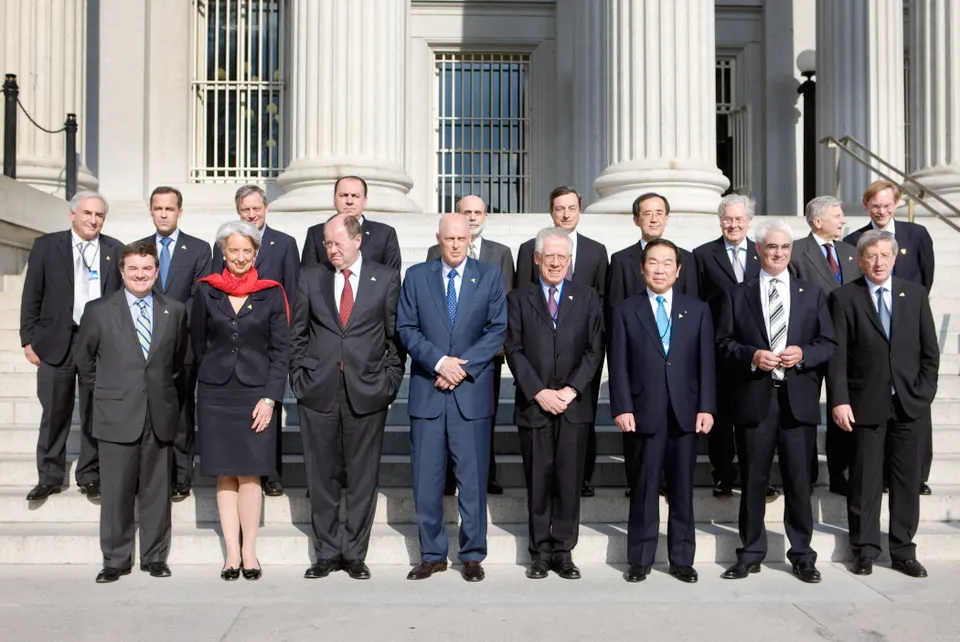
Meanwhile, in Paris, G7 Finance Ministers are meeting with a singular focus: containing the economic fallout from the Iran crisis. Their discussions center on energy prices and the potential for a coordinated debt shock if the conflict continues to drive up borrowing costs. This is the 'Bigger Picture' for the Iranian reader: the world’s most powerful economies are actively planning how to insulate themselves from our regional volatility. As they tighten the screws on sanctions while trying to keep oil prices from exploding, the margin for error for the Iranian economy narrows. The practical takeaway for the week ahead is clear: the market is no longer just reacting to bombs and drones, but to the sophisticated diplomatic chess game being played between Washington, Beijing, and Paris.
Frequently Asked Questions
Why did the Emami coin fall more than the US Dollar today?
What is the 'Taiwan Trade' rumor and how does it affect Iran?
Why are institutions pulling money out of Bitcoin ($1B outflows)?
How does the G7 meeting in Paris impact the Toman's value?
The Geopolitical Dance: How Global Politics and Trade Shape Currency Stability
In an increasingly interconnected world, the stability of a nation's currency is rarely determined by domestic economic factors alone. Instead, it often becomes a direct reflection of complex geopolitical dynamics and international trade policies. High-stakes diplomatic maneuvers, such as a potential summit between global leaders or rumors of significant trade agreements, can send immediate ripples through financial markets, particularly impacting currencies of countries already facing economic pressures or perceived geopolitical vulnerabilities. The headline's mention of a "Taiwan Trade" impacting the "Toman" perfectly illustrates this intricate relationship.
Geopolitical tensions introduce significant uncertainty into the global economic landscape. When major powers engage in strategic competition or when regional conflicts loom, investors and citizens alike tend to seek safe-haven assets, such as gold, and withdraw from currencies perceived as risky. Concurrently, international trade policies—ranging from sanctions to new bilateral agreements—directly influence a country's economic prospects, its ability to generate foreign exchange, and consequently, the value of its currency. A positive trade rumor could signal economic opportunity, bolstering a currency, while negative developments could trigger capital flight and depreciation.
For a currency like the Iranian Toman, which operates within an economy frequently subject to international sanctions and geopolitical scrutiny, its value is acutely sensitive to external political and trade developments. A "Taiwan Trade" rumor, whether it suggests a shift in US-China relations, a new bargaining chip, or a potential easing of broader trade tensions, can be interpreted by markets as either a de-escalatory step or a new point of pressure. Such interpretations directly influence the Toman's perceived stability, affecting everything from import costs to the purchasing power of ordinary citizens.
This sensitivity is often mirrored in the demand for and price of local safe-haven assets. When the Toman faces increased uncertainty due to geopolitical events, demand for physical gold, like the Emami coin in Iran, typically rises. This surge in demand reflects a loss of confidence in the national currency's ability to retain its value, leading individuals to convert their savings into a more universally recognized store of wealth. Thus, the slide in gold coin prices mentioned in the headline could paradoxically indicate a decrease in perceived geopolitical risk, or perhaps a shift in expectations regarding future currency stability, rather than just market volatility.