
The $1.3B Bitcoin Exodus: Why Gold Shines While Crypto Stumbles in a Week of Scandals
خروج ۱.۳ میلیارد دلاری از بیتکوین؛ چرا طلا در میان رسواییهای تکنولوژی میدرخشد؟
As BlackRock's Bitcoin ETF sees its largest outflow since June, global investors are fleeing to the safety of gold. Discover how regional tensions in Yemen and a massive corporate scandal at Nvidia are reshaping the market for Iranian investors.
At time of publishing
USD
265,400
Toman
Gold 18K
25.76M
Toman / gram
Bitcoin
$74,212
US Dollar
Tether
262,984
Toman
The Great Digital Retreat
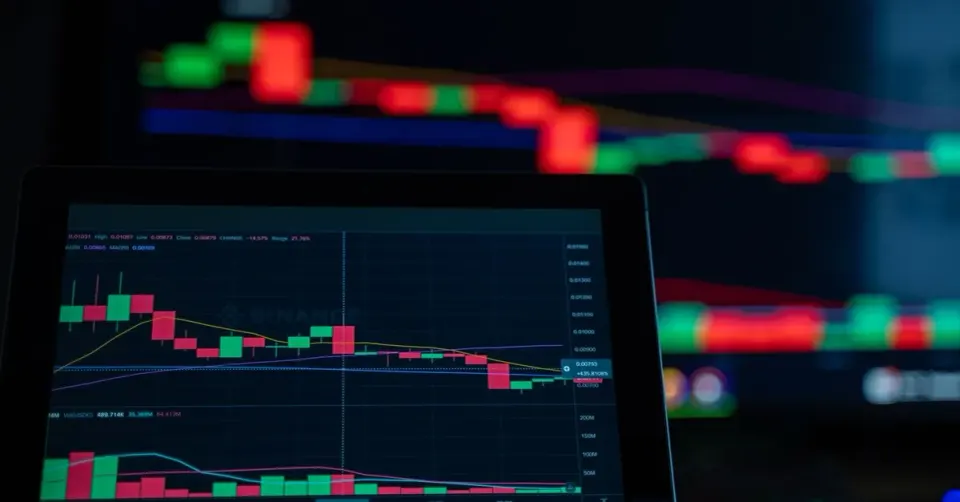
Financial markets are witnessing a dramatic shift in sentiment as the 'risk-on' appetite that fueled Bitcoin's recent rally begins to evaporate. Last week, BlackRock’s IBIT—the flagship Bitcoin ETF—recorded a staggering $1.21 billion in net outflows. This represents the most significant weekly exit of capital since late June, signaling that institutional investors are growing wary of digital assets. The primary catalyst appears to be a combination of profit-taking following the US midterm elections and a broader sell-off in technology stocks. When the big players in New York start pulling their chips off the table, the ripples are felt all the way to the P2P markets in Tehran, where Bitcoin has struggled to maintain its footing above the $76,000 mark, currently trading at $74,212.
This exodus isn't just about price action; it's about a fundamental change in how investors view the immediate future. For months, the narrative was that Bitcoin could act as a 'digital gold' during times of political upheaval. However, recent data suggests that when the heat actually turns up, traditional assets still hold the crown. The sell-off in US tech stocks, combined with the uncertainty of a post-election landscape, has forced many to liquidate their crypto positions to cover losses elsewhere or simply to move into cash and more stable commodities. This behavior highlights the ongoing volatility of crypto as a speculative asset rather than a guaranteed hedge.
Gold Reclaims the Throne Amid Regional Tension
While Bitcoin is bleeding capital, gold is proving why it remains the ultimate insurance policy. In the Iranian market, Gold 18k per gram has surged by 1.3% today, reaching 25,762,962 Toman. This rise is directly tied to a darkening geopolitical horizon. Reports from Yemen indicate that the death toll from a Saudi airstrike on a village near Sana’a has reached 40, with dozens more wounded. Whenever regional tensions flare up, the immediate psychological reaction for Iranian households and traders is to move toward 'hard' assets. Gold doesn't require an internet connection, a private key, or a stable power grid; it is the universal language of crisis management.
Beyond the headlines of war, corporate stability is also under fire. The tech world was rocked by news of an alleged scandal involving Nvidia CEO Jensen Huang. While 'Jensanity' once drove the AI boom, allegations of an affair with a suspected Chinese spy have introduced a layer of 'reputational risk' that markets hate. As Nvidia's reputation wobbles, the entire tech sector—and by extension, crypto—feels the pressure. In this environment of distrust, gold’s lack of a CEO or a balance sheet becomes its greatest strength. It simply exists, and its scarcity provides a floor that digital assets have yet to prove they can maintain during a coordinated global shock.

Privacy and the Evolution of Digital Value
Not all news in the digital space is about retreat. While the giants stumble, developers are working on the underlying plumbing of the financial future. Zcash (ZEC) developers have recently proposed a significant reduction in block times following their NU7 upgrade. The goal is simple: make private transactions fast enough for everyday use at a point-of-sale. This move toward 'shielded' transactions—which use zero-knowledge proofs to hide transaction details—is becoming increasingly relevant as concerns over corporate and state surveillance grow. Whether it is a 'monster' warehouse looming over a quiet village in Manchester or a massive data center being built by Google, the physical footprint of the digital age is causing a backlash that is driving interest back toward privacy-focused technologies.
For the Iranian user, these developments are more than just technical trivia. As the Toman remains relatively stable today at 265,400 per USD, the real strategy lies in diversification. The current market shows us that relying on a single 'modern' asset like Bitcoin can be dangerous when institutional sentiment shifts. By understanding the interplay between gold's reaction to regional conflict and crypto's sensitivity to corporate scandals, you can better position your portfolio. The lesson of the week is clear: technology provides the tools for growth, but history—and gold—provides the foundation for survival.

Concept Diagram
Frequently Asked Questions
Why did Bitcoin drop despite being called 'digital gold'?
How does the Yemen conflict specifically affect the price of gold in Iran?
What is an ETF outflow and why should I care?
Can Zcash really replace Bitcoin for payments?
Understanding Safe Haven Assets: Gold vs. Crypto in Times of Uncertainty
In the complex world of finance, investors constantly seek ways to protect their wealth, especially during periods of market turmoil, economic instability, or geopolitical unrest. This pursuit leads them to safe haven assets – investments expected to retain or even increase in value during market downturns. Traditionally, these assets are characterized by low volatility and a negative correlation with the broader market, offering a refuge when other investments falter. Gold, for centuries, has been the quintessential safe haven, valued for its intrinsic worth, scarcity, and independence from any single government or financial institution.
Gold's enduring appeal as a safe haven stems from its long history as a store of value and its physical nature. Unlike stocks or bonds, gold doesn't carry counterparty risk, meaning its value isn't dependent on the solvency of a bank or government. Its global liquidity and universal acceptance further cement its role, particularly in times of high inflation or currency devaluation, as seen in various economies worldwide. When headlines speak of "Bitcoin ETF Outflows" and "Gold Shines," it often reflects investors' flight from perceived riskier assets towards this traditional bastion of stability.
The rise of cryptocurrencies, particularly Bitcoin, introduced a new contender for the safe haven title. Initially touted by some as "digital gold" due to its decentralized nature and limited supply, Bitcoin has shown a different pattern in practice. While it offers a hedge against traditional financial systems, its price performance has often mirrored that of risk assets like technology stocks, exhibiting significant volatility. Recent "scandals" or market corrections, leading to substantial "Bitcoin ETF Outflows," underscore its current status as a less reliable safe haven compared to gold, especially when investor confidence is shaken.
The contrasting performance between gold and cryptocurrencies during periods of uncertainty highlights a crucial lesson for investors: not all assets behave the same way under stress. While innovative digital assets offer exciting opportunities, their journey to achieving true safe haven status is still evolving. Understanding the distinct characteristics and historical performance of various asset classes is vital for constructing a resilient portfolio capable of weathering economic storms and geopolitical shifts, ensuring that one's investments are truly protected when it matters most.