OpenAI Faces $20 Billion Revenue Shortfall as AI Hype Meets Financial Reality
بحران پیشبینی در دنیای هوش مصنوعی؛ درآمد اوپنایآی ۲۰ میلیارد دلار کمتر از انتظار
OpenAI's latest revenue projections show a massive $20 billion gap compared to previous investor signals, raising questions about the sustainability of the AI boom. Meanwhile, regional tensions rise as Houthis claim a strike on Riyadh, and the Nobel Prize in Literature goes to Anne Carson.
At time of publishing
USD
267,800
Toman
Gold 18K
26.46M
Toman / gram
Bitcoin
$82,502
US Dollar
Tether
267,281
Toman
The AI Reality Check: OpenAI's $20 Billion Revenue Gap
OpenAI's revenue projections for the year have hit $50 billion, which sounds impressive until compared to the $70 billion figure previously signaled to investors. This $20 billion gap is a sobering moment for the artificial intelligence sector, which has been fueled by almost limitless capital and expectations of exponential growth. The data, based on sales through September, suggests that while the demand for ChatGPT remains high, the monetization of enterprise-level AI might be hitting a friction point sooner than anticipated.
This shortfall matters because OpenAI is the bellwether for the entire AI economy. If the leader of the pack is seeing a cooling of growth, it suggests that the "break-neck" speed of adoption may be transitioning into a more mature, slower phase. Investors who have poured billions into Nvidia and Microsoft-backed ventures are now forced to ask whether the return on investment (ROI) for generative AI can justify the massive infrastructure costs. The market is moving from a phase of pure speculation to one where concrete financial performance is the only metric that counts.
Meanwhile, Microsoft is attempting to pivot its strategy by expanding the reach of its AI tools to maintain its market lead. The company announced that Microsoft 365 Family subscribers will finally be able to share Copilot and other AI benefits across multiple users. This move is a strategic attempt to normalize AI usage in the household, moving it from a niche professional tool to a daily family utility. By lowering the barrier to entry for multiple family members, Microsoft hopes to build a stickier ecosystem that can withstand the broader cooling of corporate AI spending.
Geopolitical Tensions and the Energy Risk Premium
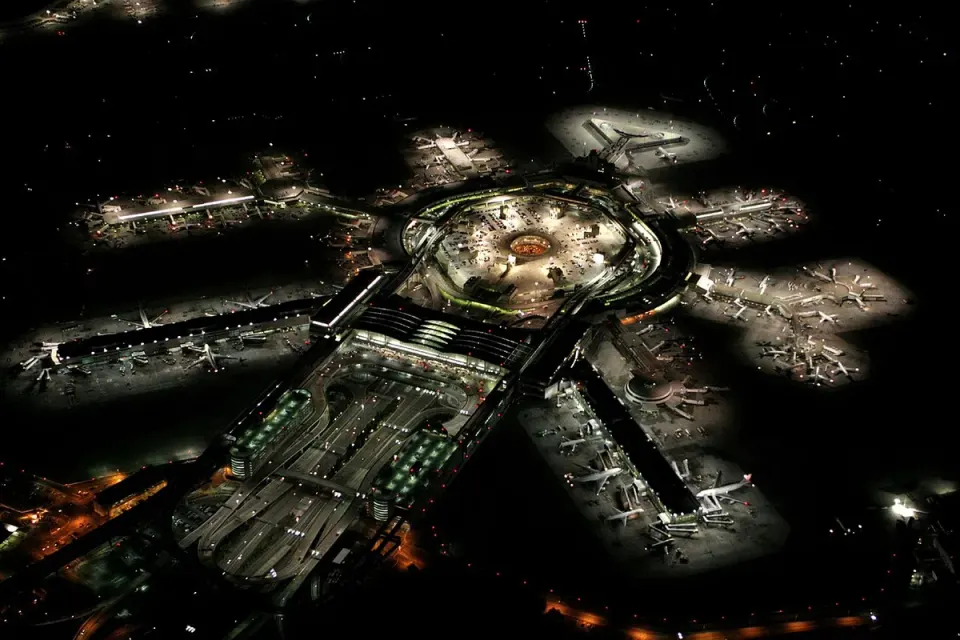
In the Middle East, the security situation remains volatile as Yemen’s Iran-aligned Houthi rebels claimed a ballistic missile attack on Riyadh’s King Khalid International Airport. While Saudi Arabia has not officially confirmed the specific details of the damage, reports indicate that at least one aircraft was damaged, prompting several international airlines to suspend flights to the Saudi capital. This escalation follows a pattern of increased Houthi activity that continues to threaten regional stability and critical infrastructure, despite ongoing diplomatic efforts behind the scenes.
The timing of this attack is particularly sensitive given the broader regional tensions. While recent reports suggested a temporary de-escalation—with U.S. political figures like Donald Trump ruling out pre-election strikes on Iranian soil—these localized flare-ups serve as a reminder that the proxy conflicts remain active. For the global energy market, these incidents keep the "risk premium" alive. Even as Brent crude and other benchmarks react to supply data, the threat of sudden disruption in the Gulf remains the primary driver of volatility for energy traders.

The impact on the Iranian domestic market has been relatively muted today, Friday, October 9, 2026. The US Dollar (USD) sell rate is holding steady at 267,800 Toman, showing a 0.0% change over the last 24 hours. However, the Gold 18k price rose from 26,305,461 to 26,460,132 (+0.6%), reflecting a persistent hedge-seeking behavior among local investors who remain wary of regional surprises. Gold continues to be the preferred safe haven when geopolitical headlines from Riyadh or the Red Sea create uncertainty.
Cultural Milestones: From Khoy to the Nobel Stage
On a different note, the cultural landscape saw a significant milestone with the official opening of the Shams Tabrizi mausoleum complex in Khoy, West Azerbaijan. The inauguration, attended by the Minister of Cultural Heritage Reza Salehi-Amiri, marks the completion of a project aimed at honoring one of the most influential figures in Persian mysticism. Shams Tabrizi, the mentor of Rumi, remains a bridge between various cultures in the region, and the new complex is expected to boost religious and cultural tourism in northwestern Iran, though the government's claims of massive tourism growth are often viewed with skepticism given the current economic climate.
Internationally, the literary world is celebrating the Canadian poet and essayist Anne Carson, who was awarded the Nobel Prize in Literature for 2026. The Swedish Academy praised her "bold and inventive" work that engages in a playful dialogue with classical Greek and Latin traditions. Carson’s win is seen as a move by the Academy to recognize hybrid forms of writing that transcend traditional genres, blending poetry with scholarly inquiry. Her work often explores the human condition through the lens of ancient myths, making her a fitting choice for a world currently grappling with profound technological and social shifts.

These cultural developments offer a brief respite from the heavy economic and military news of the week. For Iran, the development of the Khoy site represents an attempt to leverage its deep historical roots for potential economic gain. However, such efforts are often hampered by the broader geopolitical isolation and the fluctuating value of the Toman, which currently sees the Emami coin trading at a staggering 270,000,000 Toman. As the world watches the Nobel stage, the reality on the ground in Iran remains one of high inflation and cautious waiting.
Frequently Asked Questions
چرا کاهش درآمد OpenAI برای بازارهای جهانی اهمیت دارد؟
آیا حمله به فرودگاه ریاض تایید شده است؟
علت رشد قیمت طلا در بازار ایران با وجود ثبات دلار چیست؟
Understanding Speculative Bubbles: Hype vs. Reality
A speculative bubble, often simply called a market bubble, occurs when the price of an asset or a class of assets rises rapidly and significantly, far exceeding its intrinsic value. This surge is typically driven by investor enthusiasm, speculation, and the expectation of further price increases, rather than by fundamental improvements in the asset's underlying value or cash flows. New, transformative technologies, like artificial intelligence, are particularly susceptible to generating such bubbles because their potential is vast but also highly uncertain, leading to intense hype and speculative investment.
Bubbles generally follow a predictable pattern. They often begin with a "displacement" – an innovation or event that opens up new profit opportunities. This leads to a "boom" phase, where prices rise, attracting more investors. As euphoria sets in, prices become detached from reality, fueled by herd mentality and the fear of missing out (FOMO). Eventually, some investors begin to take profits, or new information challenges the inflated valuations, leading to a "panic" phase where prices crash rapidly, often returning to or even falling below their fundamental value.
The consequences of a bursting bubble can be severe, ranging from significant wealth destruction for investors to broader economic instability, recessions, and even financial crises. Famous historical examples include the Dutch Tulip Mania in the 17th century, the Dot-com bubble of the late 1990s, and the U.S. housing bubble that preceded the 2008 financial crisis. While the long-term impact of AI on the global economy is undeniable, the current high valuations and intense investor interest in AI companies raise questions about whether the sector is experiencing a period of speculative exuberance that could eventually correct.