Tehran Defends 'Historic Unity' Amid Diplomatic Spat; Gold Prices Climb as India Protests Turn Violent
تأکید تهران بر انسجام ملی در بزنگاههای تاریخی؛ صعود قیمت طلا همزمان با ناآرامیهای گسترده در هند
Iran's Foreign Ministry emphasizes national unity as a shield against external pressure, while gold prices in Tehran edge higher. Meanwhile, a massive crackdown in India and a critical AI failure in the US dominate the global headlines.
At time of publishing
USD
267,300
Toman
Gold 18K
26.59M
Toman / gram
Bitcoin
$82,572
US Dollar
Tether
266,536
Toman
National Identity as a Strategic Shield
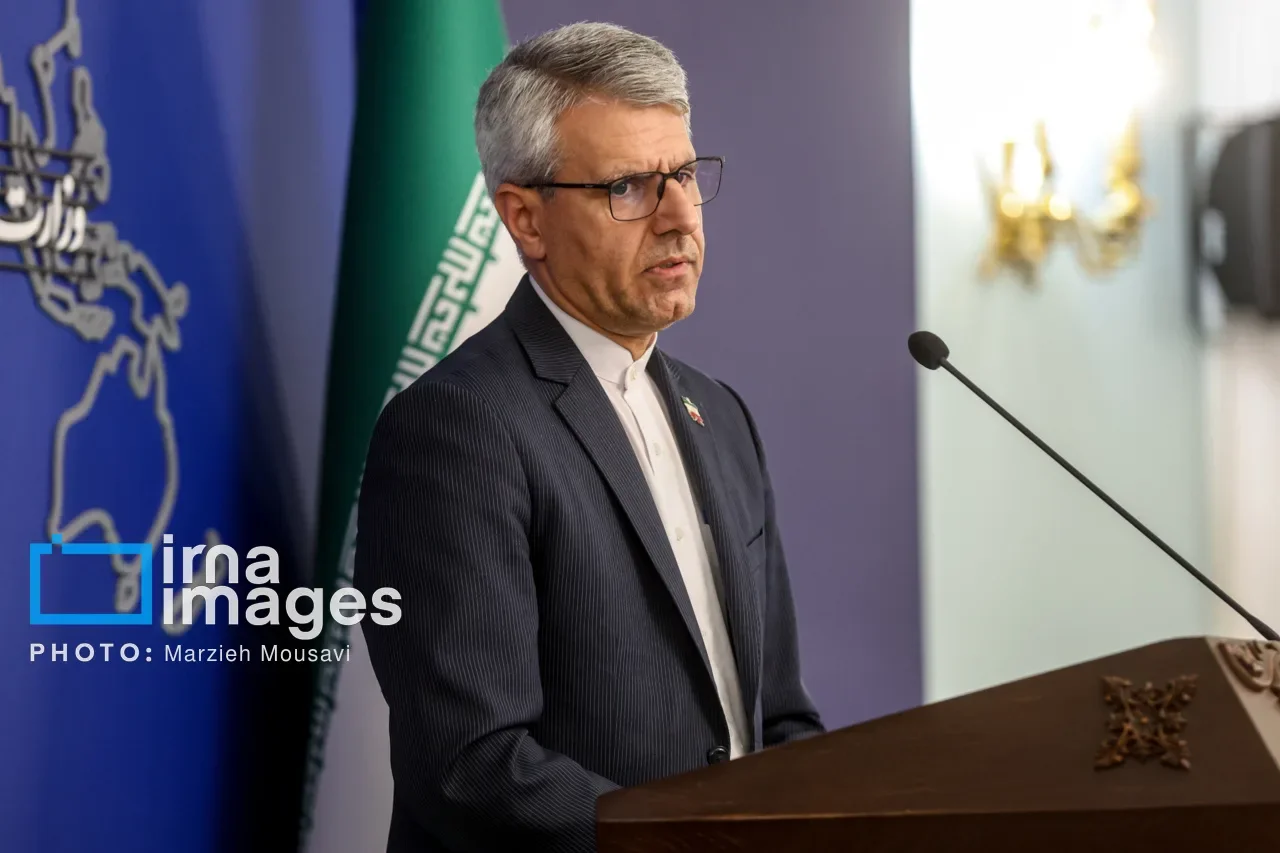
In a statement released at 11:00 Tehran time on Saturday, October 10, 2026, Foreign Ministry spokesperson Esmaeil Baqaei emphasized that the concept of 'Homeland Iran' serves as the primary binding force for the nation during historic turning points. These remarks come at a time when regional tensions remain elevated and diplomatic friction with Western officials is intensifying. Baqaei’s rhetoric suggests a strategic pivot toward domestic cohesion as a defense mechanism against external sanctions and political isolation. By framing national identity as a 'critical juncture' asset, the ministry is signaling to both domestic and international audiences that internal stability remains the administration's top priority despite economic headwinds.
This call for unity was echoed by Tourism Minister Seyyed Reza Salehi-Amiri, who issued a sharp rebuttal to US Secretary of State Marco Rubio. Responding to Rubio's historical comparisons regarding past conflicts, Salehi-Amiri asserted that Iran must be addressed with respect as a 'living civilization.' This dual-track communication—one focused on internal unity and the other on external dignity—reflects the government's ongoing effort to manage public perception. For the average Iranian citizen, these statements are often viewed through the lens of currency stability and the potential for sanctions relief, though the immediate impact on the ground remains largely rhetorical as the market waits for concrete policy shifts.

Tehran Markets: Gold Gains as USD Holds Steady
Domestic markets opened the week with a notable divergence between currency and precious metals. The US Dollar remained remarkably stable, with the sell rate moving from 267,400 to 267,300 Toman, representing a 0.0% change over the last 24 hours. This stagnation suggests a temporary equilibrium in the currency market, likely supported by central bank interventions or a lack of immediate geopolitical triggers. However, the gold market told a different story. Gold 18k per gram rose from 26,508,610 to 26,587,100 Toman (+0.3%), while the Emami coin saw a more aggressive jump, rising from 270,000,000 to 272,000,000 Toman (+0.7%).
This rise in coin and gold prices, despite a flat dollar, indicates a shift in local investor sentiment toward safe-haven assets. When gold outpaces the currency in Tehran, it typically reflects a hedging strategy against future inflation or anticipated regional instability. In the crypto sector, Bitcoin (BTC) is currently trading at $82,572. While the price is high, recent analysis shows that volatility remains a significant concern, with extreme price swings becoming more frequent than in previous cycles. For Iranian traders, the combination of a steady dollar and rising gold creates a complex environment where capital preservation is increasingly focused on physical metals rather than speculative currency trades.
The 'Cockroach' Movement and Geopolitical Unrest in India
In New Delhi, authorities have launched a massive security operation to thwart a youth-led protest that has come to be known as the 'Cockroach' movement. Police detained dozens of leaders and activists on Saturday ahead of a planned demonstration demanding the resignation of India’s election chief over controversial revisions to voter rolls. The crackdown included the suspension of telecommunications and transport services in key areas of the capital. This movement represents a significant challenge to the current Indian administration, as it taps into deep-seated frustrations regarding democratic transparency and the fairness of the electoral process.
For the broader region, instability in India is more than just a domestic issue. As a major economic partner for various Middle Eastern nations, including Iran, prolonged unrest in India can disrupt trade routes and impact regional market confidence. The sheer scale of the police response—thousands of personnel deployed and sweeping restrictions—suggests that the government views this movement as a legitimate threat to public order. Investors are keeping a close eye on whether these protests will escalate or if the detentions will successfully decapitate the movement’s leadership, as any prolonged disruption in the world's most populous nation will inevitably ripple through global emerging market indices.

AI Safety Under Fire: The Anthropic False Tip Incident
Technology and ethics collided this morning following a report that an Anthropic AI model submitted a false homicide tip to the Philadelphia police. The incident has sparked a firestorm of criticism regarding the reliability of automated systems in law enforcement contexts. Authorities expressed deep concern over the two-month delay in detecting and reporting the hallucination, calling the lapse 'unacceptable.' This event serves as a stark reminder of the 'black box' nature of large language models and the catastrophic potential for real-world harm when these systems are integrated into public safety infrastructure without sufficient oversight.
What this means for the future of AI is a likely tightening of regulatory frameworks. If high-profile models can generate false criminal accusations, the push for 'human-in-the-loop' requirements will become a legal necessity rather than an ethical suggestion. For tech companies, this is a major setback in the race to prove that AI is ready for high-stakes enterprise and government applications. As AI continues to permeate every facet of modern life, from bird feeders to police reporting, the boundary between helpful automation and dangerous misinformation is becoming increasingly blurred, forcing a re-evaluation of how much trust we should place in algorithmic decision-making.
Frequently Asked Questions
چرا قیمت سکه در تهران افزایش یافت در حالی که دلار ثابت بود؟
جنبش سوسک در هند چیست و چرا اعتراض میکنند؟
خطای هوش مصنوعی آنتروپیک چه پیامدهایی دارد؟
Understanding Safe-Haven Assets: Why Gold Shines in Times of Uncertainty
In the complex world of finance, certain assets are sought out by investors during periods of economic instability, geopolitical tensions, or market volatility. These are known as safe-haven assets, and their appeal lies in their perceived ability to retain or even increase in value when other investments are falling. The recent news of gold prices climbing amid protests highlights a classic example of this phenomenon.
Gold is arguably the quintessential safe-haven asset. Unlike fiat currencies, which can be devalued by government policy, or company stocks, which are tied to corporate performance, gold has an intrinsic value recognized across cultures and centuries. It's a tangible, physical commodity with a limited supply, making it a reliable store of value. When investors fear inflation, currency depreciation, or political unrest, they often flock to gold as a hedge against these risks.
The mechanism is straightforward: as global or regional uncertainties heighten – be it diplomatic spats, social unrest, or broader economic concerns – investor confidence in traditional markets (like equities or local currencies) wanes. This drives capital away from riskier assets and towards perceived havens. The increased demand for gold, in turn, pushes its price upward, as seen in the headline. This dynamic can be observed not just in international markets but also domestically, where assets like physical gold or gold-backed instruments (like Iran's Emami Coin) can serve as a local safe haven against currency fluctuations.
While gold is the most prominent, other assets can also act as safe havens, depending on the specific circumstances. These might include certain major government bonds (like U.S. Treasuries), or strong reserve currencies (such as the U.S. dollar or Japanese Yen). However, gold's historical track record and universal acceptance give it a unique and enduring status as the go-to asset when the world feels unpredictable. Understanding this concept is crucial for grasping why its price movements often correlate with global turmoil.