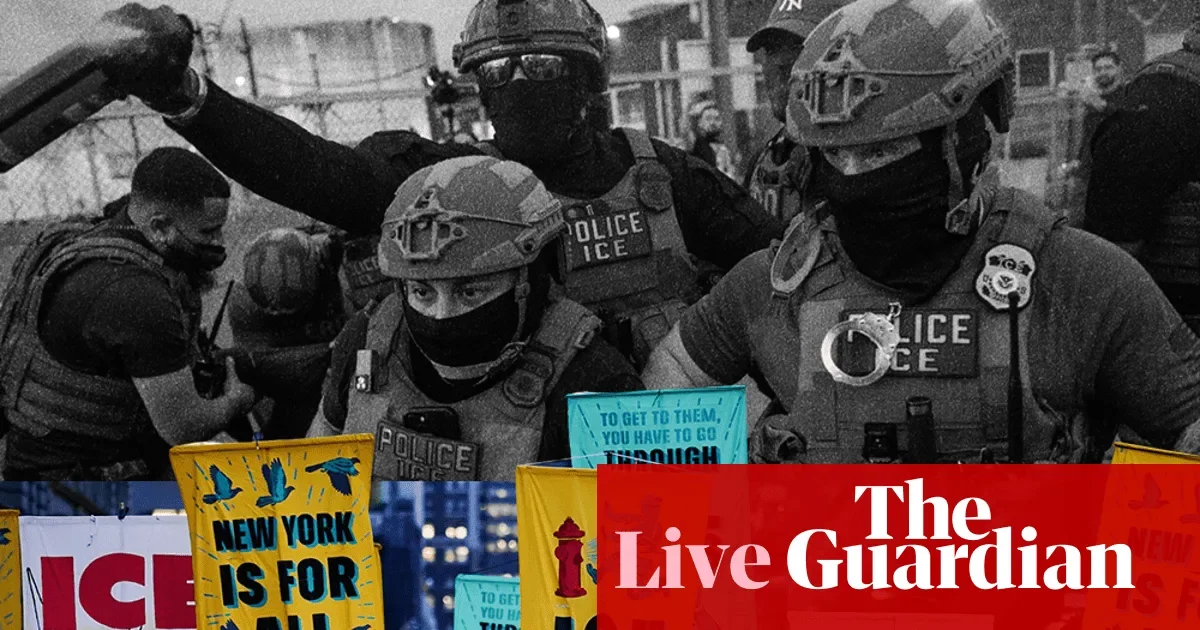
Trump’s Citizenship Crackdown Shakes Midterms as Strike Fears Devalue the Toman
لرزه بر انتخابات میاندورهای آمریکا با طرح اخراج ترامپ؛ سقوط ۱.۸ درصدی تومان در سایه تهدیدات نظامی
As the Trump administration ramps up a historic denaturalization campaign ahead of the US midterms, global markets are reacting to increased military posturing against Iran. With the Toman sliding 1.8% and Bitcoin facing volatility, the intersection of domestic US policy and Middle Eastern security is reaching a fever pitch.
At time of publishing
USD
272,500
Toman
Gold 18K
27.14M
Toman / gram
Bitcoin
$81,517
US Dollar
Tether
272,132
Toman
The Denaturalization Shadow Over US Midterms
The Department of Homeland Security (DHS) and ICE have significantly intensified their operations as the United States approaches a critical midterm election cycle. Under the Trump administration’s current mandate, the federal government is pursuing what officials describe as the “largest denaturalization effort in history.” This policy goes beyond traditional immigration enforcement; it specifically targets naturalized US citizens for the revocation of their citizenship based on past criminal records or alleged discrepancies in their original applications. The recent raid on the home of Representative Ilhan Omar has served as a lightning rod for this controversy, raising questions about whether the administration is using federal law enforcement to influence the political landscape just two weeks before voters head to the polls.
This aggressive stance is not merely a domestic issue; it signals a broader shift in how the US government views its legal obligations to its own residents. Critics argue that the strategic use of ICE raids and the threat of stripping citizenship are designed to energize a specific voter base while intimidating immigrant communities. For global observers, this internal friction suggests a period of prolonged instability in American policy. As the DHS reportedly tests non-lethal “heat ray” technology at the southern border—a military-grade weapon designed to cause intense skin sensations—the humanitarian and legal implications are beginning to weigh on international sentiment, influencing risk appetite in global financial markets.

---
Regional Escalation and the Toman’s Slide
Geopolitical tensions in the Middle East have taken a sharp turn as reports emerge from Jerusalem and Washington suggesting that the US and Israel are finalizing plans for strikes against Iranian infrastructure. These reports, highlighted by correspondents in the region, suggest that potential targets include energy sites, drone manufacturing facilities, and missile arsenals. The timing of these leaks appears coordinated to exert maximum pressure on Tehran, but the immediate fallout is being felt most acutely in the currency markets. In Tehran, the USD rose from 267,600 to 272,500 Toman, marking a 1.8% increase in just 24 hours. This devaluation reflects a growing anxiety among local traders that the current diplomatic stalemate is rapidly shifting toward a kinetic conflict.

Beyond the currency markets, the broader financial world is also reacting to the rhetoric coming out of the White House. Bitcoin, which had been showing signs of recovery, circled the $81,517 mark but faced downward pressure as President Trump’s comments regarding potential military action against Iran sent stocks lower. Investors are moving away from riskier assets as the possibility of a direct confrontation grows. This shift is particularly visible in the performance of Bitcoin ETFs, which, despite seeing massive inflows earlier in the week, are now battling the headwinds of a geopolitical environment that favors the US dollar and safe-haven assets over digital currencies.
---
The AI Lobbying War and the Creative Resistance
While the world watches the borders and the battlefields, a different kind of war is being waged in Washington D.C. Federal disclosures show that the third quarter was a record-breaking period for AI lobbying, with Nvidia, Anthropic, and OpenAI spending millions to shape future regulations. Nvidia led the pack with $2.2 million in spending, followed closely by Anthropic at $2.1 million. This surge in spending comes as the US government debates the extent to which artificial intelligence should be integrated into national security and economic infrastructure. The goal for these tech giants is clear: ensure that the legislative framework remains favorable to rapid deployment and high-scale computing, even as ethical concerns mount.

However, this push for total AI integration is meeting stiff resistance from the creative industries. The director of Wildwood, the latest stop-motion film from Laika Studios, recently stated that AI is “antithetical” to the very essence of their craft. At a time when big tech is spending record sums to normalize AI, Laika’s insistence on the human-driven, painstakingly slow process of stop-motion—involving over 230 unique puppets—serves as a cultural counter-narrative. This tension between the efficiency-driven goals of Silicon Valley and the human-centric values of traditional industries is becoming a major theme for the 2026 economic landscape, as companies and consumers alike decide where to draw the line between automation and authenticity.
Frequently Asked Questions
چرا قیمت دلار در تهران ۱.۸ درصد افزایش یافت؟
طرح «لغو شهروندی» ترامپ چیست؟
تأثیر تنشهای ایران بر بازار کریپتو چه بود؟
How Economic Sanctions Trigger Currency Devaluation: The Case of Iran’s Toman
Economic sanctions are more than a diplomatic tool; they can become a direct assault on a country’s currency. When a major economy such as the United States imposes financial restrictions on Iran, access to foreign exchange, especially U.S. dollars, is sharply curtailed. Iranian banks and businesses find it harder to obtain dollars at market rates, forcing them to rely on a tightly managed official exchange market or on a parallel black‑market where the price of the rial (or toman, its unofficial unit) can be many times higher. This scarcity of hard currency pushes the local currency’s value down, a process economists call devaluation.
Devaluation is distinct from depreciation. In a floating system, market forces cause the exchange rate to move up or down (depreciation or appreciation). In a managed or pegged system, the government or central bank sets an official rate, and when that rate becomes unsustainable, they may officially devalue the currency—lowering its value relative to foreign currencies. Iran has oscillated between a fixed official rate and a market‑determined rate for years, but sanctions have repeatedly forced abrupt devaluations, as seen in the sharp drop of the USD/IRR price in October 2026.
The macro‑economic consequences are immediate. Imported goods become more expensive, fueling inflation, while exporters may benefit temporarily from a cheaper currency. However, the overall effect is often a loss of purchasing power for ordinary citizens, as the price of basic food and medicine rises faster than wages. In Iran, the devaluation has also spurred a surge in alternative stores of value, notably Bitcoin, whose price volatility mirrors the uncertainty surrounding the rial.
Understanding the mechanics of sanction‑induced devaluation helps explain why political events—such as the threat of U.S.–Israel–Iran strikes or domestic political turmoil in the United States—can ripple through foreign‑exchange markets. Investors watch these geopolitical headlines because they can trigger sudden shifts in capital flows, further destabilising already fragile exchange rates.
Policymakers attempting to stabilise a currency under sanctions often resort to measures like foreign‑exchange reserves sales, capital controls, or currency swaps with friendly nations. While these tools can provide short‑term relief, they rarely address the underlying shortage of hard currency caused by sanctions, meaning the risk of future devaluations remains high.
Topics
Related Articles