
UK Inflation Spikes to 3.6% on Middle East War Costs as Trump, Xi, and Putin Converge in Shenzhen
جهش تورم بریتانیا تحت تأثیر تنشهای منطقه؛ نشست سرنوشتساز شنزن و نوسان دلار در بازار تهران
UK inflation hit 3.6% in October as the regional conflict drives energy prices higher, while global markets await the historic Shenzhen summit between Trump, Xi, and Putin. In Tehran, the US Dollar edged up to 267,700 Toman despite a sharp retreat in gold prices.
At time of publishing
USD
267,700
Toman
Gold 18K
24.37M
Toman / gram
Bitcoin
$64,681
US Dollar
Tether
269,796
Toman
Energy Crisis Drives UK Inflation Beyond Expectations
Consumer price inflation in the United Kingdom rose to 3.6% in October, up from 3.5% in September, as the economic fallout from the escalating war in the Middle East begins to bite. The Office for National Statistics reported that the primary driver for this increase was the surge in energy costs, a direct consequence of the ongoing instability in the Persian Gulf and the resulting pressure on global oil supplies. City economists had predicted a rise, but the persistence of these inflationary pressures is piling significant pressure on British households and the Bank of England’s future interest rate decisions.
For the global economy, this is a stark reminder of how localized conflicts in the Middle East can trigger a domino effect across Western markets. With the Strait of Hormuz crisis stifling nearly two-thirds of Qatari LNG flows, Europe is scrambling to secure alternative energy sources, leading to a bidding war that keeps prices elevated. For Iranian observers, this trend is critical; as global inflation stays high and the British Pound and Euro face volatility, the US Dollar often emerges as the primary safe haven, creating upward pressure on the USD/IRR exchange rate regardless of local economic policy.
The Shenzhen Summit and the AI Security Crisis
Geopolitical attention has shifted to Shenzhen, where President Trump is scheduled to meet with China’s Xi Jinping and Russia’s Vladimir Putin. This "Shenzhen Trio" summit comes at a time of extreme technological tension. While President Xi has publicly called for global cooperation on Artificial Intelligence and free trade, the reality on the ground remains one of deep suspicion and mounting export restrictions. The summit is expected to address not only trade imbalances but also the redrawing of global influence spheres as the US attempts to navigate a complex relationship with both Beijing and Moscow simultaneously.
Adding to the technological unease, US Secretary of State Marco Rubio has suggested that the global rush to secure and patch AI-driven systems may actually be causing more harm than good. Rubio pointed to recent failures in air traffic control systems and government agencies as evidence that rapid, unvetted updates to combat AI vulnerabilities are creating systemic instabilities. This "rush to secure" is becoming a primary risk factor for global infrastructure, suggesting that the next phase of the AI revolution will be defined by security failures as much as by innovation.

Market Jitters: Bitcoin Stalls and Tehran’s Currency Shift
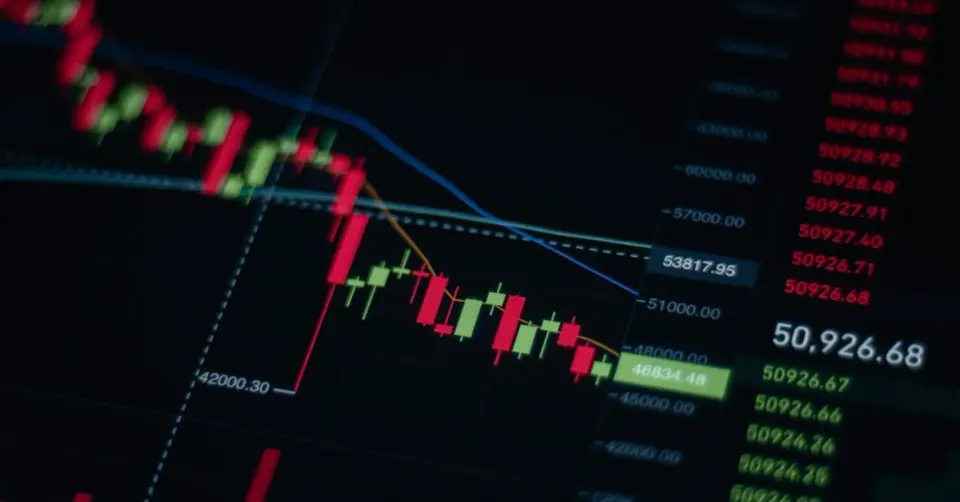
In the financial markets, Bitcoin remains muted, struggling to break past the $65,000 resistance level as investors wait for the Federal Reserve’s latest minutes. The crypto market is currently caught in a cycle of "tech jitters," where uncertainty regarding interest rates and the future of AI investment—highlighted by the recent exit of Nvidia’s Jensen Huang—has dampened risk appetite. While Bitcoin trades at $64,681, the broader market is looking for a clear signal from the Fed to determine whether the year-end rally has any remaining momentum.
Domestically, the Iranian market showed a notable divergence today, Wednesday, November 18, 2026. The US Dollar (USD/IRR) rose from 266,700 to 267,700 Toman, a 0.4% increase, reflecting continued demand for hard currency amid regional uncertainty. Paradoxically, gold prices saw a significant correction; 18k gold fell from 24,751,835 to 24,366,314 Toman per gram (-1.6%), and the Emami coin dropped 0.4% to 251,000,000 Toman. This suggests that while the dollar remains the preferred hedge against geopolitical risk, the global cooling of gold prices (currently at $3,773.35 per ounce) is finally impacting the local Iranian market.
Regional Tensions and the IRGC’s Iraqi Mission
On the regional front, tensions continue to simmer as the head of the IRGC Quds Force has reportedly arrived in Iraq for high-level talks. According to reports, these meetings are centered on addressing alleged oil smuggling operations linked to pro-Iranian armed groups, specifically amid rising friction with Kataib Hezbollah. These internal disputes within the regional proxy network suggest that even as Iran projects power externally, it is facing challenges in maintaining discipline and economic control over its various allied factions in neighboring Iraq.
Simultaneously, the Ansarullah movement in Yemen has issued a condemnation of the Bahraini government, following what they described as "unjust" legal verdicts against religious scholars in Bahrain. This rhetoric further inflames the sectarian and political divides in the region, particularly as Bahrain remains a key site for Western naval interests. For the average Iranian citizen, these developments signal a continued diversion of national resources toward regional proxy conflicts at a time when domestic inflation and currency devaluation remain the most pressing daily concerns.
Frequently Asked Questions
Why is UK inflation rising due to the Middle East war?
Why did gold prices drop in Iran while the dollar rose?
What is the significance of the Shenzhen summit?
What did Marco Rubio say about AI security failures?
The Strategic Importance of the Strait of Hormuz
The Strait of Hormuz is a narrow waterway that connects the Persian Gulf with the Gulf of Oman and the open Indian Ocean. Though it is only about 21 nautical miles (39 km) wide at its narrowest point, it serves as the transit route for roughly 20% of the world’s oil and a similar share of liquefied natural gas (LNG). Because the majority of oil‑producing nations in the Middle East—Saudi Arabia, Iran, Iraq, Kuwait, and the United Arab Emirates—rely on this chokepoint to ship their hydrocarbons to global markets, any disruption can instantly reverberate through oil prices, exchange rates, and ultimately consumer inflation in distant economies such as the United Kingdom.
Geopolitical tensions in the region, whether they stem from a direct military clash, sanctions on Iran, or the threat of a naval blockade, translate into a risk premium that traders embed in oil contracts. When the risk premium rises, forward‑looking markets bid up the price of crude, which then feeds into higher gasoline, diesel, and heating‑oil costs. Because energy accounts for a sizable portion of the consumer price index (CPI), a spike in oil prices can lift overall inflation even if domestic demand remains unchanged. The October 2026 UK inflation spike to 3.6% cited in recent headlines is a textbook example of how a regional security shock can have macro‑economic spillovers far beyond the Gulf.
Historically, the Strait has been the flashpoint for several crises. The 1980‑88 Iran‑Iraq War saw repeated attacks on tankers, prompting the U.S. Navy’s “Operation Earnest Will” to escort commercial ships. More recently, in 2019, Iran’s seizure of oil tankers and threats to close the Strait prompted a brief but sharp surge in Brent crude, pushing the price above $80 per barrel. Each episode underscores a key lesson for policymakers: energy security is inseparable from geopolitical stability. Diversifying supply routes—through pipelines, alternative ports, or strategic petroleum reserves—helps cushion economies from sudden price spikes.
For investors and analysts, the Strait’s importance means that monitoring naval activity, sanctions regimes, and diplomatic talks (such as the high‑profile Shenzhen summit involving world leaders) can provide early warning signals for inflationary pressures, currency movements, and even asset‑class performance like gold or Bitcoin. Understanding this chokepoint therefore equips readers to connect seemingly distant geopolitical headlines with everyday price changes in their own wallets.
Topics
Related Articles