Nvidia’s AI Surge Meets Hormuz Chaos: Iran Shifts Defense Strategy as Maritime Risks Skyrocket
جهش انویدیا در سایه آشوب هرمز؛ تغییر راهبرد دفاعی ایران همزمان با اوجگیری ریسکهای دریایی
Nvidia posts record earnings despite a leadership vacuum, while the Strait of Hormuz sees a shift to smaller tankers as supertankers face increasing attacks. Meanwhile, Iran's Defense Ministry signals a pivot toward hybrid warfare deterrence amid regional instability.
At time of publishing
USD
267,000
Toman
Gold 18K
24.47M
Toman / gram
Bitcoin
$64,153
US Dollar
Tether
269,500
Toman
Iran’s Hybrid Deterrence and the 'Ramadan War' Legacy
At 15:00 Tehran time on Wednesday, November 18, 2026, the Iranian Defense Ministry has signaled a significant pivot in its military posture. Brigadier General Reza Talaei-Nik, the ministry's spokesperson, stated that Iran’s deterrence strategy is being dynamically adapted to meet the challenges of 'hybrid warfare,' which he claims differs fundamentally from previous conventional conflicts. This rhetoric comes alongside statements from the deputy defense minister, who claimed that the ministry defined over 70 defense projects during what officials are calling the 'Ramadan War.' These projects are reportedly aimed at translating immediate battlefield requirements into long-term technological capabilities, focusing on drone integration and electronic warfare.
However, these official claims must be viewed through the lens of increasing regional isolation and the practical realities of the Iranian economy. While the government touts its 'dynamic deterrence' as a shield, the domestic market remains sensitive to the shadow of conflict. The USD/IRR rate saw a marginal increase today, moving from 266,700 to 267,000 Toman (+0.1%), reflecting a cautious 'wait-and-see' approach from traders. The emphasis on hybrid warfare suggests that the Iranian military leadership is aware of its limitations in a full-scale conventional engagement, choosing instead to focus on asymmetric tactics that can disrupt global trade without triggering a total war.
The Shadow War in Hormuz: Small Tankers and Rising Risks
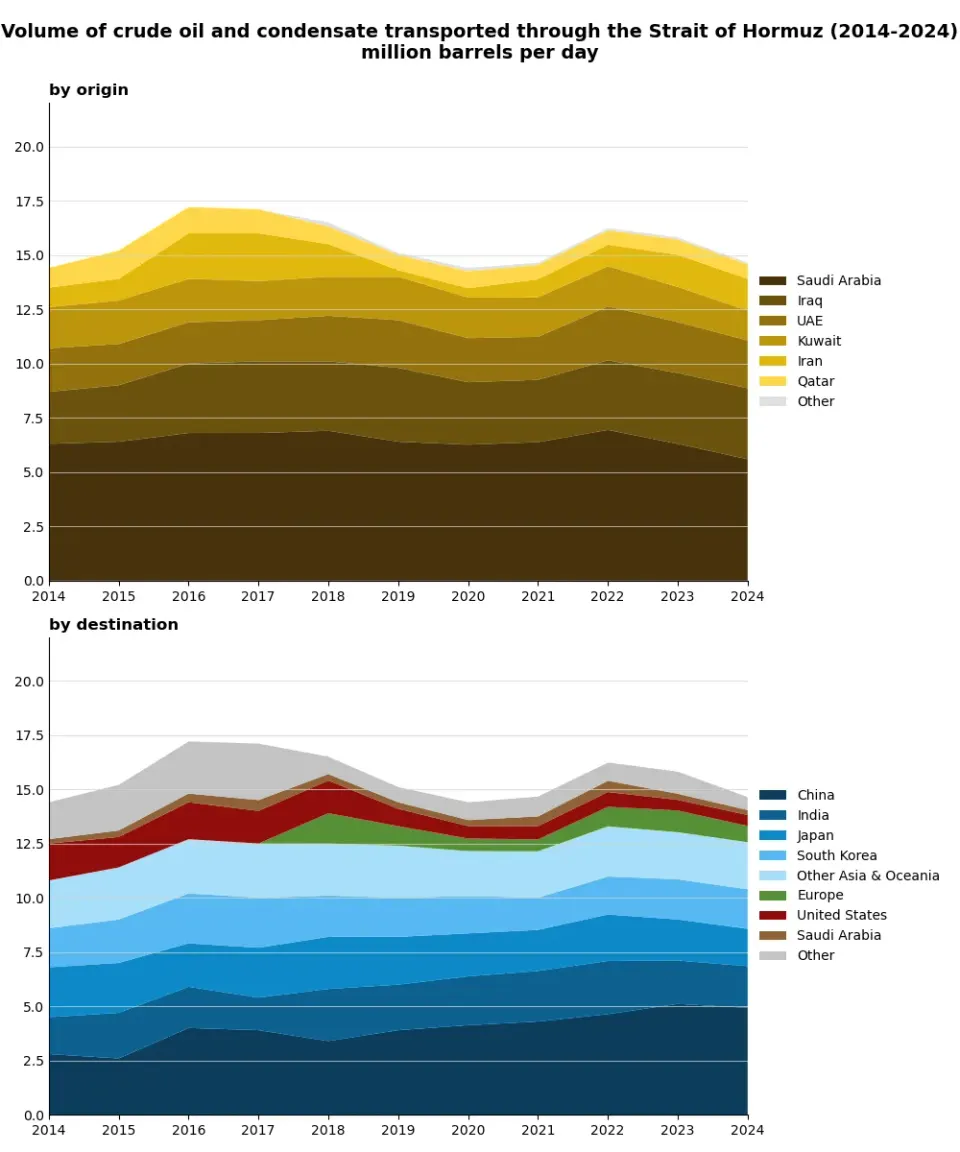
The tactical shift mentioned by Iranian officials is already manifesting in the Strait of Hormuz. Recent data shows that the trade of crude oil has shifted dramatically toward smaller vessels, such as Aframaxes and Suezmaxes, which are now moving 2 million barrels per day through the waterway. This is the highest volume for smaller tankers since the regional conflict intensified in early 2026. The reason is simple: supertankers (VLCCs) have become massive, slow-moving targets for naval mines and 'unknown projectiles.' By using smaller ships, exporters hope to minimize the impact of a single strike, though this significantly increases the per-barrel cost of shipping and insurance.
The danger was punctuated early Wednesday when ADNOC Logistics & Services confirmed that one of its vessels was attacked while transiting the Strait. One crew member remains unaccounted for, and eleven others were injured. This escalation has kept the energy markets on edge, even as global demand fluctuates. For the average Iranian reader, this maritime chaos is a double-edged sword. While it may temporarily keep oil prices high, the increased cost of imports and the constant threat of a total blockade on the Strait continue to put downward pressure on the Toman’s purchasing power and upward pressure on domestic inflation.
Nvidia’s Paradox and the Global Market Bubble
In the global tech sector, Nvidia continues to defy gravity, reporting third-quarter revenues that have doubled compared to last year. Despite the board’s firm stance against reinstating disgraced former CEO Jensen Huang, the company’s AI chip dominance remains unchallenged for now. This 'blockbuster' performance helped stabilize Bitcoin, which is currently holding at $64,153 after a brief dip. However, the euphoria in the tech sector is being met with growing skepticism from Wall Street. Analysts at MarketWatch have highlighted a staggering 97% probability of a market bubble, noting that while bubble predictions often outnumber actual crashes, the current valuation resets in tech are unprecedented.
In the Iranian domestic market, gold and coins have seen a slight retreat today. Gold 18k per gram dropped from 24,751,835 to 24,470,197 Toman (-1.1%), while the Emami coin fell from 252,000,000 to 251,000,000 Toman (-0.4%). This localized drop in gold prices suggests that some domestic investors are taking profits or shifting liquidity back into the dollar as the geopolitical situation in the Persian Gulf reaches a fever pitch. Whether Nvidia’s success can continue to buoy global markets while the Middle East teeters on the edge of a wider energy crisis remains the most critical question for the final quarter of 2026.
Frequently Asked Questions
چرا تانکرهای کوچک در تنگه هرمز جایگزین ابرتانکرها شدهاند؟
تغییر راهبرد دفاعی ایران به «جنگ ترکیبی» چه معنایی برای بازار دارد؟
چرا با وجود سودآوری انویدیا، هشدار حباب در بازار جدی است؟
Understanding Global Trade Chokepoints: The Strategic Significance of the Strait of Hormuz
In the intricate web of global commerce, certain geographical features hold disproportionate strategic importance. These are known as chokepoints: narrow maritime passages that are essential for international shipping, particularly for the transport of critical resources like oil and gas. A disruption in a chokepoint can have far-reaching economic and geopolitical consequences, impacting global supply chains, energy prices, and even international relations. Understanding these critical junctures is key to comprehending global economic stability and security.
The Strait of Hormuz stands as one of the world's most vital chokepoints. This narrow waterway, situated between the Persian Gulf and the Arabian Sea, is the sole sea passage from the Persian Gulf to the open ocean. It is a conduit for a significant portion of the world's seaborne oil and liquefied natural gas (LNG) – estimates suggest around 20-30% of global petroleum liquids transit through it daily. Its strategic location makes it indispensable for major oil-producing nations in the Middle East to export their energy resources to global markets, including Asia, Europe, and North America.
The "chaos" mentioned in the headline regarding Hormuz underscores the inherent vulnerabilities of such chokepoints. Geopolitical tensions, such as those involving Iran's defense strategy and potential hybrid warfare tactics, can escalate maritime risks dramatically. Attacks on tankers, increased naval presence, or threats to shipping lanes can lead to soaring insurance premiums, higher shipping costs, and volatile oil prices. These disruptions ripple through the global economy, affecting everything from inflation rates and consumer prices to the stability of national currencies and overall market sentiment, potentially even contributing to "market bubble" anxieties as investors seek safe havens or react to uncertainty.
Topics
Related Articles