
Gold Ounce at $4,271 vs. The Hormuz Deadlock: Why Emami Coins are Outpacing the Dollar
انس ۴۲۷۱ دلاری و بنبست هرمز؛ چرا سکه امامی از دلار پیشی گرفت؟
As shipping in the Strait of Hormuz grinds to a halt, the Iranian market is witnessing a rare divergence: gold is surging while the dollar remains stagnant. We explore why the 'Chokepoint Premium' is making physical coins more attractive than paper currency today.
At time of publishing
USD
187,000
Toman
Gold 18K
18.59M
Toman / gram
Bitcoin
$64,727
US Dollar
Tether
187,400
Toman
The Divergence: Why Gold is Winning the August Race
As of the evening session on August 6, 2026, the Iranian financial landscape is presenting a fascinating paradox. While the US Dollar has seen a slight retreat, falling from 187,300 to 187,000 Toman (-0.2%), gold is moving in the opposite direction. The Emami coin has jumped by a significant 1,000,000 Toman in just 24 hours, reaching a price of 185,000,000. This 0.5% increase might seem small in isolation, but when contrasted with the dollar's decline, it signals a shift in investor sentiment. The global context is the primary driver here, with the international gold ounce trading at a staggering $4,271.50, reflecting a world increasingly anxious about systemic stability.
For the average saver in Tehran, this creates a dilemma. Traditionally, the dollar and gold move in lockstep against the Toman. However, today we are seeing the 'Gold Premium' at play. When global tensions spike—such as the current migrant crisis in Ceuta where thousands remain stranded—gold acts as a universal hedge that transcends local currency fluctuations. In Iran, this is amplified by the fact that 18k gold has also crept up to 18,585,807 Toman per gram, a 0.2% increase that mirrors the global trend more closely than the local currency market.
The Hormuz Factor: Shipping Grinds to a Halt
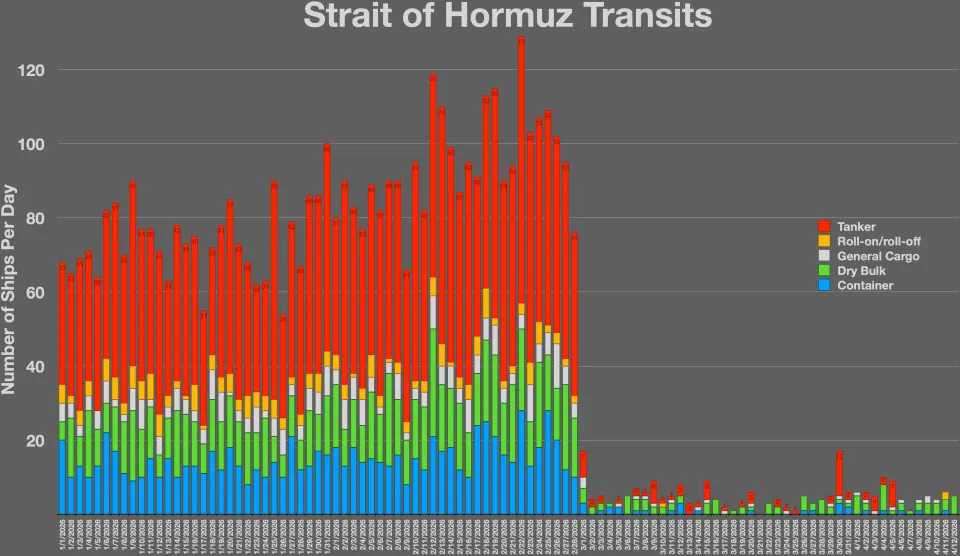
The most immediate pressure on the Iranian market stems from the maritime chokepoints that define the region's economy. Recent reports indicate that vessel traffic at the Strait of Hormuz and the Bab el-Mandeb Strait has crumbled. On Wednesday, only two vessels transited the Strait of Hormuz, a sharp decline from the eight recorded just a day prior. This 'Hormuz Deadlock' is not just a logistical nightmare; it is a psychological trigger for the market. When the physical flow of goods and oil is threatened, the perceived value of 'hard' assets like gold coins skyrockets compared to 'soft' assets like paper currency.
Investors are looking at the Houthi missile claims and the resulting halt in shipping as a sign that regional risk is no longer a theoretical threat but a daily reality. In this environment, the Emami coin serves a dual purpose: it captures the rising global value of gold while providing a liquid, high-value asset that can be hidden or transported more easily than stacks of Toman or even large amounts of USD. The liquidity of the Emami coin remains its greatest strength; unlike 18k gold, which carries a 'labor fee' (ojrat) that is lost upon resale, the coin trades near its bullion value plus a market-determined premium.
USDT vs. Physical Assets: The Digital Escape Hatch
While physical gold is winning the battle for stability, Tether (USDT) is carving out its own niche. Currently trading at 187,400 Toman, USDT is holding a slight premium over the physical 'Sana' or free-market dollar. This suggests that for those looking to move capital quickly or hedge against further regional instability, the digital dollar is preferred over the physical one. The convenience of crypto allows for an exit strategy that physical gold simply cannot match. However, the risk profiles are vastly different. While a gold coin has no counterparty risk, USDT relies on the stability of the global crypto ecosystem and the issuer's reserves.
Ultimately, the choice between gold and the dollar in late 2026 comes down to your timeframe. If the 'Hormuz Deadlock' continues for months, as some analysts fear, the scarcity of physical goods will likely drive the Toman lower, eventually dragging the dollar up with it. But in the short term, gold is the clear winner of the 'anxiety trade.' Whether it is the humanitarian crisis in Europe or the social tensions reflected in the stories of Iranian athletes seeking citizenship abroad, the world is in a state of flux. In such times, the weight of a gold coin in one's hand often feels more secure than a balance in a bank account or a stack of paper notes.
Concept Diagram
Frequently Asked Questions
Why did the Emami coin rise while the US Dollar fell today?
Is it better to buy 18k gold or Emami coins right now?
What does the shipping halt in the Strait of Hormuz mean for the Toman?
Why is USDT trading higher than the physical dollar in Tehran?
Understanding Safe Haven Assets: Gold in Times of Uncertainty
In a world often rocked by economic instability and geopolitical tensions, certain investments gain prominence as "safe haven assets." These are financial instruments or commodities that are expected to retain or even increase in value during periods of market turbulence, when other investments like stocks or fiat currencies might decline. The primary appeal of a safe haven asset lies in its perceived ability to protect wealth from the erosive effects of inflation, currency devaluation, and economic crises.
Gold is the quintessential example of a safe haven asset, a role it has played for millennia. Its intrinsic value, global liquidity, and lack of counterparty risk make it a trusted store of value when confidence in traditional financial systems wanes. In contexts like Iran, where the local currency (Rial/Toman) faces severe depreciation due to economic sanctions, high inflation, and political uncertainty, the demand for gold-backed assets like the Emami coin surges. Investors and ordinary citizens alike often turn to gold to preserve their purchasing power, viewing it as a tangible asset less susceptible to domestic economic policies or international currency fluctuations than the national currency.
The headline's mention of the "Hormuz Deadlock" further underscores gold's appeal. Geopolitical flashpoints, especially those involving critical trade routes like the Strait of Hormuz, heighten global uncertainty and can trigger risk aversion among investors. Such scenarios often lead to a flight to quality, where capital moves away from riskier assets and into perceived safe havens like gold. This increased demand, coupled with its finite supply, can drive up gold prices, making it a powerful hedge against both economic turmoil and political instability.
Ultimately, the phenomenon of Emami coins outpacing the dollar in Iran is a clear illustration of gold's enduring role as a safe haven. It highlights how, in environments characterized by high inflation, currency depreciation, and significant geopolitical risks, investors prioritize assets that offer stability and a reliable store of value over those that are vulnerable to domestic economic pressures or international political events.