
The Divergence: Why Emami Coins Slipped as the Dollar Climbed on a Tense Saturday Evening
واگرایی در بازار شنبه: چرا قیمت سکه امامی برخلاف دلار حرکت کرد؟
While the US Dollar marked a 0.3% gain to reach 187,300 Toman, Emami gold coins saw a surprising 0.3% dip. This narrative explores the shifting liquidity between physical gold, digital dollars, and the 'institutional' future of crypto.
At time of publishing
USD
187,300
Toman
Gold 18K
19.12M
Toman / gram
Bitcoin
$62,993
US Dollar
Tether
186,620
Toman
The Liquidity Trap: Coins vs. Cash
As the sun set over Tehran this Saturday, August 15, 2026, the market delivered a lesson in the difference between value and liquidity. The US Dollar (sell) rose to 187,300 Toman, a modest but clear 0.3% increase from the previous day. Conventionally, one would expect gold coins to follow suit, yet the Emami coin did the opposite, sliding 0.3% to settle at 189,000,000 Toman. This divergence highlights a critical reality for Iranian savers: the 'bubble' premium on minted coins is deflating even as the underlying currency weakens. When the market feels the pinch of reduced purchasing power, the high premiums often attached to Emami coins are the first to evaporate, making them a heavier, less agile asset compared to the liquid greenback.
Investors are beginning to realize that holding physical coins carries a specific 'local risk' that isn't present in 18k gold or paper currency. While 18k gold per gram remained perfectly stagnant at 19,121,381 Toman (0.0% change), the coin market's volatility suggests a shift in sentiment. People are no longer willing to pay massive markups for the 'roundness' of a coin when the dollar itself provides a more direct hedge against the persistent inflation that continues to plague the domestic economy. This is a classic 'flight to quality' where the simplest asset—cash—outperforms the speculative one.
[IMAGE: A physical Emami gold coin and a stack of 100-dollar bills resting on a glass desk inside a modern office in the Jordan district of Tehran]
The Mastercard Signal and Digital Alternatives
While local markets churn, global news provides a backdrop of institutional shift. Mastercard’s $1.8 billion deal, as reported in recent crypto analysis, signals that digital assets are moving beyond the 'wild west' phase and into the heart of traditional finance (TradFi). For the Iranian reader, this isn't just international news; it’s a roadmap. USDT (Tether) currently sits at 186,620 Toman, trading at a slight discount to the physical dollar sell rate. This 'digital dollar' offers a level of portability and global utility that physical cash simply cannot match, especially as global giants like Mastercard integrate these technologies into their core infrastructure.
However, the transition to digital isn't without its critics or its tragedies. The news of Professor Jason Arday’s death, described by UK Prime Minister Keir Starmer as a 'tragedy on so many levels,' serves as a somber reminder of the immense pressure within elite institutions. In the financial world, institutions are also under pressure to evolve. As Wall Street pushes deeper into digital assets, the 'permissionless' era of crypto is being challenged by centrally controlled, private blockchains. This creates a dilemma for the Iranian saver: do you trust the decentralized nature of Bitcoin, or the institutional stability (and censorship risk) of a digital dollar backed by the very systems that enforce sanctions?
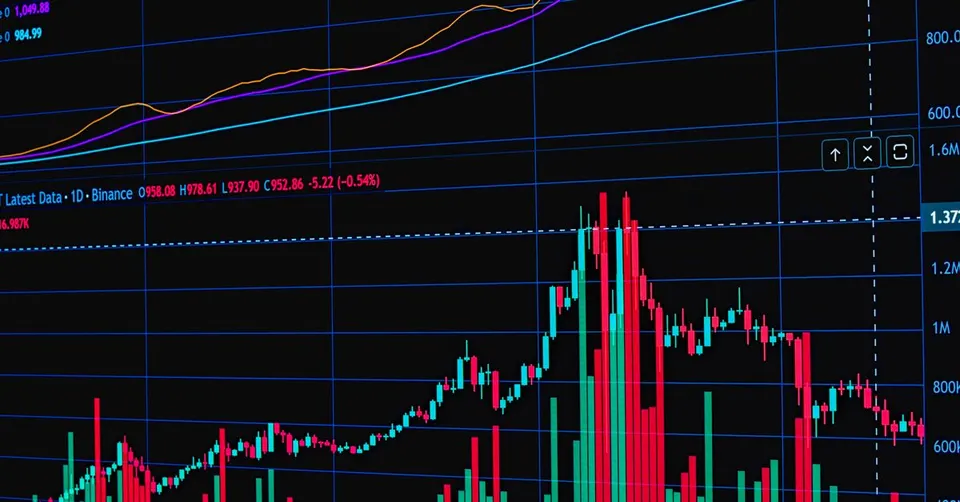
The $1 Million Bitcoin Mirage
For those looking further ahead to 2030, the dream of Bitcoin at $1 million has been met with a cold shower of mathematics. Analyst Markus Thielen recently argued that such a valuation is 'mathematically impossible' due to the sheer trillions of dollars in liquidity required to sustain it. For an Iranian investor, this means Bitcoin should perhaps be viewed not as a 'lottery ticket' to unimaginable wealth, but as a high-beta inflation hedge. With Bitcoin currently trading at $62,993, it remains a potent tool for bypassing local banking restrictions, but it requires a stomach for volatility that even the volatile Rial market might find taxing.
In contrast to the digital 'gold' of Bitcoin, we see the 'Landlords of the AI Boom'—physical infrastructure and real estate—climbing 35% this year. This global trend mirrors a local reality: real assets with pricing power are the ultimate winners in an inflationary cycle. Whether it is the data centers powering AI or the gold bars sitting in a Tehran vault, the common thread is scarcity. As we move through the final quarter of 2026, the choice for the Iranian saver is no longer just 'gold or dollar,' but rather 'physical scarcity vs. digital utility.' Each has its place, but as today's numbers show, the premium on 'prestige' assets like Emami coins is a luxury that few can afford to maintain when the dollar starts to move.
Concept Diagram
Frequently Asked Questions
Why did Emami coins drop while the USD exchange rate increased?
Is USDT a safer hedge than physical gold for Iranians right now?
What does the Mastercard $1.8 billion deal mean for local crypto users?
Is Bitcoin still a viable long-term hedge if it can't reach $1 million?
Safe-Haven Assets: Why Local and Global Protectors Can Diverge
In times of economic uncertainty, investors often seek out “safe-haven assets” – investments expected to retain or even increase in value during market turbulence. These assets act as a refuge when traditional investments like stocks or bonds face significant risk. The primary goal is to preserve capital and purchasing power, shielding wealth from inflation, geopolitical instability, or financial crises. Understanding safe havens is crucial for comprehending how different assets perform under stress, especially in complex economic environments.
Globally, the U.S. Dollar (USD) and gold are two of the most recognized safe havens. The USD's status stems from the stability of the U.S. economy, its role as the world's primary reserve currency, and its deep, liquid markets. Gold, a tangible asset with intrinsic value, has been prized for millennia as a store of wealth, often seen as a hedge against inflation and currency devaluation. Its limited supply and universal acceptance contribute to its appeal during crises, as it is not tied to the fortunes of any single government or company.
However, the performance of safe havens isn't always uniform, particularly when comparing local and global assets within a specific economy. The divergence described in the headline, where Iran's Emami coin (a local gold coin) slipped while the U.S. Dollar climbed, illustrates this complexity. While the Emami coin serves as a traditional local safe haven in Iran, similar to gold globally, its value can be influenced by unique domestic factors such as local supply and demand dynamics, government policies, or specific liquidity pressures within the Iranian market. The USD, on the other hand, reflects broader international investor sentiment and its global safe-haven status, often strengthening when there is general global or regional instability, or when the local currency faces significant depreciation.
This divergence suggests that the nature of the economic uncertainty dictates which safe haven performs better. If the perceived threat is primarily external (e.g., sanctions, geopolitical tensions impacting the national currency's exchange rate), the USD might strengthen more significantly. If the threat is more internal (e.g., local market panic, specific government actions affecting local gold supply), the local gold asset might react differently. The "tense Saturday evening" could imply a sudden shift in local sentiment or a specific event that disproportionately affected local asset perceptions, leading to the observed split in performance.