
Tether vs. Emami Coin: Choosing Your Anchor as the Toman Dips Below 260,000
تتر یا سکه امامی؟ انتخاب لنگرگاه دارایی همزمان با عقبنشینی دلار به زیر ۲۶۰ هزار تومان
As the USD sell rate retreats 1.7% to 259,600 Toman, investors face a classic dilemma: the physical security of gold or the digital agility of USDT. We analyze which vehicle offers better liquidity and protection following today's market shifts and new trade developments.
At time of publishing
USD
259,600
Toman
Gold 18K
25.76M
Toman / gram
Bitcoin
$74,593
US Dollar
Tether
258,740
Toman
The Toman’s Tactical Retreat
On Tuesday, November 10, 2026, the Iranian currency market witnessed a notable cooling period. The US Dollar, which had been testing higher levels, retreated by 1.7%, falling from 264,200 to 259,600 Toman. This downward pressure was mirrored in the gold coin market, where the Emami coin dropped 1.9% to settle at 254,000,000 Toman. Such movements often trigger a wave of panic-selling among retail holders, but for the strategic investor, it raises a fundamental question: where is the safest place to park capital when the 'bubble' begins to deflate? The shift in sentiment appears partly driven by official efforts to signal economic diversification; the head of the Iran Chamber of Commerce announced today that a joint committee with Uruguay is being established to bolster trade. While such diplomatic gestures are often more about optics than immediate cash flow, they provide a temporary psychological floor for the Toman.
However, we must view these developments through the lens of persistent geopolitical friction. While the government uses state media to highlight historical grievances—such as the Foreign Ministry's recent focus on the 'Minab atrocity' as a symbol of US brutality—the market remains more concerned with the practicalities of future sanctions and trade barriers. The gap between the USD buy rate (258,064) and the sell rate (259,600) remains narrow, suggesting that liquidity is still high, but the volatility in the Emami coin suggests that the 'gold premium' is highly sensitive to local political shifts. For those holding physical assets, the 1.9% drop in a single day is a stark reminder that gold in Iran carries a local risk premium that doesn't always align with the global spot price, which currently sits at a staggering $4,051.90 per ounce.

USDT vs. Physical Assets: The Liquidity Battle
For the modern Iranian saver, the choice between USDT (Tether) and physical gold or dollars is no longer just about preference; it is about exit velocity. Today, USDT is trading at 258,740 Toman, sitting slightly below the physical USD sell rate. The advantage of USDT lies in its 24/7 market access. While physical exchange shops (Sarraafi) close their shutters and coin dealers widen their spreads during periods of high volatility, the digital dollar remains tradable. However, the 'digital' nature of this asset brings its own set of risks. As seen in the US political arena, with figures like Pete Hegseth facing internal Republican challenges and accusations of overstepping authority, the regulatory environment for crypto remains a battlefield. Any sudden shift in US enforcement or international banking protocols can ripple through the USDT ecosystem, potentially trapping Iranian users who rely on centralized exchanges.
In contrast, the Emami coin remains the traditionalist's favorite. Even with a 1.9% daily drop, it represents a tangible asset that exists outside the digital grid. Yet, the liquidity of a 254-million-Toman coin is inherently lower than that of Tether. You cannot sell a 'fraction' of an Emami coin easily at a local jeweler without facing significant 'buy-back' penalties. This is where the narrative comparison becomes vital: if your horizon is the next 48 hours of potential geopolitical escalation, USDT offers the speed to move into other assets like Bitcoin. If your horizon is a five-year hedge against the total devaluation of the Toman, the physical weight of 18k gold—which remained stagnant today at 25,762,962 Toman per gram—offers a psychological and physical permanence that no private stablecoin can match.
Bitcoin and the Mining Meta-Narrative
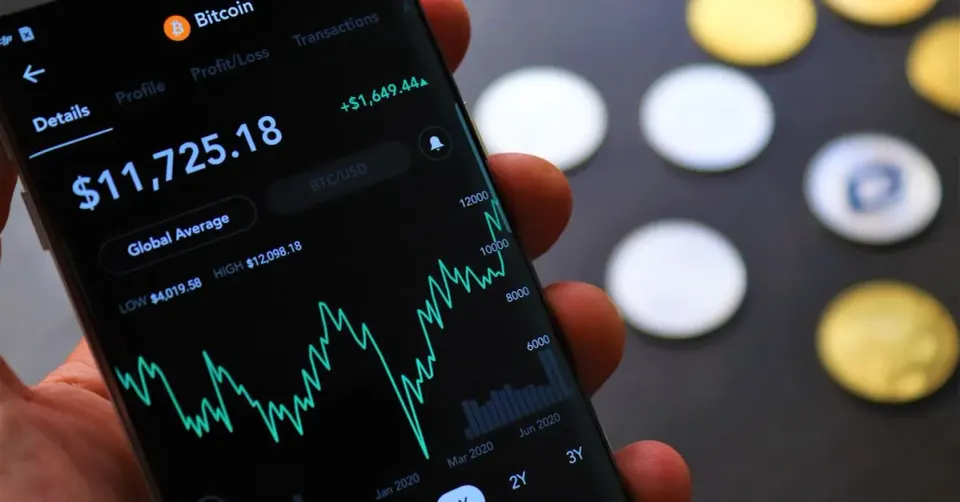
Bitcoin continues to carve a path distinct from both gold and the dollar. Today, BTC stands at $74,593, benefiting from a global environment where institutional mining is reaching record scales. Bitdeer, a major player in the space, reported a record Q3 revenue of $320.7 million, even as its net losses widened. This highlights a critical reality for Iranian investors looking at the crypto space: the infrastructure behind these assets is maturing, but it is also becoming more expensive and centralized. For an Iranian reader, Bitcoin is less of a 'currency' and more of a 'high-beta gold.' It captures the same inflation-hedging properties as an Emami coin but adds a layer of global tech exposure.
Ultimately, the decision to hold gold versus digital assets in late 2026 depends on your view of the 'Hormuz trade.' With global carbon emissions expected to drop due to the energy price shocks associated with regional tensions, the cost of living and the cost of capital in Iran are inextricably linked to the maritime security of the Gulf. Whether you hold a digital wallet or a physical safe, you are betting on the same outcome: the continued inability of the local currency to maintain its purchasing power against a backdrop of international isolation. As the Najib Razak case in Malaysia reminds us—where a former leader is released to house arrest despite a multi-billion dollar scandal—political elites globally often find ways to navigate the systems they build, while the average saver must choose between the stability of a metal and the utility of a code.
Concept Diagram
Frequently Asked Questions
Why did the Emami coin drop more than the USD today?
Is USDT safer than physical dollars in the current Iranian climate?
How does the trade news with Uruguay affect the Toman?
What is the best hedge against long-term inflation: Bitcoin or Gold?
Stablecoins: A Digital Anchor in Turbulent Economic Waters
In times of rapid currency depreciation, individuals often seek ways to preserve their wealth. This search for a "safe haven" leads many to explore alternative assets, and among the most prominent digital solutions are stablecoins. Unlike volatile cryptocurrencies such as Bitcoin, stablecoins are designed to maintain a stable value, typically pegged to a fiat currency like the US dollar, or sometimes to commodities like gold. Tether (USDT) is the most widely used example, aiming to always be worth one US dollar, making it a critical bridge between the traditional financial system and the crypto world.
The stability of stablecoins is achieved through various mechanisms. The most common approach, used by Tether, is fiat-backed, meaning that for every stablecoin issued, an equivalent amount of fiat currency (or highly liquid assets denominated in that currency) is held in reserves. Other types include crypto-backed stablecoins, which use other cryptocurrencies as collateral, and algorithmic stablecoins, which attempt to maintain their peg through smart contracts and supply adjustments. The core idea is to minimize price fluctuations, offering users a digital asset that doesn't experience the wild swings characteristic of many other cryptocurrencies.
For economies experiencing high inflation or significant currency devaluation, stablecoins can become particularly attractive. When a national currency, like the Iranian Toman mentioned in the headline, loses value rapidly, holding local cash means a constant erosion of purchasing power. Stablecoins offer a way to digitally "dollarize" savings, providing a relatively stable store of value that can be easily transferred and accessed, often bypassing traditional banking limitations or capital controls. This utility makes them a powerful tool for individuals seeking to protect their assets from economic instability.
While stablecoins offer advantages like liquidity and ease of digital transfer, they also come with their own set of considerations. Their stability relies heavily on the transparency and solvency of the issuing entity's reserves, a point of ongoing debate and regulatory scrutiny. They function somewhat similarly to traditional hedges like gold (represented by assets like Emami Coin), offering protection against currency erosion. However, stablecoins provide a digital, easily divisible, and globally transferable alternative, contrasting with the physical storage and less liquid nature of gold.
Ultimately, stablecoins represent a significant innovation in finance, offering a digital alternative for value preservation and exchange, especially relevant in volatile economic landscapes. Their growing adoption underscores a global trend where individuals and businesses are increasingly seeking resilient financial tools to navigate an uncertain economic future.