Toman Breaches 170,000 Milestone as Kharg Oil Crisis Deepens and US Gas Hits 4-Year High
عبور دلار از مرز ۱۷۰ هزار تومان؛ بحران ذخیرهسازی نفت در خارگ و رکوردشکنی بنزین در آمریکا
The Iranian Toman has officially crossed the psychological 170,000 barrier against the USD, driven by a tightening naval blockade and reports of critical storage limits at Kharg Island. As US gas prices hit four-year highs, the global energy shock is hitting Iranian wallets with unprecedented force.
At time of publishing
USD
170,050
Toman
Gold 18K
18.85M
Toman / gram
Bitcoin
$76,131
US Dollar
Tether
16,697.9
Toman
The 170,000 Milestone: A Psychological Breach
Today’s market session closed with a definitive and painful milestone for the Iranian economy. The US Dollar moved from 159,950 to 170,050 Toman, marking a sharp 6.3% increase in just 24 hours. This isn't just a numerical shift; it represents the crossing of a psychological barrier that has historically triggered panic buying in Tehran’s Grand Bazaar. The ripple effect was immediate in the gold market, where the Emami coin surged from 181,500,000 to 195,000,000 Toman (+7.4%). When the currency loses over 6% of its value in a single day, the public shifts from 'watching' to 'hedging,' further accelerating the demand for hard assets.
This volatility is rooted in the deepening gridlock over the Strait of Hormuz. As negotiations remain at a standstill, the market is pricing in a long-term disruption of trade routes. For the average Iranian, this means the cost of imported electronics, medicine, and basic commodities will likely see another round of aggressive price hikes by next week. The gap between the free market rate and the USDT rate (currently at 16,698 Toman) suggests that while crypto remains a slight discount, the general trend is one of rapid devaluation that shows no signs of cooling.

The Kharg Island Bottleneck: Floating Storage and Ghost Tankers
Behind the currency collapse lies a mounting crisis in Iran’s energy infrastructure. Reports indicate that Kharg Island, which handles roughly 90% of Iran's oil exports, is nearing its maximum storage capacity. Because the blockade has made it nearly impossible to move crude to international buyers, the regime has been forced to reactivate the M/T Nasha, a 30-year-old derelict crude carrier, to serve as floating storage. This is a desperate move that signals a looming production halt; if the wells have nowhere to send their oil, they must be shut down, which can cause permanent geological damage to the reservoirs.
While Iran struggles to store its oil, China’s Sinopec reported a 28% jump in first-quarter profits, largely due to higher crude prices lifting inventory values. This irony is not lost on market observers: while Iran’s primary customer benefits from the price surge, the Iranian state is unable to liquidate its primary asset. This 'supply shock' is the primary engine driving the Toman’s descent. If the Kharg Island capacity is reached before a diplomatic breakthrough occurs, the loss of oil revenue could lead to even more drastic fiscal measures from the Central Bank.
Global Ripples: From US Gas Prices to Rare Hope
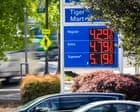
The crisis is not contained within Iran’s borders. In the United States, average gas prices have surged to $4.15 a gallon, the highest level in four years. This global energy inflation keeps the US Dollar strong against all emerging market currencies, including the Toman. Meanwhile, the UAE’s shocking decision to exit OPEC has fractured the oil cartel’s ability to stabilize prices, leading to a 'every nation for itself' environment. Even in the West, corporations are feeling the shift; General Motors is expecting a $500 million tariff refund after a Supreme Court ruling, showing how legal and political volatility is reshaping the global trade landscape.
Amidst this economic warfare, a rare spot of hope appeared in the Iranian wilderness. Conservationists have recorded new sightings of Asiatic cheetah cubs, a subspecies found only in Iran. While it may seem disconnected from the price of Bitcoin or the price of gold, it serves as a reminder of the nation's underlying resilience. However, for the investor, the practical takeaway remains grim: with the Strait of Hormuz blocked and storage at capacity, the pressure on the Toman will remain extreme. Diversification into gold or stablecoins remains the only viable shield against a currency that is currently in freefall.
Frequently Asked Questions
Why did the USD jump 6.3% in a single day?
What is the significance of the M/T Nasha tanker reactivation?
How does the UAE's exit from OPEC affect the Iranian market?
Is the current gold price a bubble?
Understanding Currency Devaluation: Why the Iranian Toman Plummeted Past 170,000 per USD
Currency devaluation is the intentional or market‑driven reduction in a nation's monetary unit value relative to foreign currencies. In Iran, the official exchange rate is set by the Central Bank, but a parallel market (often called the free market or black market) reflects true supply‑and‑demand dynamics, especially under heavy sanctions. When sanctions restrict oil exports and limit foreign currency inflows, the supply of dollars shrinks while the demand for hard currency to pay for imports stays high, forcing the Toman’s market value to fall sharply.
The mechanics are simple: a lower supply of dollars means each dollar can buy more Tomans. At the same time, the government may intervene by raising the official rate to raise revenues, but if the official rate diverges too far from the market rate, arbitrage opportunities emerge, further destabilising the currency. The recent breach of 170,000 IRR per USD reflects both the loss of oil‑related foreign earnings and the loss of confidence among investors, who now demand a higher premium to hold Iranian assets.
Devaluation has immediate macro‑economic consequences. Imported goods become more expensive, fueling inflation; wages lose purchasing power; and debt denominated in foreign currency becomes harder to service. For ordinary Iranians, this translates into higher prices for food, medicine, and fuel, while businesses that rely on imported inputs face squeezed margins. Policymakers may try to curb the slide by tightening monetary policy, imposing capital controls, or seeking alternative trade partners, but these tools are limited when sanctions block access to global financial systems.
Understanding devaluation helps explain why related topics—such as the Kharg Island oil storage crisis, the price of the Emami cryptocurrency, or the impact of a potential Strait of Hormuz blockade—are all intertwined with the health of Iran’s currency. A weaker Toman makes oil revenues worth less in local terms, intensifying the pressure on the government to find ways to stabilize the exchange rate.
For a deeper dive, see the references below which cover the basics of devaluation, Iran’s specific situation, and recent market data.