Trump Vows Retaliation as Apache Downed in Hormuz; Toman and Gold Defy Tensions with Surprise Retreat
تهدید ترامپ پس از سرنگونی آپاچی در هرمز؛ عقبنشینی غافلگیرانه دلار و طلا در برابر تنشها
Despite a dramatic escalation in the Strait of Hormuz involving a downed U.S. helicopter, the Toman and gold prices actually cooled during Tuesday's night session. We analyze why the market is ignoring the war drums and what the new Claude AI release means for the regional tech landscape.
At time of publishing
USD
176,100
Toman
Gold 18K
18.19M
Toman / gram
Bitcoin
$61,713
US Dollar
Tether
176,199
Toman
The Hormuz Paradox: Why Markets Cooled as Tensions Boiled
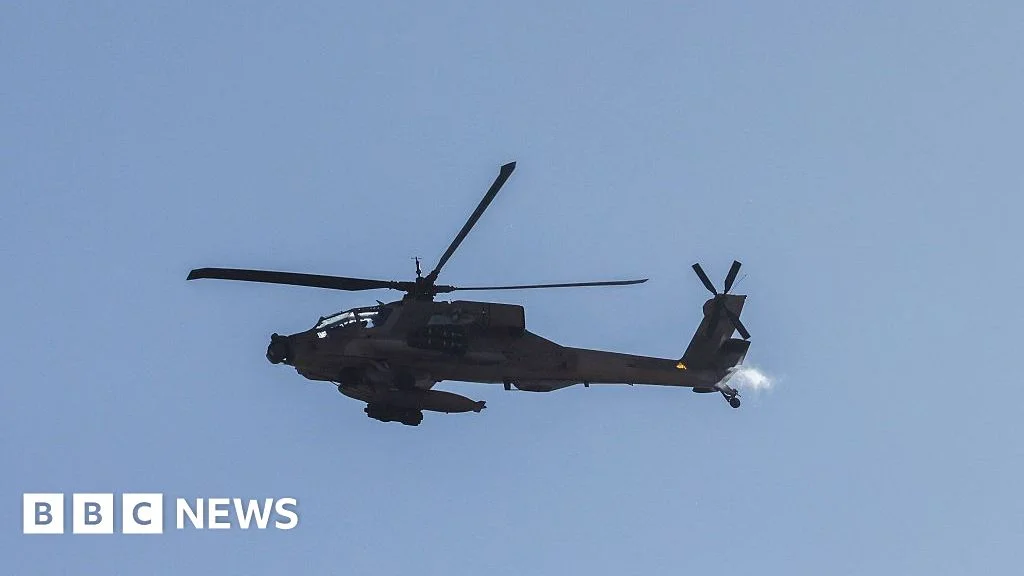
On a day that should have seen the Toman plummet, the Iranian market showed a surprising level of stoicism. Donald Trump’s announcement that an American Apache helicopter was downed by Iranian forces in the Strait of Hormuz initially sent shockwaves through global news cycles. However, the local currency market reacted with a counter-intuitive dip. The US Dollar moved from 176,900 to 176,100 Toman, a modest but notable decline of 0.5%. This suggests that traders are either skeptical of a full-scale military escalation or are pricing in the successful rescue of the crew by the Navy’s Task Force 59 drone boats, which significantly lowers the immediate political pressure for a 'blood-for-blood' response.
For everyday Iranians, this price movement is a lesson in market psychology. Often, when a geopolitical event is 'too loud,' the smart money looks for the exit. The fact that the crew was rescued by an autonomous vessel—a first in naval history—indicates a shift toward technological warfare that doesn't necessarily lead to the catastrophic ground invasions of the past. As long as the Strait remains technically navigable, even with friction, the currency seems to be holding a tentative floor rather than entering a freefall.

Gold’s Correction: A 2% Slide Amid Global Uncertainty
Gold, the traditional hedge against war, also failed to catch a bid in Tehran today. Gold 18k per gram dropped from 18,534,327 to 18,185,973 Toman, marking a 1.9% decrease. Similarly, the Emami coin shed 2 million Toman of its value, falling from 183,000,000 to 181,000,000 (-1.1%). While the global gold ounce remains elevated at $4,265.20, the local 'bubble' or premium on gold coins appears to be deflating. This could be due to a liquidity crunch or investors rotating into other assets like Tether (USDT), which traded at a slight premium to the physical dollar at 176,199 Toman.
This retreat in gold prices suggests that the 'war premium' that had been built up over the last week reached a local exhaustion point. Iranians who bought gold at the peak this morning are now facing a 'red' evening. The takeaway here is that in the 2026 economy, geopolitical shocks are often front-run by speculators, meaning by the time the news hits the mainstream, the price has already peaked. Monitoring the global gold flow is essential, but local demand remains the primary driver of the Toman-denominated gold price.

The Tech and Energy Buffer: Claude Fable and Argentina’s Shale
Beyond the immediate borders of Iran, two major stories are providing a 'buffer' for the global economy that indirectly stabilizes the Toman. First, Anthropic’s release of Claude Fable 5—a 'safe' version of its powerful Mythos-class AI—marks a new era in software engineering and knowledge work. While the high-end 'Mythos' models are restricted to cyber-partners, the public release of Fable 5 gives Iranian startups and developers access to world-class reasoning capabilities. This technological advancement continues to decouple economic productivity from physical geography, allowing the digital economy to thrive even when physical trade routes like Hormuz are under threat.
Secondly, the energy market is finding workarounds for Middle Eastern instability. Argentina’s Vaca Muerta shale boom is reaching record levels, positioning the country as a global energy powerhouse. This surge in South American production is one of the primary reasons global oil prices haven't hit the $200 mark despite the Apache incident. For the Iranian reader, this means that the 'oil weapon' is less potent than it used to be. As global supply diversifies, the impact of regional tensions on the Toman’s purchasing power becomes slightly more muted, though the long-term trend still favors those holding diversified digital and hard assets.

Watch
Trump confirms Iran shot down US helicopter, vows retaliation
CNN
Frequently Asked Questions
Why did the USD/IRR price drop after a military helicopter was shot down?
Is the 1.9% drop in gold a buying opportunity?
How does Argentina's shale boom affect the Iranian economy?
Understanding Safe-Haven Assets and Paradoxical Market Reactions
In times of global uncertainty, investors often seek refuge in what are known as safe-haven assets. These are investments expected to retain or even increase in value during periods of market turmoil and geopolitical instability. Gold is perhaps the quintessential safe-haven asset, alongside certain government bonds (like U.S. Treasuries) and currencies (such as the Swiss Franc or Japanese Yen). The logic is straightforward: when conflicts like a helicopter incident in the Strait of Hormuz escalate, threatening oil supplies or regional stability, investors typically flee riskier assets like stocks and emerging market currencies, flocking to these perceived havens. This demand usually drives up their prices.
However, markets are rarely simple, and the headline's mention of the Toman and gold "defying tensions with a surprise retreat" highlights a crucial nuance: safe-haven assets don't always behave predictably. While an immediate knee-jerk reaction to a geopolitical shock might see gold prices surge and local currencies like the Iranian Toman weaken, other factors can quickly come into play. These can include prior market expectations (the "buy the rumor, sell the news" phenomenon), profit-taking after an initial spike, or even the perception that the conflict, despite its severity, might not escalate further or could be contained.
Furthermore, domestic economic policies and market dynamics can significantly influence asset prices, overriding immediate geopolitical fears. In the case of the Iranian Toman, a currency heavily impacted by international sanctions and internal economic pressures, its behavior might be more sensitive to local monetary policy, supply-demand imbalances within its own market, or even government interventions designed to stabilize the exchange rate, rather than solely reacting to external security incidents. The "retreat" could signify a combination of these factors, suggesting that the market had either already priced in the risk or was reacting to other, more dominant economic signals.
Ultimately, the unexpected behavior of gold and the Toman underscores the complexity of financial markets. While safe-haven assets generally offer protection during crises, their performance is not guaranteed. A multitude of variables—ranging from investor sentiment and liquidity to government policy and underlying economic fundamentals—intertwine to determine asset prices, often leading to outcomes that challenge conventional wisdom and require a deeper understanding of the specific context.