Iraq Army Deploys to Iran-Backed Militia Stronghold, Pushing Toman to 268,600 Amid Regional Tensions
استقرار ارتش عراق در پایگاه شبهنظامیان وابسته به ایران؛ دلار به ۲۶۸,۶۰۰ تومان رسید
Regional tensions flared today as Iraq's army moved into a stronghold of Iran-backed Kataib Hezbollah, a development that quickly echoed in Tehran's markets. The US Dollar gained ground against the Toman, rising to 268,600, while gold and coins also saw modest increases, reflecting heightened risk aversion. Meanwhile, concerns over Iran's winter natural gas supply add another layer of uncertainty to the economic outlook.
At time of publishing
USD
268,600
Toman
Gold 18K
24.57M
Toman / gram
Bitcoin
$64,995
US Dollar
Tether
270,301
Toman
What Actually Happened
Today's market session closed with a clear tilt towards safe-haven assets and a stronger US Dollar, directly influenced by escalating geopolitical tensions in the region. The US Dollar, often seen as a hedge against instability, rose from 266,700 to 268,600 Toman, marking a notable 0.7% increase over the past 24 hours. This movement reflects a broader sentiment of caution among investors, who are closely watching developments across the Middle East.
Adding to the unease, gold and coins also registered modest gains. Gold 18k per gram moved from 24,495,590 to 24,567,154 Toman, an increase of 0.3%, while the Emami coin, a popular investment vehicle in Iran, saw its price climb by 0.2% from 251,000,000 to 251,500,000 Toman. These shifts underscore a prevailing preference for tangible assets that can preserve value amidst economic uncertainty. Globally, Bitcoin (BTC) is trading at 64,995 USD and Ethereum (ETH) at 1,830.91 USD, with USDT (Toman) at 270,301, suggesting a degree of stability in the crypto market despite regional turbulences.
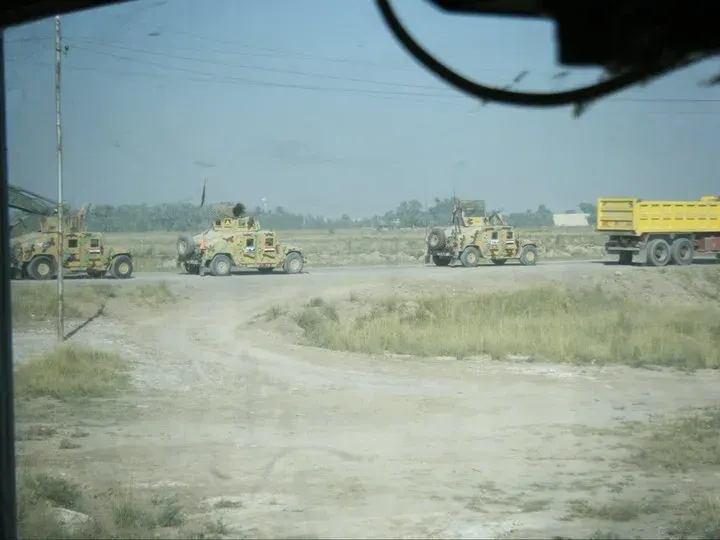
The primary driver of today's market sentiment was the significant news from Iraq, where the army deployed forces to a stronghold of Kataib Hezbollah, an Iran-backed militia group. This move, reported by Al Jazeera, signifies a potential escalation in efforts to curb Tehran's influence in Iraq, raising concerns about direct confrontations and broader regional instability. Such deployments often create ripples across financial markets, particularly in countries with close ties to the involved parties. Simultaneously, Iran is bracing for potential natural gas shortages during the upcoming winter, a critical energy imbalance exacerbated by years of underdevelopment and international sanctions, as highlighted by Al Jazeera. This domestic challenge adds another layer of economic vulnerability.
Why This Matters
The deployment of Iraqi forces into a stronghold of an Iran-backed militia is not merely a local incident; it's a development with profound regional implications that directly affect the economic outlook for everyday Iranians. Any increase in geopolitical tension in neighboring Iraq, particularly involving groups linked to Iran, tends to heighten risk perception across the entire region. This heightened risk translates into a stronger demand for hard currencies like the US Dollar, as individuals and businesses seek to protect their savings and assets from potential Toman depreciation. The 0.7% jump in the USD/IRR exchange rate today is a tangible reflection of this immediate reaction, making imported goods more expensive and eroding purchasing power.
Moreover, the concurrent rise in gold and coin prices reinforces this flight to safety. For many Iranians, gold and coins are traditional hedges against inflation and economic instability, offering a sense of security when the future feels uncertain. The subtle but consistent upward trend in these assets suggests that concerns about regional stability and domestic economic pressures are weighing heavily on public confidence. This dynamic means that the cost of living could continue to climb, impacting household budgets and making long-term financial planning even more challenging.

The Bigger Picture
The confluence of regional geopolitical maneuvers and domestic energy challenges paints a complex picture for Iran's economy. The situation in Iraq, if it escalates, could disrupt trade routes, impact energy exports, and further complicate Iran's already strained international relations. Such scenarios invariably lead to increased economic pressure, potentially accelerating inflation and further weakening the Toman in the long run. For ordinary citizens, this means a continuous struggle against rising prices for essential goods and services, making daily life increasingly difficult.
Iran's looming natural gas shortage, a consequence of underinvestment and sanctions, is a stark reminder of internal vulnerabilities. A severe winter energy crisis would not only impact residential heating but also industrial output, potentially leading to factory shutdowns and job losses. This domestic strain, combined with external pressures, creates a challenging environment for economic growth and stability. As such, the market's reaction today is not just about a single event but a cumulative response to ongoing regional volatility and persistent domestic economic headwinds.
While regional events dominate the financial news, other global stories also capture attention, though with less direct market impact on Tehran. For instance, the BBC reported that Russell Brand's 'appalling' prison message is under investigation by No 10, a development in a high-profile legal case. Separately, in France, a verdict is due in a triple murder trial linked to Marseille's drug wars, a significant legal event covered by France 24. And in the US, Lindsay Clancy is set to face a retrial next year for the deaths of her three children, as reported by the BBC. These stories, while newsworthy, underscore the diverse global landscape against which Iran's specific economic and geopolitical challenges are unfolding, serving as a reminder of the broader world, even as local issues demand immediate financial attention. The practical takeaway from today's market movements is the urgent need for individuals to consider diversifying their assets, perhaps by converting a portion of their holdings into hard currency or physical gold, to mitigate the risks associated with ongoing regional instability and domestic economic pressures.
Practical Takeaway: In times of rising regional tension and domestic economic uncertainty, preserving purchasing power becomes paramount. Consider diversifying a portion of your savings into more stable assets like hard currency or physical gold to hedge against potential Toman depreciation and inflation.
Frequently Asked Questions
What caused the Toman's depreciation against the USD today?
How did gold and coins react to today's news?
What is the significance of Iran's natural gas shortage mentioned in the briefing?
What is Kataib Hezbollah and why is its situation in Iraq relevant to Iranian markets?
Exchange Rate Depreciation in Sanctioned Economies: The Case of Iran’s Toman
When a country faces extensive international sanctions, its currency often loses value dramatically. In Iran, the official exchange rate for the Iranian rial (IRR) is set by the Central Bank, but a parallel market—known as the “free market” rate—floats according to supply and demand. The gap between the official rate and the free‑market rate can widen to several hundred percent, as seen in the recent drop of the Toman (one‑tenth of a rial) to 268,600 per US dollar. This depreciation reflects reduced confidence, limited foreign‑currency inflows, and the government's need to fund imports with a dwindling pool of hard currency.
Depreciation has a cascade of economic effects. First, imported goods become more expensive, fueling inflation. Households see the price of staple items and consumer goods rise, while wages often lag behind, eroding real purchasing power. Second, the price of gold—traditionally a hedge against inflation—soars in rial terms, prompting many Iranians to buy gold or even “Emami” coins as a store of value. The higher cost of imports also pressures the energy sector; Iran’s natural gas shortages become more acute because the country must spend more rial to import equipment or pay for foreign expertise.
Policymakers face a dilemma: intervene to stabilize the currency by raising interest rates or imposing capital controls, which can stifle growth, or let the market adjust, risking hyperinflation and social unrest. In practice, Iran has alternated between tightening monetary policy, subsidizing essential goods, and allowing the free‑market rate to float more freely. Each approach has trade‑offs, and the ongoing regional tensions—such as Iraq’s deployment against Iran‑backed militias—add geopolitical risk that further depresses investor confidence.
Understanding exchange‑rate depreciation helps explain why a seemingly technical metric—like the USD/IRR rate—has profound implications for everyday life, from the price of a loaf of bread to the strategic calculations of neighboring states. For anyone watching the Middle East’s economic landscape, the Iranian case illustrates how sanctions, political instability, and market mechanisms intertwine to shape a nation’s monetary reality.