XRP Breaks Resistance: What Institutional Whales Know That You Don't
جهش ریپل و عبور از سد مقاومت؛ نهنگهای سازمانی چه خوابی برای بازار دیدهاند؟
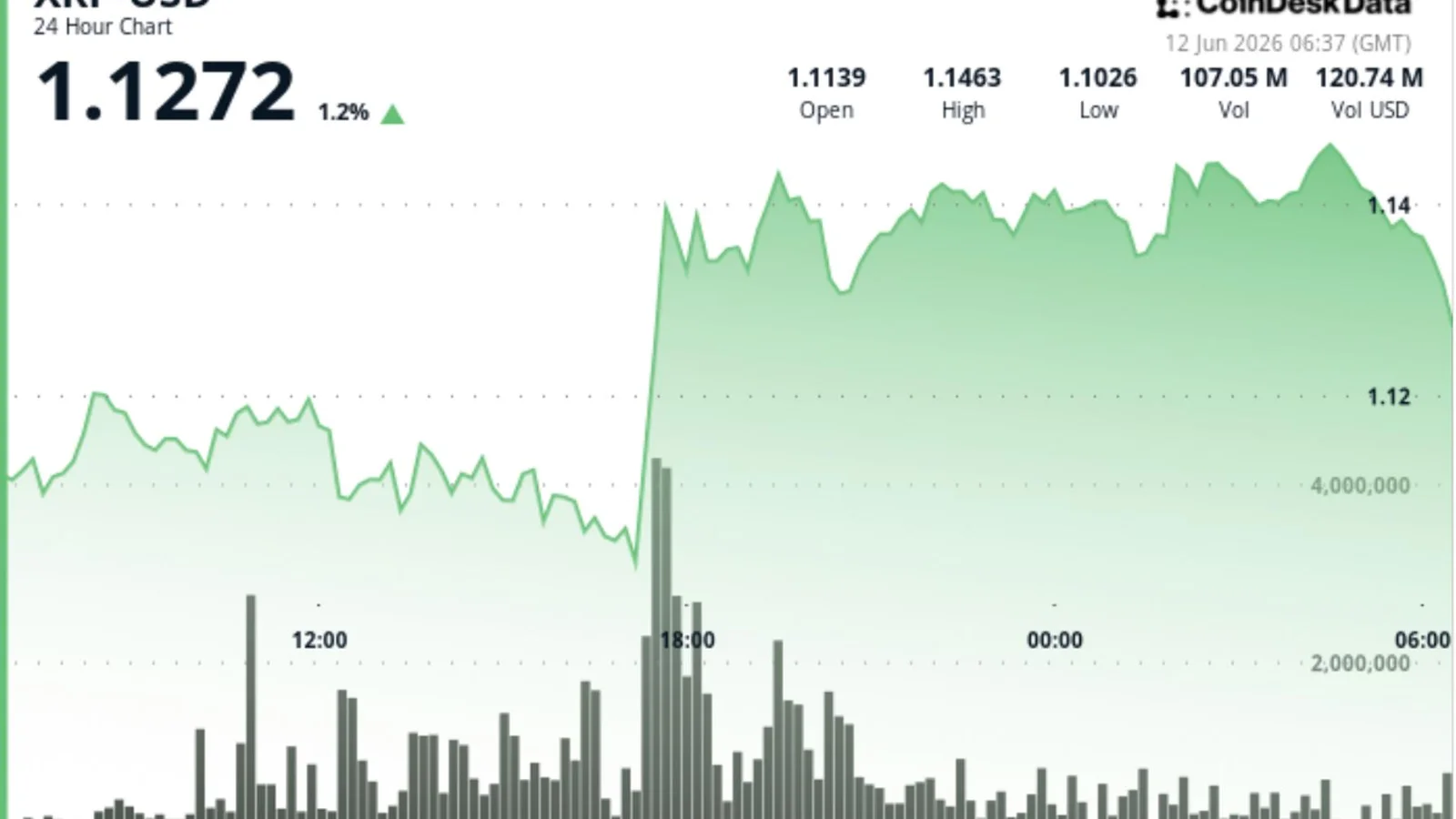
XRP has jumped 3% to clear the $1.14 mark as institutional buying ramps up, but the broader crypto market remains in a tug-of-war. We explore why big money is moving now and what Japan’s looming rate hike means for your digital portfolio.
At time of publishing
USD
178,900
Toman
Gold 18K
18.29M
Toman / gram
Bitcoin
$63,603
US Dollar
Tether
175,601
Toman
The Institutional Awakening of XRP
While the broader market often fixates on Bitcoin's crawl toward the $75,000 milestone, XRP has quietly stolen the spotlight this Friday. The token surged 3% to trade above $1.14, driven by a significant spike in trading volume that analysts attribute to institutional 'whales.' This isn't just a random pump; it represents a key test of long-term resistance levels. For the average investor, this move highlights a shift in sentiment where 'old school' tokens are being re-evaluated for their utility in cross-border settlements, especially as global liquidity remains tight.
However, it is not all clear skies. Despite the jump, XRP still faces a downward trendline that has suppressed its price for months. The surge in volume suggests that big players are placing bets, but retail traders should remain cautious. In the crypto world, 'institutional buying' often acts as a double-edged sword; while it provides price support, these entities are also the first to take profits when the macro environment shifts. With Bitcoin currently holding above support in a 'bear flag' setup, the entire market is essentially waiting for a catalyst to decide the next major direction.

Global Macro Shifts: From Tokyo to Tehran
The crypto rally is happening against a backdrop of massive shifts in traditional finance. Japan is reportedly preparing to hike interest rates to a 31-year high, a move that could send shockwaves through global markets. When the Japanese Yen carries a higher yield, the 'carry trade'—where investors borrow cheap Yen to buy riskier assets like Bitcoin—begins to unwind. This explains why, despite the positive XRP news, there is a lingering sense of caution among seasoned traders. They are watching the weekly RSI (Relative Strength Index) on Bitcoin, which suggests the market hasn't quite hit a definitive bottom yet.
In the local Iranian market, we see a fascinating divergence. While the USD/IRR exchange rate has remained remarkably flat at 178,900 Toman, Gold 18k has climbed by 0.6% to reach 18,291,472 Toman per gram. This suggests that while the currency market is in a 'wait-and-see' mode regarding geopolitical headlines, local investors are seeking safety in gold. The tension between President Trump’s claims of a 'great settlement' with Iran and Tehran’s dismissal of these reports as 'speculative' creates a volatile environment where gold often outshines paper currency or digital assets.
Security and the 'Invisible War'
As retail interest in crypto grows, so does the sophistication of bad actors. A recent international sting operation involving eleven countries successfully shut down a $390 million money-laundering ring known as AudiA6. This serves as a stark reminder for Iranian users: the decentralized nature of crypto does not mean it is beyond the reach of the law or immune to security breaches. Utilizing reputable platforms and maintaining strict personal security protocols is no longer optional; it is a requirement for survival in the modern fintech landscape.
Furthermore, the geopolitical 'invisible war' is expanding into new territories. China recently claimed that foreign agencies are using 'spy animals' fitted with sensors to map their waters. While this sounds like science fiction, it underscores the reality that data and infrastructure are the new frontlines. For the fintech user, this means that the platforms you use and the networks you trust are part of a much larger, interconnected global struggle. Whether it's a corporate giant like Flutter leaving the London Stock Exchange to list in New York or a sudden fuel cap in India, every global event eventually trickles down to the price of the assets in your hand.

Frequently Asked Questions
Why is XRP rising while other cryptos are relatively stable?
How does the Japanese interest rate hike affect Bitcoin?
Why is gold rising in Iran while the USD/IRR remains flat?
What was the 'AudiA6' crypto sting?
The Influence of "Smart Money" in Financial Markets
In the fast-paced world of finance, from traditional stocks to volatile cryptocurrencies, you often hear whispers of "smart money" – a term referring to institutional investors, hedge funds, large corporations, and professional traders with significant capital, advanced analytical tools, and often, superior market insights. Unlike individual retail investors, these entities operate with vast resources, employing teams of analysts, sophisticated algorithms, and direct access to market makers, allowing them to execute trades that can genuinely move markets. Their investment decisions are typically based on deep fundamental analysis, proprietary data, and a long-term strategic outlook, rather than short-term speculative impulses.
The sheer scale of "smart money" operations means their collective actions can create significant price trends and shifts in market sentiment. When institutional whales begin accumulating an asset, their large-volume purchases can drive prices up, often breaking through technical "resistance levels" as mentioned in the headline. Conversely, large-scale selling can trigger significant downturns. Their influence isn't just about capital; it's also about the perceived validation their involvement brings. When institutions enter a market, it can signal increasing maturity, stability, and long-term potential, attracting further investment and legitimizing the asset class.
Understanding the behavior of "smart money" is crucial for any investor. While individual investors cannot replicate their resources, observing the broader trends and accumulation/distribution patterns can provide valuable clues. Tools like on-chain analytics in crypto or volume indicators in traditional markets can sometimes offer glimpses into potential institutional activity. However, it's important to remember that "smart money" isn't infallible, and blindly following their perceived moves without independent research can be risky. The key takeaway is to recognize that large, well-informed players are always at work, shaping the landscape and often possessing insights that are not immediately obvious to the public.