
Beyond $64K: Can Bitcoin Survive the Quantum Threat and Geopolitical Thaws?
فراتر از ۶۴ هزار دلار: آیا بیتکوین از پس تهدید کوانتومی و تنشزداییهای سیاسی برمیآید؟
As Bitcoin tests the $64,000 resistance, new debates over quantum security and a potential US-Iran deal are reshaping the market. We break down why the 'digital gold' narrative is evolving and what it means for your portfolio in Tehran.
At time of publishing
USD
173,500
Toman
Gold 18K
17.75M
Toman / gram
Bitcoin
$63,799
US Dollar
Tether
173,449
Toman
The $64,000 Tug-of-War and the Toman's Retreat
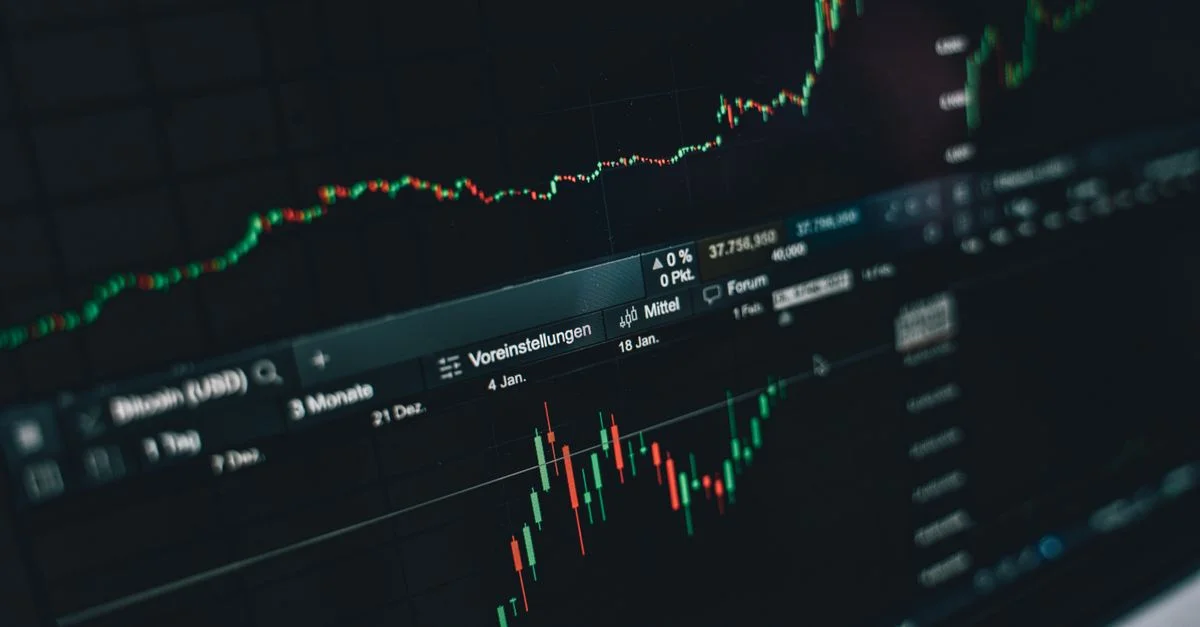
Bitcoin is currently hovering at $63,799, showing a resilient recovery but struggling to decisively break the psychological $64,000 barrier. For Iranian investors, this global stability is being met with a local cooling of prices. Today, the USD sell rate in Tehran dropped to 173,500 Toman, a 0.6% decline from yesterday's 174,600. This shift is largely driven by reports that a US-Iran ceasefire deal is 'very close,' as noted by senior administration officials. When geopolitical tension eases, the 'fear premium' that usually props up the dollar and gold in the local market begins to evaporate.
This cooling effect is even more visible in the gold market. The Emami coin saw a significant 2.2% drop, falling from 182,000,000 to 178,000,000 Toman. Meanwhile, 18k gold per gram decreased by 1.1% to 17,745,971 Toman. For the average reader, this means that while Bitcoin might be building a bullish case globally, the local 'Toman price' of crypto (USDT) is being pulled down by the strengthening of the national currency's sentiment. It’s a classic example of how local macro events can sometimes outweigh global asset rallies for an Iranian holder.
The Quantum Shadow: Is Satoshi’s Fortune at Risk?
While traders watch the charts, a deeper technical debate has emerged. A panel of top cryptographers recently convened by Coinbase to discuss Bitcoin's 'quantum question.' The concern isn't just academic; it’s about the fundamental security of the blockchain. As quantum computers become more powerful, they could theoretically reverse-engineer the private keys of older, 'inactive' Bitcoin addresses—including the roughly 1.1 million BTC attributed to Satoshi Nakamoto. These coins use older cryptographic standards that are more vulnerable to future quantum attacks than modern 'SegWit' addresses.
The debate currently divides the community: should Bitcoin developers proactively freeze these vulnerable coins to prevent a future thief from crashing the market? Or does that violate the 'immutability' that makes Bitcoin valuable in the first place? While we are likely years away from a computer powerful enough to crack Bitcoin, the fact that major exchanges and cryptographers are discussing it now shows that the industry is maturing. For long-term holders, this is a reminder that even 'digital gold' requires constant technological upgrades to remain a safe haven.

Geopolitics and the Energy Frontier
Beyond the code, the physical world is also shifting. News of a potential breakthrough in US-Iran relations has immediate effects on market liquidity. As a senior official mentioned that the two sides are 'not quite at the finish line yet' but very close, we see a 'risk-off' move in Tehran. Investors are moving out of hard assets like gold coins and back into the Toman or productive sectors, anticipating a period of relative stability. This is why we see the Emami coin dropping faster than the dollar; it was more inflated by speculative fear.
Interestingly, the future of the energy needed to power these networks is also evolving. China's Experimental Advanced Superconducting Tokamak (EAST) is reportedly on track for nuclear fusion ignition by 2027. If successful, this could eventually provide a near-limitless source of clean energy. For the crypto world, where mining energy consumption is a constant criticism, the move toward fusion energy could change the narrative entirely. It suggests a future where the cost of securing the Bitcoin network drops significantly, potentially making the 'energy-backed' value of BTC even more robust against traditional fiat currencies.

What This Means for You
If you are holding Tether (USDT) or Bitcoin in Iran today, you are witnessing a rare moment where global bullishness and local bearishness are fighting for control. The USDT price sits at 173,449 Toman, tracking the official dollar rate closely. If the diplomatic deal is finalized, we might see further corrections in the Toman price of crypto, even if Bitcoin's dollar value rises. This 'decoupling' is essential to understand: your profit isn't just about the coin's price in New York, but the Toman's strength in Tehran.
In the long run, the 'quantum threat' and energy milestones like China's fusion reactor are noise for the day trader but vital for the generational investor. Bitcoin has survived every technical challenge thrown at it for 15 years. The current dip in local gold and currency prices should be seen as a normalization of the market after weeks of high tension. Staying diversified—keeping some assets in global crypto and some in local stability—remains the smartest play for the Iranian fintech enthusiast.
Concept Diagram
Frequently Asked Questions
Why is the price of gold and dollar falling in Iran despite Bitcoin's stability?
What is the 'Quantum Threat' to Bitcoin mentioned in recent news?
How does China's fusion reactor progress affect the crypto market?
Is now a good time to buy USDT in Toman?
The Quantum Threat to Bitcoin's Security
Bitcoin's security, like most modern digital communication, relies on robust cryptography, specifically public-key cryptography. This system uses pairs of keys: a public key (from which your Bitcoin address is generated) and a private key (which you use to sign transactions, proving ownership of your funds). The mathematical relationship between these keys makes it computationally infeasible for a classical computer to deduce the private key from the public key, ensuring that only the owner can spend their Bitcoin.
The "quantum threat" refers to the potential for powerful quantum computers to break these cryptographic foundations. Unlike classical computers that use bits representing 0s or 1s, quantum computers use qubits, which can represent both simultaneously through superposition and entanglement. This allows them to perform certain calculations exponentially faster than classical machines, posing a fundamental challenge to current encryption standards.
The primary concern for Bitcoin comes from Shor's algorithm, a theoretical quantum algorithm developed by Peter Shor. This algorithm can efficiently factor large numbers, which is the mathematical problem underpinning RSA encryption, and also solve the discrete logarithm problem, which is the basis for Elliptic Curve Digital Signature Algorithm (ECDSA) – the specific algorithm Bitcoin uses for digital signatures. If a sufficiently powerful quantum computer running Shor's algorithm could be built, it could potentially derive a Bitcoin user's private key from their public key, or even from a transaction's public key, effectively allowing an attacker to steal funds.
While current quantum computers are not powerful enough to pose an immediate threat to Bitcoin's cryptography, the field is advancing rapidly. Researchers are actively developing "post-quantum cryptography" (PQC) – new cryptographic algorithms designed to be resistant to attacks from quantum computers. The Bitcoin community and wider cryptocurrency ecosystem are aware of this long-term challenge, and future upgrades to Bitcoin's protocol would likely incorporate PQC standards once they are mature and proven, ensuring its continued security in a quantum-enabled future.
Topics
Related Articles



We use cookies for analytics and advertising. You can accept or reject. See ourPrivacy PolicyandCookiesfor details.