From Pakistan Courtrooms to Bitcoin ETFs: How 'Risk Sentiment' Governs Your Toman
از دادگاههای پاکستان تا صندوقهای بیتکوین: چگونه «اشتهای ریسک» بر تومان شما حکومت میکند؟
While global headlines focus on a landmark life sentence in Pakistan and a staggering $6.4 billion exit from Bitcoin ETFs, the Iranian market is feeling the ripple effects. Learn why 'risk-off' sentiment is pushing the Dollar down in Tehran and what it means for your long-term savings.
At time of publishing
USD
158,850
Toman
Gold 18K
15.99M
Toman / gram
Bitcoin
$63,981
US Dollar
Tether
158,508
Toman
The Invisible Thread: Law, Order, and Your Wallet
It might seem strange to connect a legal ruling in Pakistan to the price of a gold coin in Tehran, but in the world of finance, everything is connected by a thread called "Risk Sentiment." Recently, a court in Pakistan delivered life sentences to the father and uncle of a 14-year-old girl from New York, a case that drew international eyes toward the region's judicial stability. To a casual observer, this is a human interest story; to a seasoned investor, it is a signal of the "Rule of Law." Markets generally prefer environments where legal consequences are predictable and enforceable. When justice systems function, even in tragic cases, it contributes to a broader sense of regional stability.
In the Iranian context, we are seeing a different kind of stability-seeking behavior. As high-stakes peace talks between the US and Iran commence in Switzerland, the market is entering a "wait-and-see" mode. This has led to a noticeable cooling in currency prices. Today, the USD/IRR pair fell from 160,550 to 158,850, a decline of 1.1%. This isn't just a random fluctuation; it is the physical manifestation of traders reducing their "risk premium"—the extra cost added to assets when the future looks uncertain. When the news suggests even a slight chance of diplomacy, the urge to hoard hard currency weakens.

The $6.4 Billion Leak: Understanding the Crypto Winter Chill
While the Toman is finding some relief, the world of digital assets is facing a harsh reality check. US-listed spot Bitcoin ETFs have witnessed a record $6.4 billion net outflow over the past 30 days. To understand this, imagine an ETF as a giant bucket that holds Bitcoin for institutional investors who don't want to manage private keys. When $6.4 billion "leaks" out of that bucket, it means the big players—pension funds, wealth managers, and corporations—are pulling back. This massive exit coincides with Bitcoin falling 17% over the past month, currently battling resistance levels between $64,300 and $65,000.
For the Iranian investor, this "crypto winter chill" serves as a vital lesson in liquidity. Many jumped into Bitcoin hoping for a hedge against local inflation, only to find that global sentiment can be just as volatile as local politics. Just as the town of Ebbw Vale in Wales is experiencing economic regret years after backing Brexit due to a lack of promised jobs and investment, crypto investors often feel the sting of regret when they enter a market at its peak. The lesson here is that an "inflation hedge" only works if you don't overpay for the entry ticket. When the big money leaves the room, the small investors are often the ones left holding the bag.
Defensive Play: The Goalkeeper Strategy for Your Portfolio
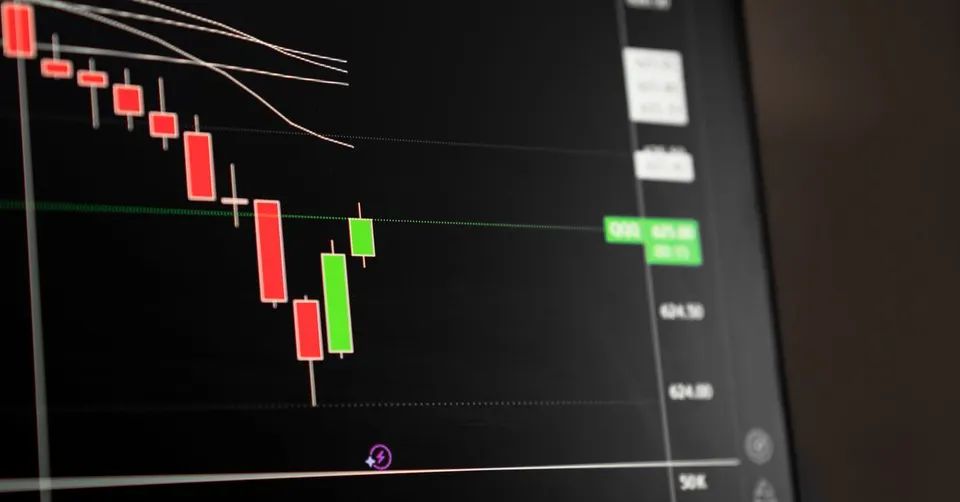
In times of high volatility, the best strategy isn't always to score a goal, but to prevent one. Take the example of Eloy Room, the goalkeeper for Curacao, who recently made a record-equalling 15 saves to secure a point against Ecuador in the World Cup. He didn't win the game, but he saved his team from a crushing defeat. Your financial portfolio needs a similar "goalkeeper." In a week where Emami coins dropped by 2.1% (falling from 165.5 million to 162 million Toman), having a diversified set of assets—perhaps some fixed-income gold certificates or stablecoins—acts as your defense.
Investing is a marathon, not a sprint. Much like the 20,000 runners tackling the world’s largest ultramarathon in South Africa, the goal is endurance. Whether it is the geopolitical shifts in Switzerland or the technological shifts in the G7’s approach to critical minerals, the global landscape is constantly moving. The key to surviving as an Iranian investor is to look past the daily noise and understand the underlying mechanics. If the USD is dropping because of peace talks, and Bitcoin is dropping because of ETF outflows, your job is not to panic-sell, but to rebalance. Ask yourself: is my "defense" strong enough to handle the next 15 saves?

Concept Diagram
Frequently Asked Questions
What is 'Risk-Off' sentiment and why does it lower the USD price in Iran?
Why did Bitcoin ETFs lose $6.4 billion in a month?
How can I protect my savings when both gold and crypto are falling?
Understanding Risk Sentiment: The Invisible Hand Guiding Your Investments
In the world of finance, few forces are as pervasive yet as intangible as Risk Sentiment. This crucial concept refers to the overall attitude of investors towards taking on risk in financial markets. It's a spectrum, ranging from "risk-on" — where investors are optimistic, seeking higher returns and willing to invest in riskier assets like stocks, emerging market currencies, or cryptocurrencies — to "risk-off," a state of caution where capital preservation is prioritized, leading investors to flee to perceived safe havens such as government bonds, gold, or stable currencies.
Risk sentiment acts as a powerful determinant of asset prices across the globe. When sentiment is "risk-on," we often see robust demand for growth-oriented assets, pushing up their values. Conversely, a shift to "risk-off" sentiment triggers a sell-off in these same assets, leading to price declines. This dynamic directly explains phenomena like Bitcoin ETF outflows, where investors pull money from riskier crypto-linked investments, or fluctuations in currency pairs like USD/IRR, as global and regional risk perceptions shift.
What drives these shifts in sentiment? A myriad of factors, including macroeconomic data (like inflation or employment figures), geopolitical events (such as international peace talks or regional conflicts), central bank policies, and even major news headlines. These influences can rapidly alter investor confidence, leading to swift reallocations of capital. For instance, positive developments in international relations might foster a "risk-on" environment, while rising political uncertainty or economic downturns can quickly usher in a "risk-off" phase.
The implications for investors are significant. During periods of strong "risk-off" sentiment, a defensive investing strategy becomes paramount. This involves shifting portfolios towards less volatile assets, stable dividend-paying stocks, or fixed-income securities, aiming to protect capital rather than maximize growth. Understanding risk sentiment is not just for institutional traders; it's a fundamental lens through which any curious reader can better comprehend the seemingly erratic movements of their own investments, including how global events can influence the value of their local currency or digital assets.