From Sri Lanka's Dengue Crisis to Bitcoin's Bear Flag: How Global Geopolitics Echoes in Iran's Markets
از بحران دنگی سریلانکا تا پرچم خرسی بیتکوین: چگونه ژئوپلیتیک جهانی در بازارهای ایران طنینانداز میشود
Recent events, from a dengue outbreak in Sri Lanka tied to the 'Iran War' to direct US-Iran military exchanges and Bitcoin's volatile movements, reveal a deeply interconnected world. This guide explores how these seemingly disparate global incidents create ripple effects, directly influencing currency, gold, and crypto prices in Iran and shaping investor confidence.
At time of publishing
USD
170,400
Toman
Gold 18K
16.92M
Toman / gram
Bitcoin
$60,238
US Dollar
Tether
170,611
Toman
The Distant Echo: Sri Lanka's Health Crisis and the Iran War's Shadow
It might seem far-fetched to connect a dengue fever outbreak in Sri Lanka to your portfolio in Tehran, but the world's financial arteries are more intertwined than ever. Recent reports highlight a surge in dengue cases across Sri Lanka, straining hospitals in a nation already grappling with severe energy shortages. Crucially, these energy woes are explicitly linked to the ongoing 'Iran War,' as reported by the NYT World [3]. While the immediate human cost is tragic, the economic implications extend far beyond the island nation's borders.
This connection illustrates a critical principle: regional conflicts, particularly those involving major energy producers like Iran, don't just affect neighboring economies. They disrupt global supply chains, drive up energy costs worldwide, and can even divert humanitarian and economic aid. For Iranian readers, this means higher global commodity prices – from food to fuel – can eventually translate into increased import costs and inflationary pressures at home. Such distant, war-induced disruptions, whether in energy markets or global trade routes, can subtly but significantly erode purchasing power and investment returns, reminding us that no economy is an island.

---
Geopolitical Tensions Closer to Home: US-Iran Strikes and Market Jitters
While the 'Iran War's' distant echoes resonate, more direct geopolitical tensions are playing out closer to home, with immediate and tangible effects on local markets. Just hours ago, the US and Iran exchanged strikes, with each side accusing the other of violating a ceasefire, as reported by BBC World [2]. Iran claims retaliatory attacks on US infrastructure in Kuwait and Bahrain, following US strikes across Iran. This escalation, even if contained, sends clear signals of heightened regional instability.
Such direct confrontations immediately trigger a flight to safety among investors. When the geopolitical landscape becomes uncertain, the demand for traditional safe-haven assets typically surges. This is precisely what we've seen in the past 24 hours: the USD/IRR exchange rate rose from 166,850 to 170,400 (+2.1%), reflecting increased demand for foreign currency as a hedge against local economic uncertainty. Similarly, physical gold and coins saw significant jumps, with Gold 18k/gram climbing from 16,530,310 to 16,924,604 Toman (+2.4%), and the Emami coin surging from 166,000,000 to 172,000,000 Toman (+3.6%). These movements are a direct reflection of investors seeking tangible assets to preserve wealth amidst rising regional risks.

---
World Cup Dreams and the Crypto Current: Sentiment and Speculation
Beyond the raw economics of conflict, even national sentiment can play a role, albeit indirectly. The recent news of Iran's World Cup exit, with Team Melli's knockout dream ending in late drama [1], while primarily a sporting disappointment, can subtly influence overall national mood and consumer confidence. However, the more direct financial impact of global sentiment is evident in the cryptocurrency markets, which often act as a barometer for risk appetite.
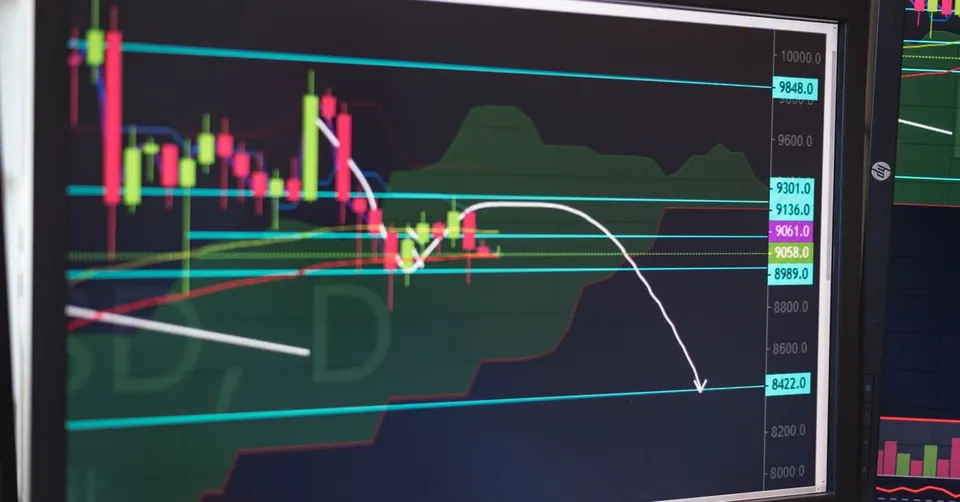
Today, Bitcoin finds itself "trapped in a bear flag near $60K," according to Investing.com [6], signaling potential further downside. This technical pattern, combined with broader market anxieties, is exacerbated by news like Grayscale's research head Zach Pandl suggesting the company might need to sell $3 billion in Bitcoin to restore confidence [0]. For Iranian investors, who often turn to crypto, particularly USDT, as an alternative hedge against local currency fluctuations and inflation, these global crypto trends are crucial. The current USDT price of 170,611 Toman, trading slightly above the USD sell rate, indicates persistent local demand for stable digital assets amidst the prevailing uncertainty. Understanding these global crypto dynamics is vital for anyone holding digital assets, as local prices are fundamentally tied to these international movements.
---
Navigating Uncertainty: Your Portfolio in a Connected World
The events of the past 24 hours paint a clear picture: our financial world is deeply interconnected, with distant wars, regional conflicts, and global market sentiments all conspiring to shape local prices and investor behavior. From the energy shortages in Sri Lanka to the exchange of strikes in the Persian Gulf and the technical patterns forming in Bitcoin, every major global event sends ripples that eventually reach your wallet.
For Arzbin's audience, this interconnectedness underscores the importance of a well-informed and diversified investment strategy. Relying solely on local indicators is no longer sufficient. Understanding global geopolitical shifts, their potential impact on commodity prices, and the flow of capital into and out of various asset classes – traditional and digital – is paramount. In times of heightened uncertainty, a balanced portfolio that considers both local realities and global influences, perhaps diversifying into assets that traditionally perform well during inflationary periods or geopolitical turmoil, can offer a degree of resilience. Stay vigilant, stay informed, and remember that even the most distant news can have a very real impact on your financial future.
Concept Diagram
Frequently Asked Questions
How can a dengue outbreak in Sri Lanka affect prices in Iran?
Why do US-Iran military exchanges cause gold and dollar prices to rise in Iran?
What is a 'bear flag' in Bitcoin, and why does it matter for Iranian crypto investors?
How does Grayscale's Bitcoin strategy impact the broader crypto market, and consequently, Iranian investors?
What can Iranian investors do to navigate this interconnected and volatile market?
Safe-Haven Assets: Protecting Wealth in Turbulent Times
In an increasingly interconnected yet volatile world, understanding how to safeguard one's wealth is crucial. This is where the concept of safe-haven assets comes into play. A safe-haven asset is an investment that is expected to retain or increase in value during periods of market turbulence and economic uncertainty. Investors flock to these assets with the primary goal of preserving capital rather than seeking high returns, especially when global events cast a shadow over traditional markets.
The appeal of safe-haven assets intensifies dramatically during times of geopolitical instability, such as the specter of a regional conflict or a full-blown war. Concerns about widespread "Market Volatility," coupled with fears of rampant "Inflation" or the depreciation of local currencies (like the "USD/IRR" rate in Iran), drive investors to seek refuge. They want to move their wealth into assets that are perceived to be stable and less prone to the shocks affecting other parts of the financial system, thereby mitigating risk.
The quintessential safe-haven asset is gold. For centuries, gold has been valued for its intrinsic worth, limited supply, and its historical tendency to act as a store of value across different civilizations and economic systems. Its lack of correlation with other financial assets often makes it an attractive hedge against inflation and market downturns. Beyond gold, certain strong and stable currencies, such as the US Dollar (USD) or the Japanese Yen (JPY), also function as safe havens, particularly during global crises, as investors seek liquidity and the perceived stability of major economies.
More recently, cryptocurrencies like Bitcoin have been touted by some as a modern "Inflation Hedge" or a digital safe haven, especially in regions with high inflation or capital controls. However, Bitcoin's significant "Market Volatility" means its safe-haven status is still fiercely debated and less proven compared to traditional assets like gold. While it might offer a hedge in specific scenarios, it does not yet provide the same predictable stability during extreme market stress that traditional safe havens offer.