
The Decentralization Paradox: From the UK's 'No 10 North' to the EU’s New Crypto Crackdown
پارادوکس تمرکززدایی؛ از انتقال قدرت در بریتانیا تا محدودیتهای جدید کریپتو در اروپا
As the UK shifts its political gravity away from London to Manchester, the crypto world is seeing a tightening of centralized control with new EU bans. We explore why these two seemingly unrelated events define the future of your financial sovereignty and how Bitcoin is holding its ground during a massive AI stock rout.
At time of publishing
USD
193,500
Toman
Gold 18K
18.86M
Toman / gram
Bitcoin
$64,951
US Dollar
Tether
191,208
Toman
The Manchester Experiment: Moving the Center of Gravity
This week, the British political landscape witnessed a symbolic yet profound shift. Prime Minister Andy Burnham began his first working day at 'No 10 North' in Manchester, a move designed to pull the levers of economic decision-making away from the hyper-concentrated hub of London. For decades, the 'London-centric' model has dictated the UK's financial pulse, often leaving Northern regions in the shadow. By establishing a national economic council in Manchester, the government is attempting a physical form of decentralization—a recognition that having a single point of failure or control is no longer efficient for a modern state.
For the average investor, this is more than just a political headline; it is a lesson in risk management. Centralization, whether in a government or a bank, creates a bottleneck. When all decisions flow through one door, the entire system becomes vulnerable to localized shocks. The UK’s attempt to 'accelerate devolution' and bring Whitehall to the people mirrors the very reason many Iranians turned to Bitcoin: the need to escape a system where a central authority’s decisions can overnight devalue a lifetime of savings. Decentralization isn't just a tech buzzword; it’s a strategy for resilience.

The EU’s Belarus Ban: The Illusion of Permissionless Finance
While the UK moves toward decentralization, the European Union is moving in the opposite direction regarding digital assets. New regulations set to take effect on August 25 will bar Belarusian nationals and residents from owning or managing any MiCA-regulated crypto service providers. This isn't just a strike against one nation; it’s a reminder that the 'permissionless' nature of crypto is under constant siege by centralized regulators. If you are using a centralized exchange (CEX), your assets are only as 'yours' as the regulator allows them to be.
For Iranians, this news is a loud warning bell. We have long navigated the complexities of sanctions and restricted access to global markets. The EU's move against Belarus shows that the infrastructure of the crypto world—the exchanges, the custodians, and the ramps—is increasingly being integrated into the traditional geopolitical weaponization of finance. It highlights why understanding the difference between holding your keys on a hardware wallet versus leaving them on an exchange is the most critical skill for any investor in 2026. True decentralization exists only when you control the private keys.
---
Bitcoin’s Resilience Amidst the AI Carnage
On the market front, we are witnessing a fascinating decoupling. The 'Magnificent Seven' tech giants recently suffered their worst day since early 2025, with an $800 billion wipeout in AI-related stocks triggered by disappointing earnings from Tesla and Alphabet. Historically, such a massive selloff in tech would have dragged Bitcoin down into the abyss. However, Bitcoin has remained remarkably steady, holding near the $65,000 mark. While Dogecoin and Ether saw pullbacks of 4.5% and 2.5% respectively as investors digested the tech earnings, the 'digital gold' narrative for Bitcoin is strengthening.
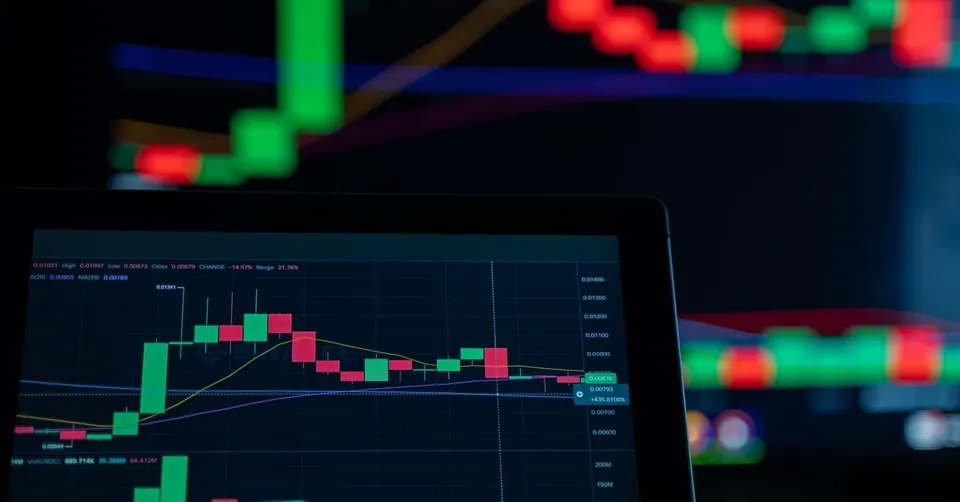
In the local Iranian market, this global stability reflects in the USDT/Toman rate. With USD sell prices at 193,500 Toman and USDT at 191,208 Toman, the spread remains a key indicator of local demand. Even as global retail sales in places like Great Britain are driven up by heatwaves and sporting events, the Iranian investor remains focused on the hedge. When global tech bubbles burst, the flight to 'hard' digital assets becomes more pronounced. Bitcoin is no longer just a 'risk-on' asset; for many, it is becoming the life raft when the traditional tech-heavy lifeboats start taking on water.
Why This Matters for Your Portfolio
The takeaway from this midday session is clear: the world is in a tug-of-war between centralization and decentralization. Whether it's the UK government trying to spread its power or the EU trying to centralize its control over crypto users, the theme remains the same. As an investor, your goal should be to minimize your 'counterparty risk.' Every time you rely on a single entity—be it a bank, a centralized exchange, or a single geographic economy—you are exposed.
Diversification in 2026 isn't just about owning different stocks; it's about owning different types of systems. By balancing local assets like Gold 18k (currently at 18,860,519 Toman) with decentralized assets like Bitcoin, you are essentially building your own 'No 10 North'—a personal economic council that doesn't rely on any single central gatekeeper to survive. Keep a close eye on the Fed meeting next week; that will be the next major test for this newfound resilience in the crypto markets.
Watch
Who's to blame for 'prisons crisis' as Burnham pauses early release scheme? | The Cathy Newman Show
Sky News
Frequently Asked Questions
چرا انتقال دفتر نخستوزیری بریتانیا به منچستر برای یک معاملهگر کریپتو مهم است؟
آیا ممنوعیت جدید اتحادیه اروپا برای بلاروس، خطری برای کاربران ایرانی دارد؟
چرا بیتکوین برخلاف سهام شرکتهای هوش مصنوعی (Tesla/Alphabet) سقوط نکرد؟
تفاوت قیمت دلار و تتر در بازار امروز تهران نشاندهنده چیست؟
The Decentralization Paradox: When Autonomous Systems Meet State Control
Decentralization, at its core, refers to the distribution of power and control away from a central authority. In the digital realm, particularly with blockchain technology and cryptocurrencies, it promises a world where transactions are peer-to-peer, transparent, and resistant to censorship, operating without the need for traditional intermediaries like banks or governments. This vision appeals to those seeking greater financial autonomy and less reliance on centralized institutions, embodying a spirit of individual empowerment and global connectivity.
However, this promise of absolute decentralization presents a profound paradox when it confronts established state structures and their inherent need for control. Governments and central banks are fundamentally designed to maintain financial sovereignty, manage monetary policy, ensure economic stability, and enforce laws. A truly decentralized financial system, operating beyond their purview, challenges these core functions, raising concerns about illicit finance, tax evasion, consumer protection, and the potential for systemic risks that could destabilize national economies.
This tension leads to what we observe as the "decentralization paradox": while the technology aims to be borderless and unregulated, its real-world impact forces a response from sovereign states. Regulations like the EU's Markets in Crypto-Assets (MiCA) framework are direct attempts to bridge this gap, aiming to impose structure, accountability, and oversight on a system designed to resist it. These regulatory efforts represent a reassertion of state control, seeking to integrate decentralized finance into existing legal and economic frameworks, even if it means compromising some of its foundational principles. This ongoing struggle defines a critical frontier in the evolution of both technology and governance.