
How to Spot a Real Store of Value: Navigating Global Volatility and the 270 Million Toman Coin
تشخیص دارایی امن در آشفتهبازار؛ چگونه در روزهای نوسان، طلای واقعی را از حباب جدا کنیم؟
With $1 billion in crypto liquidations and Bitcoin ETFs seeing $261M in outflows, the search for a stable store of value is more urgent than ever. Learn the concrete steps to evaluate your assets as the Toman faces fresh pressure and gold hits new local highs.
At time of publishing
USD
267,200
Toman
Gold 18K
26.29M
Toman / gram
Bitcoin
$81,223
US Dollar
Tether
266,101
Toman
The Liquidation Trap and the Institutional Signal
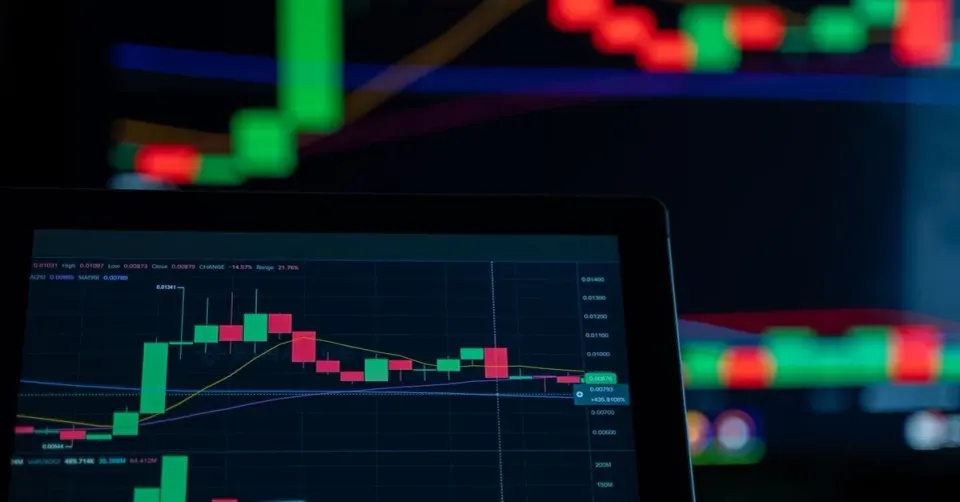
Today, Thursday, October 15, 2026, the global markets are providing a masterclass in risk. Bitcoin ETFs have recorded a staggering $261 million in net outflows since Monday, signaling a sharp retreat by institutional investors. This isn't just a random dip; it follows a week where $681 million was already pulled back. For the Iranian investor, who often views Bitcoin as a digital lifeboat against Toman depreciation, this institutional exodus is a loud warning. When the 'smart money' exits, it usually means they anticipate a period of low liquidity or high macro uncertainty.
Simultaneously, the market witnessed nearly $1 billion in crypto liquidations as prices for major assets like Ether and XRP slid. This massive wipeout of leveraged positions proves that volatility is the enemy of a store of value. A true store of value shouldn't just have the potential to go up; it must have the resilience to not disappear overnight. If your 'safe' asset can lose 10% of its value because of a liquidation cascade in a single afternoon, you aren't holding a store of value—you are holding a speculative ticket.
The Macro Filter: From Lithium to Geopolitics
To evaluate a store of value, you must look beyond the price ticker. Consider the recent 14% plunge in lithium prices following the EU-China trade deal. This collapse happened because 'demand fears' overrode the intrinsic utility of the metal. A similar logic applies to your portfolio in Iran. Are you buying an asset because it has a global, unchanging utility, or because of a temporary hype cycle? Even strategic assets like lithium can fail as a store of value when geopolitical shifts—like protectionist measures between major blocs—rewrite the rules of the game.
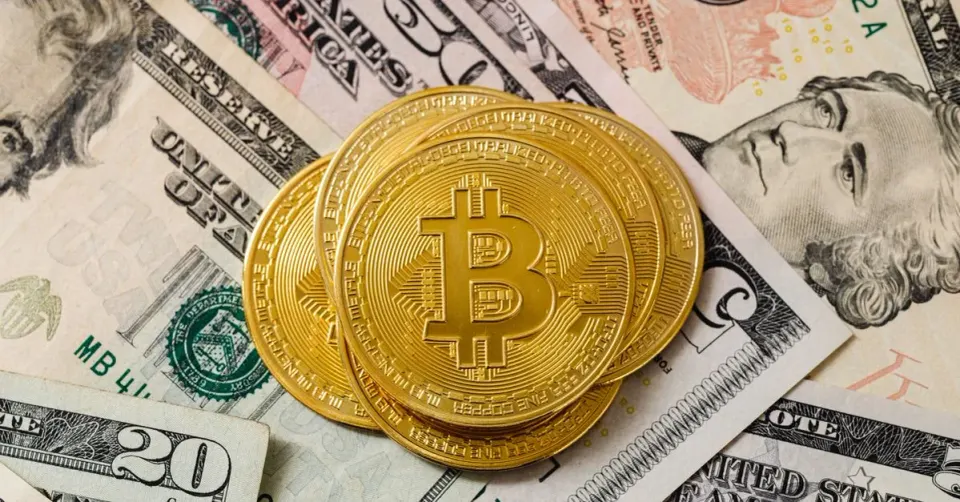
Furthermore, seemingly unrelated global events like the UK's hardening stance on migration or human rights crackdowns in West Africa contribute to a 'risk-off' environment. When global tensions rise, capital flows back to the most liquid and historically proven havens. This is why, despite the crypto chaos, we see the USD/IRR rate climbing 0.8% today to 267,200 Toman and the Emami coin rising to 270,000,000 Toman. In times of uncertainty, the market returns to what it knows best: hard currency and physical gold.
The Three-Step Evaluation for the Iranian Investor
How do you decide if your next purchase is a sound store of value? First, check the 'Liquidity at Scale.' Can you sell 1 billion Toman of this asset in under ten minutes without crashing the local price? Today, gold and USDT pass this test, while many mid-cap altcoins do not. Second, analyze the 'Correlation to the Toman.' On October 15, 2026, as the Toman weakened, gold 18k rose 0.6% to over 26.2 million Toman per gram. A good store of value for an Iranian must move inversely to the Rial's purchasing power.
Finally, look at the 'Global Floor.' Bitcoin’s current support at $81,223 is being tested by ETF outflows, but it remains a globally recognized asset. Contrast this with local speculative bubbles. If you are buying a specific coin or a physical asset that has no market outside of Iran, you are taking on 'sovereign risk.' To hedge effectively without large capital, focus on fractional gold or USDT, ensuring that your wealth is tied to global benchmarks rather than local sentiment alone. This disciplined approach is what separates those who survive a volatile October from those who see their savings evaporate in liquidations.
Concept Diagram
Frequently Asked Questions
Why are Bitcoin ETFs seeing outflows while the price is at $81,000?
Is the 270 million Toman price for Emami coin a bubble?
How did the EU-China trade deal affect lithium, and why does it matter to me?
What is the safest way to hedge against Toman depreciation with small capital?
Understanding 'Store of Value' in Volatile Times
In an era marked by global economic shifts and local currency fluctuations, the concept of a "store of value" becomes critically important for individuals and investors alike. At its core, a store of value is any asset, commodity, or currency that can be held and exchanged at a later date without significant depreciation in its purchasing power. Unlike a "medium of exchange" (which facilitates transactions) or a "unit of account" (which measures value), a store of value's primary function is to preserve wealth over time, offering a hedge against inflation and economic uncertainty.
Key characteristics define a robust store of value. These include scarcity (its supply cannot be easily increased), durability (it doesn't degrade over time), fungibility (each unit is interchangeable with another), divisibility (it can be easily broken into smaller units), and most importantly, resistance to debasement or manipulation. Historically, precious metals like gold have served this role due to their inherent scarcity and chemical stability. Real estate also often acts as a store of value, though its illiquidity can be a drawback.
In modern times, the search for reliable stores of value has expanded to include digital assets. Bitcoin, for instance, is often touted as "digital gold" due to its fixed supply cap and decentralized nature, which theoretically makes it resistant to government debasement. However, its significant price volatility, as highlighted by recent crypto liquidations and ETF outflows, presents a challenge to its consistent status as a stable store of value. Conversely, traditional currencies like the US Dollar can act as a store of value in some contexts, but their purchasing power can erode over time due to inflation, especially when compared to assets like the Emami coin or gold in economies experiencing high local currency depreciation, such as Iran.
Ultimately, identifying a "real" store of value requires a nuanced understanding of an asset's intrinsic properties, the broader economic environment, and an individual's specific financial goals. What serves as a stable store of value in one market (e.g., gold in Iran amidst Toman depreciation) might behave differently in another. Diversification across various assets, each with different risk profiles and characteristics, is often a prudent strategy to navigate global volatility and protect wealth.