Climbing the Peak of Volatility: What Rapper Aitch and Crypto Sanctions Teach Us About Risk
صعود بر قله نوسان: درسهایی از تحریمهای کریپتو و چالش رپر مشهور برای سرمایهگذاران
Markets, like mountains, require more than just luck to conquer. Today we explore how new EU sanctions on HTX and global retail price wars reflect the same risk-management mindset needed to navigate the current 1.2% dip in gold prices.
At time of publishing
USD
187,300
Toman
Gold 18K
17.93M
Toman / gram
Bitcoin
$64,472
US Dollar
Tether
186,699
Toman
The Endurance of the Investor: A Lesson from the Peaks
To the uninitiated, investing looks like a series of numbers on a screen, but to those in the thick of it, it feels more like a grueling mountain climb. British rapper Aitch recently announced his intention to climb one of the world's highest peaks to raise awareness for the Down's Syndrome Association, inspired by his sister. While his mission is philanthropic, the metaphor for the Iranian investor is striking. Climbing a peak requires endurance, a clear goal, and the understanding that the weather—or the market—can turn against you at any moment.
Today, we see that turn in the local Iranian market. The US Dollar has dipped 0.8% to 187,300 Toman, while Gold 18k and the Emami Coin have followed suit with drops of 1.2% and 1.9% respectively. For many, these red numbers trigger panic, but for the seasoned 'climber,' they are merely a change in the weather. Understanding the 'why' behind these shifts requires looking beyond our borders at the global geopolitical and economic landscape that dictates our local reality.
The Tightening Noose: HTX and the Reality of Global Sanctions
A major signal for the crypto world arrived today as the European Union added the HTX exchange (formerly Huobi) to its Russia sanctions list, with restrictions set to begin on August 23. This isn't just a story about Russia; it is a story about the infrastructure of digital finance. When major platforms like HTX, BitPapa, and Exnode are targeted by the EU, it signals a narrowing of the 'gray zones' that many international users, including those in Iran, rely on for liquidity.
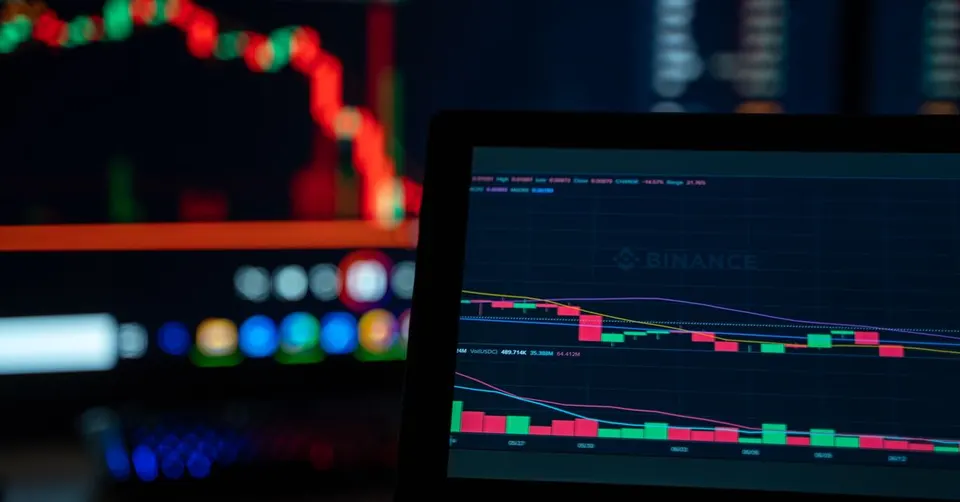
For the Iranian user, this is a reminder that 'decentralization' is often a myth when dealing with centralized exchanges. As the EU tightens its grip to prevent sanction evasion, the risk of frozen assets and blocked accounts increases. This news contributes to a cautious atmosphere in the crypto markets, where Bitcoin hovers around $64,472. It teaches us that regulatory risk is not a ghost story—it is a tangible force that can suddenly cut off access to global capital, making local diversification even more critical.
The Race to the Bottom: Price Wars and Inflationary Pressures
In the traditional retail sector, we see a different kind of struggle. Primark, the high-street giant, is adopting 'supermarket tactics' to survive an online price war against ultra-cheap Chinese retailers. This 'race to the bottom' highlights a global cost-of-living crisis where consumers are forced to choose the cheapest possible option. For an investor, this signals that global profit margins are being squeezed, which often leads to broader economic cooling or, conversely, a desperate search for yield in more volatile assets like gold or crypto.
This global competition for every cent mirrors the struggle of the Iranian household trying to preserve purchasing power. When global giants are panicking over price wars, it suggests that the global economy is in a state of flux. This uncertainty often drives investors toward 'safe havens,' yet even gold isn't immune to short-term volatility, as seen in today's 1.2% drop in 18k gold. It reminds us that no asset is a 'set and forget' solution; even the most stable hedges require active monitoring in a world where retail and tech are being disrupted simultaneously.

Regulatory Whiplash: Lessons from the French Countryside
Finally, we look at the 'regulatory whiplash' happening in France, where beekeepers are furious over the lifting of a ban on certain pesticides. This might seem distant from the Tehran Stock Exchange, but it represents a core investment concept: Political Risk. Governments often make 'irrational' or 'scandalous' reversals—as the French beekeepers put it—to protect specific industries (like sugar beet farmers) at the expense of others.
In the world of finance, an unexpected injury to a star player like Liverpool’s Gomez can overshadow a winning start for a manager like Iraola, just as a sudden policy shift can ruin a perfectly planned investment strategy. Whether it is a change in pesticide laws in Europe or a shift in currency regulations in Tehran, the lesson is the same: the 'rules of the game' are never permanent. Diversification is not just about having different assets; it is about being protected against the sudden, irrational changes of those in power. As we navigate today's slight market cooling, remember that the peak is reached not by those who ignore the wind, but by those who adjust their sails.
Frequently Asked Questions
Why did the EU add HTX to its sanctions list?
How does the drop in USD and Gold today affect my long-term strategy?
What is the 'supermarket tactic' mentioned in the Primark story?
Can Iranian users still safely use centralized crypto exchanges like HTX?
Understanding Geopolitical Risk in Global Markets
In an increasingly interconnected world, events far removed from one's immediate surroundings can significantly impact personal finances and investment portfolios. This phenomenon is best understood through the lens of Geopolitical Risk, which refers to the uncertainty and potential disruption to markets and economies stemming from political decisions, international relations, conflicts, and policy changes across different nations. From trade wars and sanctions to regional instability and shifts in government policies, geopolitical risk introduces an unpredictable element into economic forecasts and market behavior.
The recent headlines vividly illustrate how geopolitical risk manifests. Sanctions imposed on entities like HTX by the EU, for instance, highlight how regulatory actions driven by political considerations can reshape the landscape for cryptocurrencies and digital assets. Similarly, fluctuations in the gold price in Iran or the USD/IRR exchange rate are often direct consequences of global political tensions, regional instability, or international economic pressures. These events underscore that the value of currencies, commodities, and even individual company stocks are not solely determined by supply and demand, but also by the intricate web of global power dynamics and policy decisions.
For investors, understanding geopolitical risk is paramount for effective risk management. It necessitates looking beyond traditional economic indicators and considering the broader political environment. A sudden escalation of a conflict, the imposition of new tariffs, or a significant policy shift by a major global player can trigger widespread market volatility, causing asset prices to swing dramatically. This volatility can present both challenges and opportunities, but without a grasp of the underlying geopolitical currents, investors are often left reactive rather than proactive.
Ultimately, navigating the complexities of modern financial markets requires more than just financial acumen; it demands a keen awareness of global political dynamics. By recognizing geopolitical risk as a fundamental driver of market movements, investors can better prepare for potential disruptions, diversify their portfolios strategically, and make more informed decisions in an ever-changing world. It's a crucial concept for anyone seeking to understand why markets behave the way they do, especially when seemingly unrelated global events send ripples through their investments.