The Risk Premium: Why Global Political Shifts and Crypto Outflows Are Pushing Tehran Gold Higher
حقالعمل ریسک؛ چرا تغییرات سیاسی جهان و خروج سرمایه از بیتکوین قیمت طلا را در تهران بالا برد؟
While local tensions grab headlines, global shifts—from Australian political leadership changes to massive Bitcoin ETF outflows—are reshaping investor risk appetite. Learn how these seemingly distant events directly impact the price of your Gold and USD in Tehran today.
At time of publishing
USD
193,600
Toman
Gold 18K
18.75M
Toman / gram
Bitcoin
$64,433
US Dollar
Tether
193,163
Toman
The 'Butterfly Effect' of Global Politics
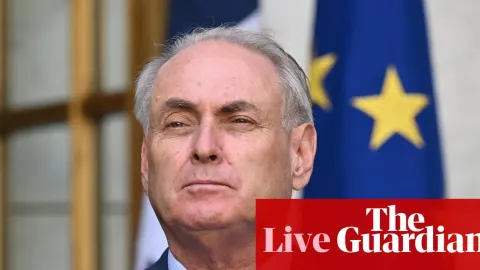
It might seem counterintuitive to look at the state of Victorian politics in Australia when trying to understand why Gold 18k in Tehran rose by 2.2% today. However, the rare public statement by former Premier Daniel Andrews supporting Ben Carroll's leadership bid highlights a broader theme: the search for stability in an increasingly volatile world. Markets loathe uncertainty. When leadership transitions occur—whether in a major Australian state or during a heated US election cycle—investors calculate a 'risk premium.' This is the extra return they demand for holding assets in a world where rules might change overnight.
Combined with extreme climate events, such as the record-breaking heatwaves and wildfires currently racing across France and Spain, the global sense of 'unpredictability' is peaking. When firefighters are struggling to contain blazes before temperatures hit 104 degrees, it reminds the market that supply chains and infrastructure are fragile. For the Iranian investor, this global anxiety translates into a stronger appetite for 'hard assets.' This is why we see the Emami coin jumping 1.9% to 187,500,000 Toman; it is not just a local reaction, but a reflection of a world seeking a hedge against chaos.
---
The Crypto Paradox: Ark Invest vs. The Crowd
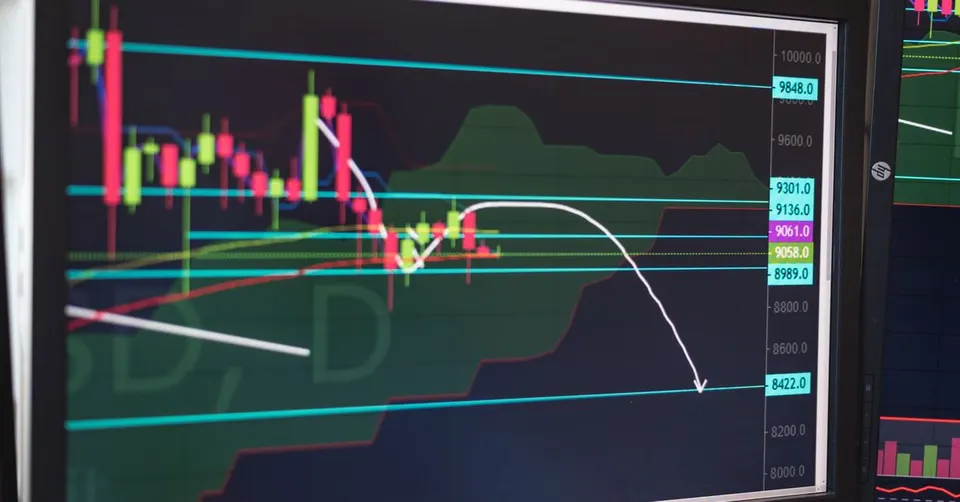
In the digital asset space, we are witnessing a fascinating divergence in how 'smart money' and 'retail money' behave. Today's data shows that US spot Bitcoin ETFs recorded a massive $526 million in outflows over four sessions. This selling pressure contributed to Bitcoin’s inability to hold the $65,000 level, currently hovering around $64,433. To many casual observers, this looks like a retreat. However, look at what the pros are doing: Cathie Wood’s Ark Invest just poured $12 million into SpaceX while trimming its holdings in retail-focused platforms like Robinhood and Block Inc.
This move is a masterclass in risk management. By selling Robinhood and buying SpaceX, Ark is moving away from 'trading volatility' and toward 'frontier infrastructure.' For you as an investor, this signals that the current dip in Bitcoin might be a temporary liquidity flush rather than a fundamental collapse. In Tehran, the USDT price has climbed to 193,163 Toman, tracking the 1.3% rise in the free-market Dollar. Even as Bitcoin struggles globally, the 'Tether-to-Toman' bridge remains a primary escape route for those looking to protect their purchasing power from local currency devaluation.
---
Connecting the Dots: Tehran’s Midday Reality
The local market today is a pressure cooker of both global sentiment and regional headlines. While IRGC state media claimed successful missile strikes on US bases in Jordan—claims the US military stated were successfully intercepted—the market reacted with its usual 'safety-first' stance. The USD sell rate climbed from 191,200 to 193,600 Toman (+1.3%). This isn't just about the news itself; it's about the speed at which the market processes risk.
When you see Gold 18k per gram hitting 18,745,094 Toman, you are looking at a dual-engine rally. On one side, the global ounce is sitting at a staggering $4,035, driven by international central bank moves and safe-haven buying. On the other side, the local Toman is weakening against the Dollar. This 'double leverage' is why gold remains the ultimate inflation hedge in the Iranian context. Understanding that your wealth is tied to both a political statement in Melbourne and a wildfire in Spain might seem overwhelming, but in a globalized economy, everything is connected. The key is to watch the 'risk premium'—when the world feels less safe, gold and hard assets will almost always demand a higher price.

Frequently Asked Questions
Why does an election in Australia affect the price of gold in Iran?
Why is Bitcoin falling while the US Dollar in Iran is rising?
What does Ark Invest's move into SpaceX tell us about the market?
Is the current gold price in Tehran a bubble?
Understanding the Global Risk Premium
The "risk premium" is a fundamental concept in finance, representing the additional return an investor expects or demands for taking on a higher level of risk compared to a risk-free asset. In simpler terms, it's the extra compensation for putting your money into something potentially volatile rather than a guaranteed, low-return investment. This premium isn't static; it fluctuates based on market sentiment, economic conditions, and, crucially, geopolitical stability. When investors perceive greater uncertainty or potential for negative events, they demand a higher risk premium for holding riskier assets like stocks or bonds of particular countries.
In a global context, the "Global Risk Premium" refers to the collective assessment of risk across international markets. Geopolitical shifts, such as regional conflicts, political instability in major economies, or trade wars, significantly heighten this perceived global risk. When this premium rises, investors tend to shy away from assets deemed riskier and gravitate towards "safe-haven assets." These are investments expected to retain or increase in value during times of market turbulence, acting as a store of value when other assets decline. Gold is perhaps the quintessential safe-haven asset, alongside certain government bonds or strong reserve currencies.
The phenomenon observed with Tehran gold prices rising amidst global political shifts and crypto outflows perfectly illustrates the dynamics of an increasing global risk premium. As geopolitical tensions mount, the demand for gold as a hedge against inflation and currency depreciation, and as a refuge from broader market instability, naturally increases. Investors, both institutional and individual, seek to protect their wealth by moving into assets traditionally seen as immune to political turmoil or economic downturns. This increased demand, coupled with factors like local currency depreciation (USD/IRR exchange rate) and a shift away from perceived riskier digital assets like Bitcoin (as suggested by ETF outflows), collectively drives up the price of gold in local markets like Tehran.
Therefore, understanding the global risk premium is key to interpreting how seemingly disparate events—from political unrest to shifts in cryptocurrency markets—can converge to influence the price of traditional assets like gold. It highlights the interconnectedness of global finance and the enduring role of safe-haven assets in investor portfolios during uncertain times.