
Bhutan’s Bitcoin Pivot: Why the World’s Most Secretive Treasury is Putting 10,000 BTC to Work
چرخش استراتژیک بوتان؛ چرا مخفیترین خزانهداری جهان ۱۰ هزار بیتکوین خود را به کار انداخت؟
Bhutan is moving beyond simple 'HODLing' by employing market-neutral strategies for its massive Bitcoin treasury. This shift signals a new era for institutional digital assets, offering a masterclass in how to generate yield without selling the underlying asset.
At time of publishing
USD
191,900
Toman
Gold 18K
18.35M
Toman / gram
Bitcoin
$63,527
US Dollar
Tether
192,170
Toman
The Kingdom of Crypto: Bhutan's New Strategy
For years, the Kingdom of Bhutan was the 'quiet giant' of the crypto world, quietly mining Bitcoin using its abundant hydroelectric power. However, today's news from the Gelephu Mindfulness City (GMC) marks a fundamental shift in how nations handle digital wealth. Instead of simply letting 10,000 BTC sit idle in a 'cold' wallet, Bhutan has partnered with 3iQ to manage these assets on a market-neutral basis. This isn't just about 'selling' or 'buying'; it is about turning a static asset into a productive one.
In financial terms, a market-neutral strategy aims to generate returns regardless of whether the price of Bitcoin goes up or down. For an Iranian investor watching the USD/IRR hover at 191,900 Toman, this concept is revolutionary. It suggests that the goal of holding an asset like Bitcoin or Gold shouldn't just be waiting for the price to moon, but finding ways to let that capital 'breathe' and earn yield through lending or sophisticated hedging. Bhutan is essentially treating its Bitcoin like a sovereign wealth fund treats its stocks—not as a speculative bet, but as a tool for national development.

The 'Cramer Effect' and the Quantum Scare
While Bhutan moves toward institutional maturity, retail sentiment remains volatile, often swayed by loud voices in the media. Today, Jim Cramer of CNBC sparked a minor 'quantum panic,' claiming he is dumping his Bitcoin due to fears that quantum computing might one day crack the encryption. Yet, Bitcoin has held remarkably steady around the $63,527 mark. This disconnect highlights a crucial lesson for the Arzbin community: professional money (like Bhutan's) focuses on current utility and risk management, while retail often reacts to hypothetical, far-future threats.
Quantum computing is a favorite 'boogeyman' for those looking to justify market exits, but the reality is that the network's security protocols are constantly evolving. If you look at the price action today, where USD/IRR remained flat at 191,900 and Gold 18k saw a minor dip of 0.1%, it’s clear that the local market is more concerned with immediate geopolitical realities than theoretical tech collapses. When a famous media personality suggests a 'panic sell,' it often serves as a contrarian indicator for seasoned traders who see it as a sign of a local bottom.
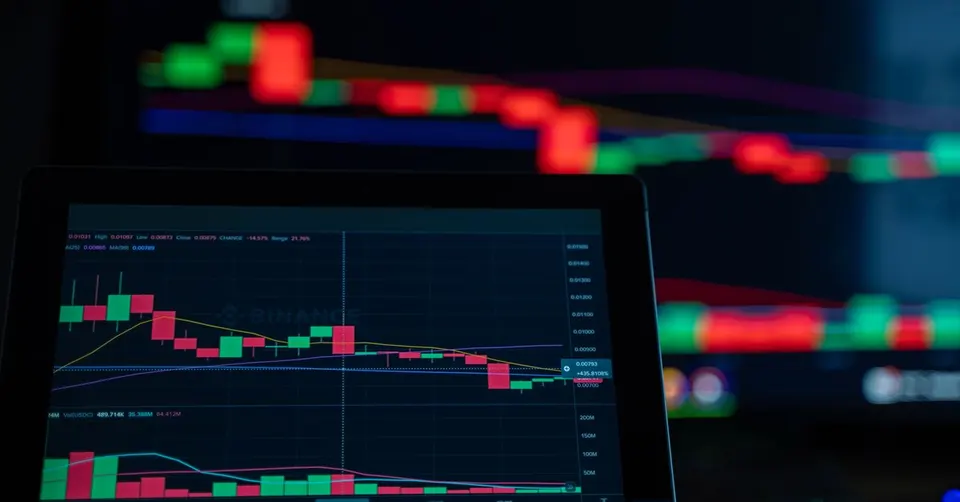
Geopolitics, Tariffs, and the Iranian Context
Global events continue to exert pressure on the local Toman rate. Donald Trump’s recent claims that negotiations with Iran are ongoing, coupled with his warning of a 'last chance' regarding the Strait of Hormuz, create a backdrop of high-stakes uncertainty. This is further complicated by domestic US politics, where record-breaking spending by groups like AIPAC in Michigan’s Senate primary—reaching $30 million—shows how deeply Middle Eastern policy is intertwined with American electoral cycles. For the Iranian reader, this means the 'risk premium' on the Dollar is unlikely to vanish soon.
Even seemingly unrelated stories, like a Florida candidate being accused of 'stiffing' a student out of scholarship money, remind us of the fundamental importance of counterparty risk. Whether you are a student waiting for an $8,000 prize or an investor holding USDT at 192,170 Toman, the reliability of the platform or entity you trust is paramount. In a world of shifting tariffs and potential trade wars, as seen in the 25 US states suing over new levies, holding 'hard' assets like Bitcoin or Gold becomes less about getting rich and more about surviving the friction of global finance.
The Deflationary Engine: Solana’s Big Move
While Bitcoin acts as digital gold, other networks are trying to optimize their internal economies. A new proposal for Solana, SGP-0003, aims to increase daily SOL burns from $47,000 to $650,000. For the uninitiated, 'burning' tokens is the crypto equivalent of a stock buyback. It reduces the total supply, making each remaining token theoretically more valuable. This is the exact opposite of what happens to fiat currencies under high inflation, where the 'supply' of money increases, diluting the purchasing power of every Toman in your pocket.
Understanding these mechanisms—yield generation in Bhutan, sentiment cycles with Cramer, and deflationary burns in Solana—is key to moving from a beginner to an intermediate investor. Today’s market data, with Emami coins holding steady at 185,000,000 Toman, suggests a period of consolidation. Investors aren't panicking, but they are watching. By observing how a nation-state like Bhutan manages its treasury, we can learn to treat our own portfolios with the same level of strategic discipline: prioritize security, look for yield, and ignore the noise.
Concept Diagram
Frequently Asked Questions
What is a market-neutral strategy in crypto?
Why is the USDT price in Toman higher than the paper Dollar?
Is quantum computing a real threat to Bitcoin today?
How does 'token burning' affect my investment?
Understanding Market‑Neutral Strategies in Crypto Asset Management
A market‑neutral strategy is an investment approach that seeks to generate returns regardless of overall market direction. By simultaneously holding long (buy) and short (sell) positions in related assets, the portfolio’s net exposure to market movements is minimized. The goal is to profit from the price spread between the two legs, rather than from the market’s upward or downward trend. This concept, long used in equities and fixed‑income, has been adapted to the fast‑moving world of digital assets, where price volatility is extreme and traditional hedging tools are scarce.
In the crypto arena, market‑neutral tactics often involve pairing a volatile coin like Bitcoin with a stablecoin such as USDT, or taking opposite positions on correlated tokens (e.g., long Bitcoin, short Ethereum). Sophisticated traders may also use futures, options, or decentralized finance (DeFi) protocols that allow automated shorting. By balancing the positions, the net beta – the sensitivity to overall crypto market swings – approaches zero, leaving the strategy’s performance tied to the relative price movements of the chosen pair.
Sovereign entities like Bhutan’s treasury find market‑neutral crypto strategies attractive for several reasons. First, they provide exposure to the upside potential of Bitcoin without the full downside risk that a pure long position would entail. Second, the strategy can generate steady yield when paired with high‑interest lending platforms or liquidity mining programs, turning otherwise idle assets into productive capital. Finally, a market‑neutral stance aligns with a treasury’s mandate to preserve capital while seeking modest, diversified returns.
However, market‑neutral crypto investing is not risk‑free. Liquidity constraints on smaller exchanges can make it difficult to unwind short positions without slippage. Counterparty risk is heightened in DeFi, where smart‑contract bugs or platform insolvency can erode returns. Moreover, regulatory uncertainty may affect the availability of futures or short‑selling mechanisms. Practitioners must therefore combine rigorous risk management, transparent reporting, and robust on‑chain analytics to ensure the strategy truly remains neutral.