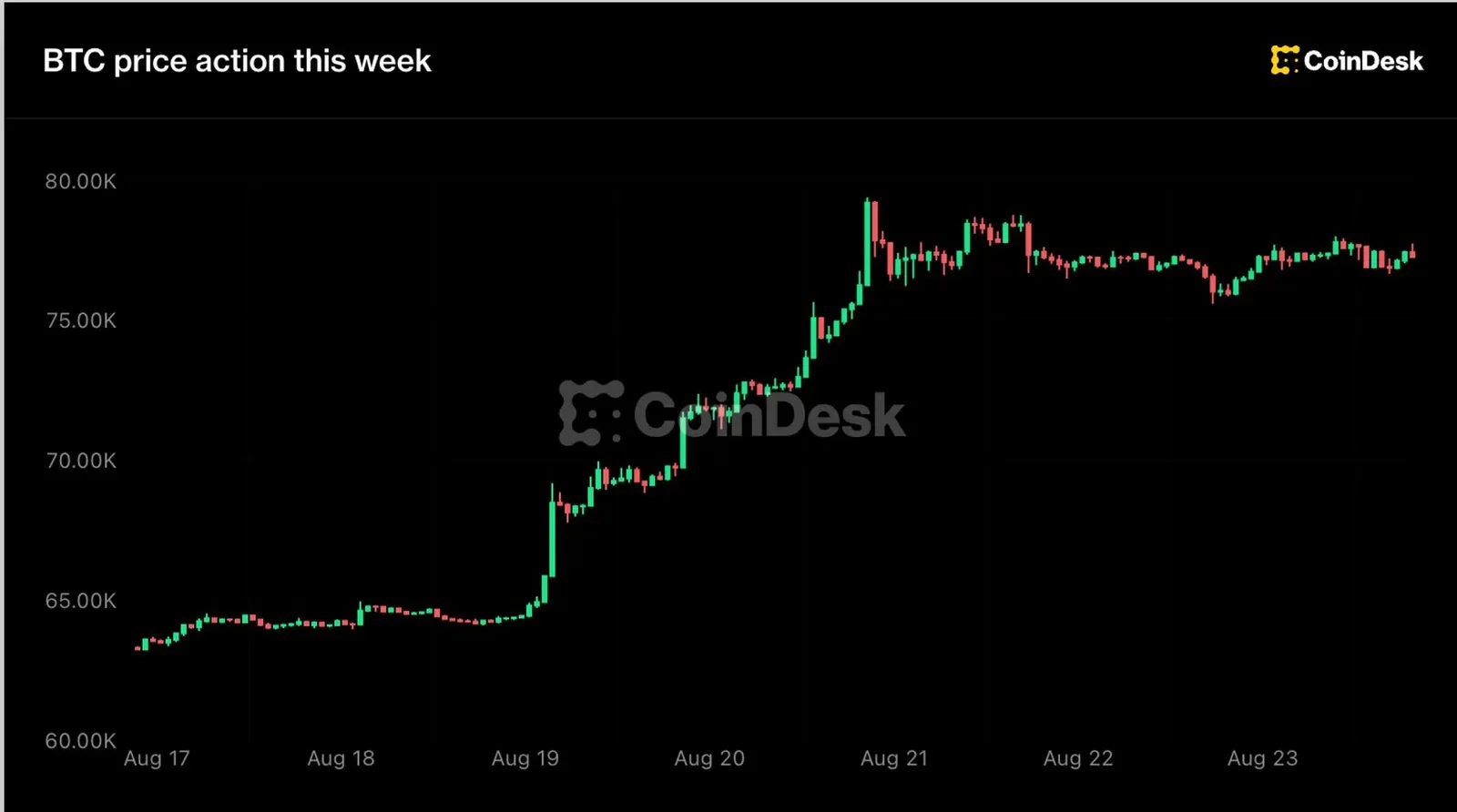
Bitcoin at $77k Meets Toman at 200k: Why Global Volatility is Hitting Iranian Pockets
بیتکوین ۷۷ هزار دلاری و تومان ۲۰۰ هزار تومانی؛ چرا تلاطم جهانی به جیب ایرانیها رسید؟
As Bitcoin holds steady at $77,000 and the Toman crosses the historic 200,000 mark, a perfect storm of global trade wars and central bank shifts is brewing. We explain why 'Jackson Hole' matters to you and how the ETH 'Golden Cross' signals a shift in the crypto market.
At time of publishing
USD
203,500
Toman
Gold 18K
22.20M
Toman / gram
Bitcoin
$77,262
US Dollar
Tether
201,457
Toman
The $77,000 Bitcoin and the 'Golden Cross'
Bitcoin has just finished its second-best week since early 2021, holding firm at $77,262. But the real story isn't just the price; it's the momentum. While Bitcoin leads, Ethereum is showing signs of outperforming its older brother. Analysts point to a "Golden Cross" in the ETH/BTC ratio—a technical signal where a short-term moving average crosses above a long-term one. For the average investor, this suggests that the market's "risk-on" appetite is growing, and money is flowing into more diverse crypto assets beyond just the market leader.
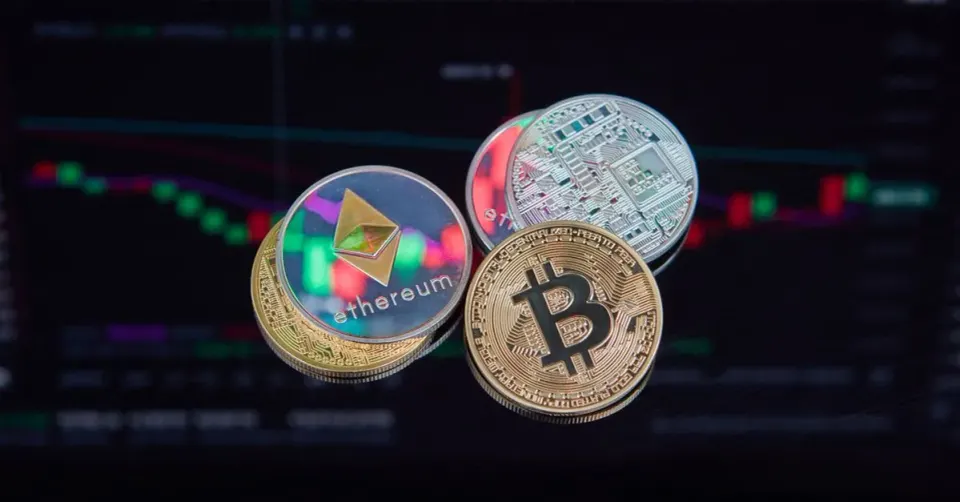
This surge isn't happening in a vacuum. Massive inflows into Bitcoin ETFs and a weakening US dollar have created a favorable environment for digital assets. However, the market is currently catching its breath. With XRP and Zcash pulling back slightly after their recent rallies, traders are looking for the next catalyst. In Iran, this global rally coincides with a significant local milestone: the USD/Toman sell rate reaching 203,500. When global crypto rises and the local currency falls, the "double whammy" effect significantly increases the wealth of those holding digital assets in Toman terms.
Why Jackson Hole Matters in Tehran
This week, all eyes are on the Jackson Hole Economic Symposium, where central bankers gather for their annual retreat. This year is particularly significant because it marks the debut of the new Fed Chair, Kevin Warsh. Why should someone in Tehran care about a meeting in the American mountains? Because the Fed's stance on interest rates dictates the strength of the US Dollar globally. If Warsh signals a "hawkish" or tough stance on inflation, the dollar strengthens, which often puts pressure on emerging market currencies and global commodities.

The current global environment is further complicated by a sudden trade war between the US and Canada. With 50% tariffs being discussed, the stability of global trade is at risk. For Iranians, global instability usually translates into higher gold prices. Today, we see Gold 18k rising to 22,196,315 Toman, a 2.3% increase. When major economies like the US and Canada engage in trade friction, investors worldwide run to "safe havens" like gold and Bitcoin, explaining the synchronized rally we are witnessing in both assets.
Navigating the Toman’s 200k Milestone
The Toman has officially entered the 200,000 range per USD, a psychological barrier that fundamentally changes how citizens think about savings. While Iranian officials like Abbas Araghchi have claimed that new US sanctions are merely like watching the "same movie on repeat," the market is reacting with heightened sensitivity. The 2.2% jump in the USD/IRR rate from 199,200 to 203,500 in just 24 hours reflects a deep-seated anxiety about regional stability and the "fuel squeeze" mentioned in global energy reports.
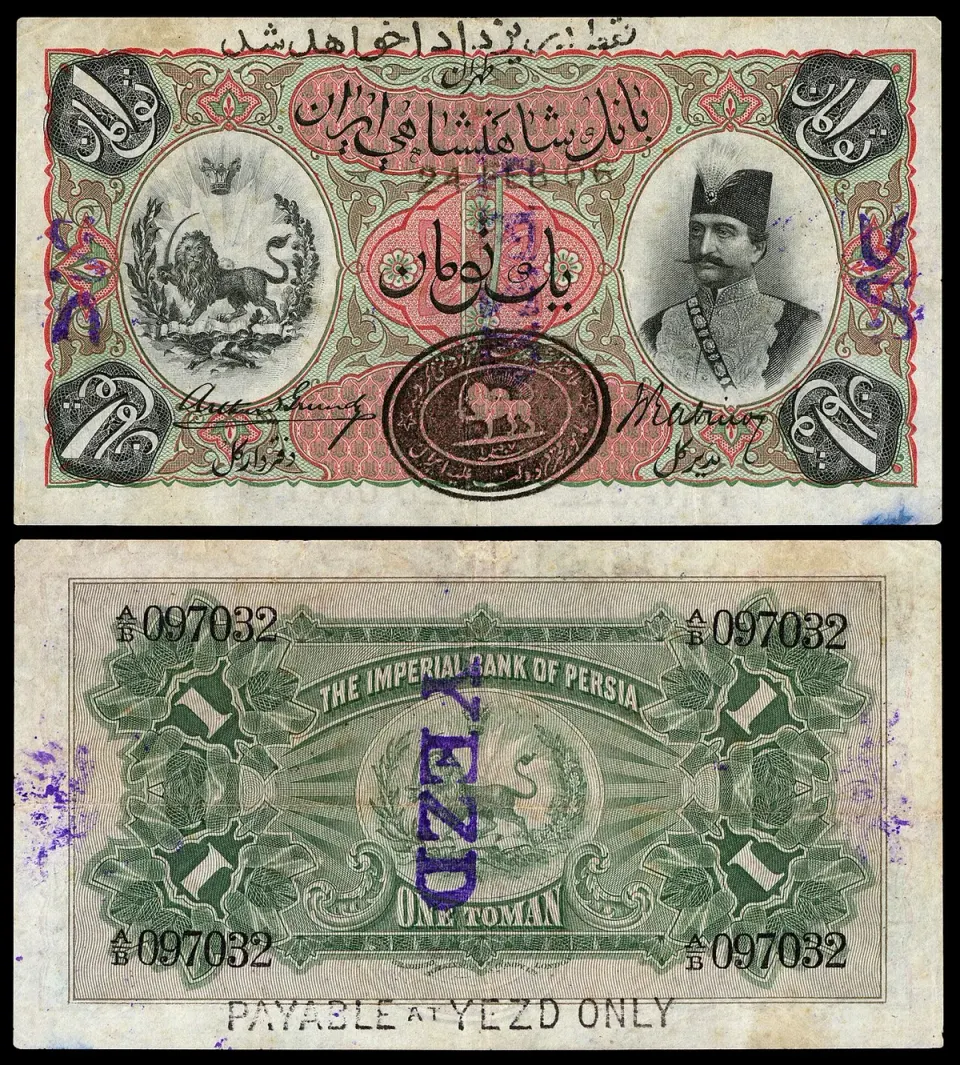
For the Iranian investor, the strategy is shifting from simple saving to active hedging. An "inflation hedge" is an investment intended to protect against the decreased purchasing power of a currency. As the Toman loses value, holding assets denominated in USD (like USDT) or global commodities (like Gold) becomes a necessity for wealth preservation. Understanding that Bitcoin at $77,000 is part of a global flight to quality helps us realize that our local price spikes are not just domestic issues—they are tied to a massive, interconnected global shift in risk management.
Concept Diagram
Frequently Asked Questions
What is the 'Golden Cross' mentioned in the Ethereum analysis?
How does the Jackson Hole meeting affect the price of the Toman?
Why is gold rising alongside Bitcoin today?
Is the 200,000 Toman per Dollar rate expected to stay?
Currency Depreciation and the Quest for Wealth Preservation
When a nation's currency rapidly loses value, it's experiencing currency depreciation. This phenomenon occurs when the exchange rate of a currency falls significantly against other major currencies, or when its purchasing power within the domestic economy diminishes due to high inflation. Factors contributing to severe depreciation often include economic instability, geopolitical tensions, sanctions, mismanagement of monetary policy, and a lack of public trust in the government's economic stewardship. The immediate consequence is that it takes more units of the local currency to buy the same amount of foreign goods or services, making imports prohibitively expensive and eroding the value of domestic savings.
For ordinary citizens, currency depreciation translates directly into a loss of purchasing power and a rapid erosion of their wealth. Savings held in the depreciating currency quickly become worthless, and real wages plummet as prices for essential goods and services skyrocket. This situation forces individuals and households to seek alternative ways to preserve their hard-earned assets. They look for "inflation hedges" – assets that are expected to retain or increase their value during periods of high inflation or economic uncertainty, thereby protecting wealth from the local currency's decline.
Historically, gold has been the quintessential inflation hedge, prized for its intrinsic value, limited supply, and global acceptance. In times of economic turmoil, demand for gold typically surges as investors flock to its perceived safety. More recently, cryptocurrencies like Bitcoin have emerged as a modern alternative. Bitcoin, with its decentralized nature, fixed supply cap, and global accessibility, offers a digital form of wealth preservation, particularly appealing in economies with strict capital controls or a profound lack of trust in traditional financial systems. Its value is not tied to any single government or central bank, making it an attractive refuge when local currencies are in freefall.
The situation described in the headline, with the Iranian Toman reaching 200,000 against the dollar while Bitcoin hits new highs, perfectly illustrates this dynamic. Faced with severe currency depreciation and persistent inflation, Iranian citizens, like those in other high-inflation economies, are compelled to explore avenues beyond their national currency to safeguard their financial future. This global volatility, amplified by local economic pressures, directly impacts their pockets, driving them towards assets like gold and cryptocurrencies in a desperate bid to preserve their wealth.