From Boardrooms to Blockchains: What the $1.6B Hong Kong Crypto Scandal Teaches Every Investor
از بانکداری تا بلاکچین: درسهای کلاهبرداری ۱.۶ میلیارد دلاری هنگکنگ برای سرمایهگذاران
A former banker's four-year sentence for $1.6 billion in false credit and crypto bribes highlights the growing intersection of traditional finance and digital assets. We explore why these scandals happen and how you can protect your capital in an increasingly complex market.
At time of publishing
USD
230,700
Toman
Gold 18K
23.69M
Toman / gram
Bitcoin
$81,451
US Dollar
Tether
228,590
Toman
The $1.6 Billion Mirage
In a case that has sent shockwaves through the financial hubs of Asia, a former banking official in Hong Kong was recently sentenced to four years in prison. The crime? Orchestrating a massive $1.6 billion scheme involving false letters of credit and accepting nearly $470,000 in cryptocurrency bribes. This isn't just a story about a corrupt official; it is a masterclass in how the perceived 'anonymity' of digital assets is being tested by modern law enforcement. For the average investor, it serves as a stark reminder that even within the walls of regulated institutions, the allure of quick, untraceable gains can lead to catastrophic failures.
What makes this case particularly fascinating is the bridge between traditional 'paper' fraud—false credit lines—and the high-tech world of crypto. The official believed that by taking bribes in digital currency, he could bypass the traditional banking surveillance that flags large cash deposits. However, as Bitcoin and other assets move closer to the mainstream, the tools used to track them have become incredibly sophisticated. The very blockchain that enthusiasts praise for its transparency is the same ledger that eventually provided the digital breadcrumbs leading to this banker's downfall.
The Irony of Blockchain Transparency
One of the most common misconceptions among new investors—and apparently, some corrupt bankers—is that cryptocurrency is a 'black hole' for money. In reality, most public blockchains are the exact opposite: they are permanent, immutable ledgers that anyone can audit. While your name isn't directly attached to a wallet address, your behavior is. When a large sum of USDT or Bitcoin moves from a suspicious source to an exchange where you've verified your identity (KYC), the mask slips. This is likely how the $470,000 bribe was eventually linked back to the official’s activities.
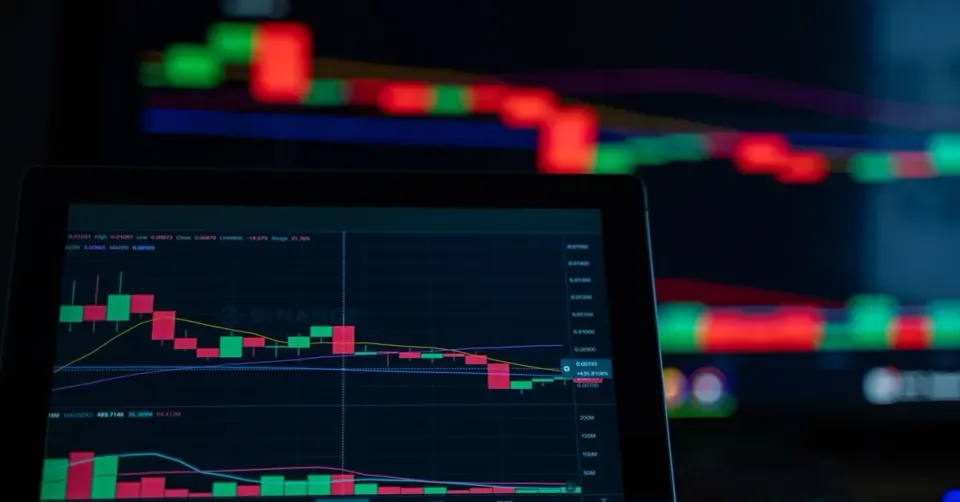
This transparency is a double-edged sword. For the global financial system, it provides a level of accountability that physical cash never could. For the individual investor, it means that the 'safety' of a platform or a person shouldn't be judged by their title or the prestige of their office, but by the verifiable data on the chain. As we see in today's market, with Bitcoin trading at $81,451 and the local Toman price for USDT sitting at 228,590, the stakes are higher than ever. When prices are high, the 'bad actors' become more creative in their attempts to siphon off value through 'guaranteed' investment schemes.
Protecting Your Capital in a High-Risk Environment
Closer to home, the Iranian market is feeling the heat of global volatility. Today, the USD sell rate rose to 230,700 Toman, a 0.9% increase, while Gold 18k climbed 1.0% to reach 23,685,304 Toman per gram. In such an environment, the 'inflation hedge' narrative of crypto is incredibly attractive. However, stories like the $1.1 million loss reported by an investor on a fake platform (News Index 7) remind us that the biggest risk isn't market volatility—it's human deception. If an executive from a major bank or a 'new revolutionary platform' promises you returns that seem impossible, they usually are.

To navigate this, investors must adopt a 'trust but verify' mindset. Use reputable exchanges, avoid keeping large sums on platforms you don't fully control, and never send funds to 'verified' individuals who promise to trade on your behalf. The 1.7% jump in Emami coin prices today to 236,000,000 Toman shows that Iranians are still flocking to 'hard' assets. Whether you choose gold or crypto, the rule remains the same: the more someone tries to hide the mechanics of how they make money, the faster you should run in the opposite direction. Technology like AI is making these scams more convincing, but the fundamental red flags remain unchanged.
The Future of Regulated Digital Assets
As Hong Kong and other financial centers tighten their grip on crypto regulations, we are entering an era of 'Institutional Crypto.' This means more oversight, but also more safety for the retail user. The jailing of this banker is a signal that the 'Wild West' days are being reined in. For the Iranian user, who often operates in a gray zone due to sanctions, this global trend toward regulation is a double-edged sword. It makes it harder to use certain platforms, but it also cleans up the ecosystem by removing the most blatant scammers.
In the coming years, we expect to see more 'physical AI' startups, like Vantora (News Index 8), integrating with financial systems to automate compliance and fraud detection. While technology can be used to deceive—as seen with AI 'hallucinations' nearly triggering military operations (News Index 23)—it is also our best defense. By understanding the tools of the trade and staying informed through reliable data, you can ensure that your hard-earned Toman doesn't end up as a footnote in someone else's $1.6 billion scandal.
Concept Diagram
Frequently Asked Questions
آیا ارز دیجیتال واقعاً قابل ردیابی است؟
چرا با وجود ریسک کلاهبرداری، قیمت دلار و طلا در ایران صعودی است؟
چگونه بفهمیم یک پلتفرم سرمایهگذاری کریپتو کلاهبرداری است؟
Understanding Centralized Risks in the Cryptocurrency Ecosystem
The recent $1.6 billion Hong Kong crypto scandal, like many others, highlights a critical distinction often overlooked by investors: the difference between the inherent transparency of a blockchain ledger and the potential for opacity and fraud within the centralized entities built upon it. While the underlying blockchain technology offers an immutable and auditable record of transactions, many popular cryptocurrency services, including exchanges and stablecoin issuers, operate as centralized businesses. These centralized points introduce traditional financial risks that blockchain technology alone cannot eliminate.
Stablecoins, such as USDT mentioned in the keywords, are a prime example. Designed to maintain a stable value, typically pegged to a fiat currency like the US dollar, their stability relies heavily on the issuer's ability to hold sufficient reserves to back every coin in circulation. This reserve management is a centralized operation, requiring trust in the issuing company's financial integrity, audit practices, and regulatory compliance. If reserves are mismanaged, insufficient, or misrepresented, the stablecoin's peg can break, leading to significant investor losses.
Fraud and security breaches in the crypto space frequently originate not from a failure of the blockchain itself, but from vulnerabilities in these centralized entities. This could involve insider trading, inadequate cybersecurity measures, poor governance, or outright embezzlement of customer funds or stablecoin reserves. The "transparency" of the blockchain only extends to the on-chain transactions; it doesn't automatically reveal the health of a company's balance sheet or the honesty of its executives.
For investors, understanding this dichotomy is paramount for effective financial risk management. It necessitates rigorous due diligence beyond merely checking a token's price or market cap. Investors must scrutinize the management teams, regulatory frameworks, audit reports (if available and credible), and overall operational security of any centralized crypto service they use, especially for stablecoins. The scandal serves as a stark reminder that even in the age of blockchain, traditional principles of trust and oversight remain crucial.