The Bottleneck Trap: Lessons from Bangkok's Snakes and Brooklyn's Data Centers for Investors
تله گلوگاه: درسهایی از مارهای بانکوک و مراکز داده بروکلین برای سرمایهگذاران
What do a snake catcher in Thailand and an AI data center in New York have in common? They are both hitting the 'bottleneck'—a critical concept that explains why markets like gold and the US dollar move even when demand is high.
At time of publishing
USD
272,000
Toman
Gold 18K
25.64M
Toman / gram
Bitcoin
$78,000
US Dollar
Tether
271,691
Toman
The Booming Business of Risk
In Bangkok, Pinyo Pukpinyo is the city’s most famous snake catcher. Today, his business is booming. As urban sprawl pushes further into nature, snakes are appearing in kitchens, bedrooms, and offices at record rates. But Pinyo has a problem: he is running out of containers. Because he refuses to kill the snakes, his success has created a 'bottleneck.' He has the demand (more snakes to catch) and the skill (he is the best), but he lacks the infrastructure (the boxes) to scale.
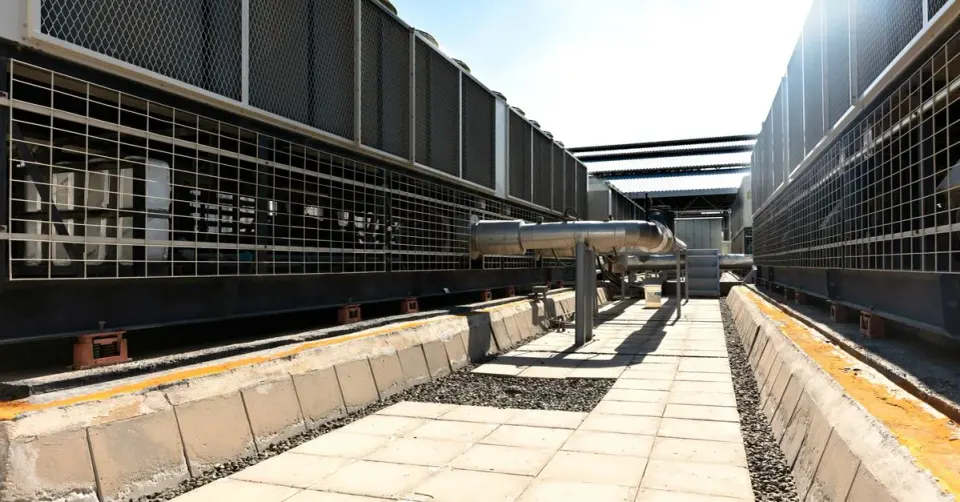
In finance, we call this 'Capacity Risk.' For an investor, seeing a booming industry is only half the battle. You must also ask: where is the bottleneck? Today, Sunday, November 1, 2026, we see this exact phenomenon playing out in global technology. In Brooklyn, data centers have become a massive political issue. Everyone wants AI, but no one has enough electricity to power the massive servers. Like Pinyo’s snakes, AI is growing faster than the 'containers' (the power grid) can hold it.

Why Bottlenecks Drive Market Prices
When a system hits a bottleneck, the price of the 'missing piece' skyrockets. In the technology sector, this has turned energy into a premium asset. In the geopolitical world, diplomacy acts as the ultimate bottleneck. Today, reports suggest that US and Iranian foreign ministers believe a diplomatic end to the war is still possible. Diplomacy is the narrow neck of the hourglass; until it opens, trade, oil exports, and regional stability remain trapped.
This tension is visible in today's local market data. The US Dollar (USD) rose from 270,000 to 272,000 Toman (+0.7%) as traders hedge against the uncertainty of these diplomatic 'bottlenecks.' When the path to a solution is narrow and crowded, the price of safety—usually gold or the dollar—tends to climb. Gold 18k followed suit, rising from 25,358,973 to 25,635,994 Toman per gram (+1.1%). These aren't just random fluctuations; they are the market’s way of pricing the difficulty of moving through a crisis.
The Investor’s Strategy: Spotting the Squeeze
To be a successful investor in the 2026 landscape, you must look for the 'missing container.' For example, while Bitcoin sits at a strong $78,000, the bottleneck for crypto isn't demand—it's security and regulation. The recent $6.3 billion Binance hack attributed to North Korea shows that the infrastructure of trust is still the bottleneck for mass adoption.
When you analyze your own portfolio, ask yourself: what is the one thing that could stop this growth? If you are betting on an Iranian economic recovery, the bottleneck is the removal of sanctions. If you are betting on gold, the bottleneck is global interest rates. By identifying the bottleneck before the rest of the market does, you move from being a reactive trader to a strategic investor. Just like Pinyo in Bangkok, you don't want to be the one holding a cobra when you've run out of boxes to put it in.

Concept Diagram
Frequently Asked Questions
چرا مفهوم گلوگاه برای یک سرمایهگذار در ایران مهم است؟
چطور بفهمیم یک دارایی مثل بیتکوین به گلوگاه رسیده است؟
آیا طلا همیشه در زمان وجود گلوگاههای سیاسی گران میشود؟
Understanding Market Bottlenecks and Capacity Risk
A market bottleneck is a critical point of congestion or constraint within a supply chain, production process, or economic system that limits the overall output or flow. Imagine a multi-lane highway suddenly narrowing to a single lane; traffic backs up, causing delays and inefficiencies. In economic terms, bottlenecks can occur anywhere from raw material extraction to manufacturing, transportation, energy supply, or even data infrastructure. They represent a fundamental challenge where demand exceeds the capacity to supply, leading to significant ripple effects across industries.
The consequences of market bottlenecks are far-reaching. For instance, the rapid expansion of AI and data centers creates immense demand for energy and specialized hardware. If the electrical grid infrastructure or the supply of advanced chips cannot keep pace, these become bottlenecks, driving up costs, delaying project completions, and potentially hindering technological progress. Similarly, inadequate economic infrastructure, such as congested ports or inefficient transportation networks, can impede trade, increase logistics expenses, and make goods more expensive for consumers, as seen in various global supply chain disruptions.
For investors, understanding market bottlenecks is paramount. These constraints directly translate into "capacity risk" – the danger that a company or an entire industry cannot meet growing demand due to limited resources or infrastructure. Companies operating within a bottlenecked environment may face higher operating costs, reduced profit margins, and slower growth potential. Conversely, identifying bottlenecks can reveal lucrative investment opportunities in firms that provide solutions, such as new energy technologies, infrastructure development, or innovative logistics platforms, or in companies that are resilient to such constraints.
Ultimately, persistent bottlenecks can have broader macroeconomic implications. They can contribute to inflationary pressures by restricting supply while demand remains high, leading to price increases. They can also stifle economic growth by limiting productivity and investment. Therefore, analyzing potential bottlenecks, from global energy markets to local infrastructure, is a crucial component of a robust investment strategy and a key indicator of economic health.
Topics
Related Articles