
Iran Resumes Flights, Bitcoin Faces Quantum Threat, and Gold Shines as USD Gains
ایران پروازها را از سر میگیرد، بیتکوین با تهدید کوانتومی روبرو، طلا در برابر دلار صعود میکند
Iran’s commercial aviation restarts amid the ongoing war, while Bitcoin grapples with a looming quantum‑computing risk. At the same time, the US dollar climbs 1.2% against the rial and gold prices edge higher, reshaping the Tehran market snapshot.
At time of publishing
USD
155,950
Toman
Gold 18K
17.89M
Toman / gram
Bitcoin
$77,605
US Dollar
Tether
15,356.7
Toman
Iran Restarts Commercial Flights After Two‑Month Hiatus
Tehran’s main international airport welcomed its first commercial aircraft this morning, marking the end of a two‑month suspension that began when hostilities with the United States and Israel escalated. The IRNA report quoted the Civil Aviation Organization saying that airlines from several Middle Eastern carriers have already filed slots, and passengers are expected to see a gradual return of routes to Dubai, Istanbul and Doha. The move is both symbolic and practical: it signals the government’s attempt to normalize daily life and to generate hard‑currency earnings at a time when sanctions have strangled tourism and trade.
The resumption comes despite ongoing missile exchanges over the Persian Gulf, suggesting that Tehran believes the risk to civilian aviation is manageable. Analysts warn that any accidental strike on civilian airliners could trigger a diplomatic flashpoint, especially if foreign carriers are involved. For Iranian citizens, the news offers a rare glimpse of normalcy, but it also underscores the regime’s reliance on domestic propaganda to portray resilience.
Bitcoin’s Quantum Countdown: A 6.9‑Million‑BTC Threat
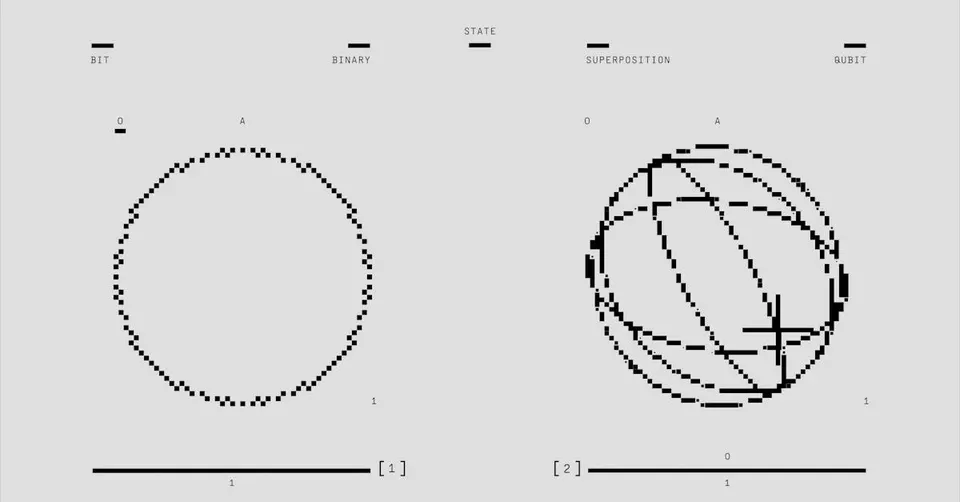
A new technical paper circulated on cryptography forums, warning that a sufficiently powerful quantum computer could, in theory, break the elliptic‑curve signatures that protect Bitcoin’s blockchain. Researchers estimate that up to 6.9 million BTC—including the famed Satoshi’s coins—could be vulnerable if a quantum adversary can execute a Shor’s algorithm attack before the network upgrades its post‑quantum safeguards. The urgency stems from the fact that Bitcoin’s consensus mechanism has never undergone a hard fork for such a fundamental cryptographic overhaul.
Industry leaders are debating whether to adopt lattice‑based signatures or other quantum‑resistant schemes, but any change would require near‑universal node participation to avoid a split. Meanwhile, investors remain cautious; spot Bitcoin ETFs have continued to attract inflows, yet the quantum risk adds a new layer of systemic uncertainty that could dampen long‑term confidence. For traders in Tehran, where Bitcoin trades at $77,605, the threat is a reminder that digital assets are not immune to frontier‑technology challenges.
Dollar Gains, Gold Gains: Tehran’s Market Snapshot
The Iranian market saw the US dollar rise from 154,050 to 155,950 IRR, a 1.2 % increase over the past 24 hours, while gold’s 18‑karat price climbed from 17,728,888 to 17,893,023 Toman (+0.9 %). The USD rally reflects renewed appetite for safe‑haven currency amid the volatile Middle‑East backdrop, as investors hedge against possible escalations in the Iran‑US confrontation. Conversely, gold’s modest rise signals that local investors are also turning to precious metals as a store of value, especially after the recent announcement that Iran’s Vice President Mohammad Reza Aref promised a “more magnificent” reconstruction of the country.
For everyday Iranians, the dual pressure of a stronger dollar and pricier gold squeezes household budgets, already strained by inflation and sanctions. The Emami coin—a popular domestic digital token—slipped 0.6 % to 175,000,000 Toman, suggesting that even alternative assets are feeling the macro‑economic drag. Traders should watch the USD/IRR corridor closely; a breach of the 156,000 mark could trigger further devaluation pressures.
Tech Leadership Shifts: Apple, Best Buy and Lululemon Name New CEOs
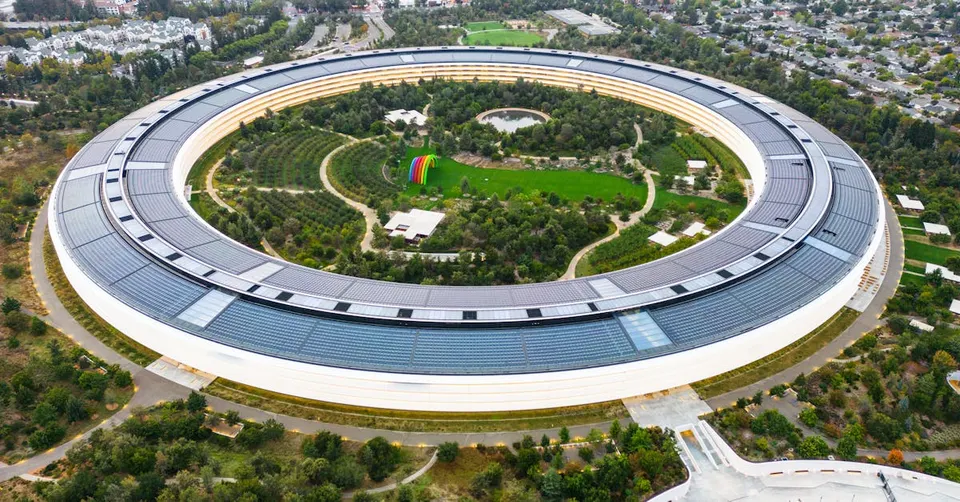
In a wave of executive reshuffles, Apple appointed a veteran of its Services division as CEO, while Best Buy and Lululemon each installed leaders with backgrounds in digital transformation. MarketWatch argues that these appointments reflect a broader industry trend: companies are betting on leaders who can navigate a “more chaotic world” marked by supply‑chain disruptions, AI integration and shifting consumer habits. Apple’s new chief, for instance, is expected to double down on subscription revenue, a strategy that could reshape the tech ecosystem and influence global chip demand.
The significance for Iranian investors lies in the indirect impact on the Tehran stock market. Many local funds hold ADRs of these firms, and any shift in corporate strategy can affect portfolio performance and, by extension, the rial’s stability. Moreover, the tech sector’s focus on AI—highlighted by recent OpenAI controversies—continues to ripple through policy debates in Tehran, where regulators are wrestling with the balance between innovation and national security.

Frequently Asked Questions
Why did Iran decide to resume commercial flights now?
What is the quantum threat to Bitcoin?
How does the USD rise affect everyday Iranians?
What do the new CEOs at Apple, Best Buy and Lululemon mean for investors?
Quantum Computing Threat to Bitcoin's Security
Bitcoin relies on elliptic‑curve cryptography (ECC) to secure transactions and control ownership of coins. Each user holds a private key that, when combined with the public key embedded in a transaction, proves they are authorized to spend the associated bitcoins. The security of ECC rests on the mathematical difficulty of the discrete logarithm problem, which classical computers cannot solve in a reasonable time.
A sufficiently powerful quantum computer could change that picture dramatically. Using Shor's algorithm, a quantum machine can factor large numbers and compute discrete logarithms exponentially faster than any classical computer. In practice, this means that a quantum computer with enough qubits could derive a Bitcoin private key from its public key in seconds, effectively allowing an attacker to forge signatures and steal funds.
Current estimates suggest that breaking Bitcoin's ECC would require a quantum computer with on the order of a few thousand logical qubits, far beyond the capabilities of today’s noisy intermediate‑scale quantum (NISQ) devices. However, research is progressing rapidly, and some experts warn that a “quantum‑ready” horizon could appear within the next decade. This timeline creates a race between the Bitcoin community and quantum researchers to adopt post‑quantum cryptographic schemes, such as lattice‑based signatures, that are believed to be resistant to quantum attacks.
Transitioning Bitcoin to a quantum‑safe algorithm is not trivial. It would require consensus among developers, miners, and users, as well as a coordinated hard fork to replace the existing ECDSA verification rules. Until such a migration occurs, best practice for users is to avoid reusing addresses and to move funds to new addresses after a transaction is confirmed, limiting exposure of public keys. Understanding the quantum threat helps investors and technologists gauge the long‑term resilience of cryptocurrencies in an evolving computational landscape.
For those interested in deeper technical details, the fields of quantum computing, elliptic‑curve cryptography, and post‑quantum cryptography offer rich literature that explores both the theoretical foundations and practical implementation challenges.