Modena Car Attack Rattles Europe as $300B Iran War Warning Stings Markets; Tehran Gold Prices Soften
حمله خودرویی در ایتالیا و هشدار ۳۰۰ میلیارد دلاری جنگ ایران؛ عقبنشینی قیمت طلا و سکه در تهران
A violent car attack in Italy has sparked new security fears in Europe, while a major economic report warns of a $300 billion shock from potential Iran-US conflict. Meanwhile, Tehran's gold market sees a sharp correction as Emami coins drop 1.8% despite regional tensions.
At time of publishing
USD
180,100
Toman
Gold 18K
19.80M
Toman / gram
Bitcoin
$78,248
US Dollar
Tether
18,005
Toman
Security Alert in Europe as Car Plows Into Italian Pedestrians
A terrifying scene unfolded in the northern Italian town of Modena late Saturday when a car plowed into a crowd of pedestrians, injuring at least eight people. According to local authorities and the Mayor of Modena, four of the victims remain in serious condition. The incident, which occurred during a busy evening hour, was met with immediate bravery from local residents who successfully prevented the driver from fleeing the scene on foot before police arrived. While the investigation into the driver's motive is ongoing, the event has immediately heightened security concerns across the European Union, which is already on edge due to rising political polarization and recent civil unrest.
This attack comes at a time when European cities are grappling with a complex security landscape. The fact that civilians had to intervene to stop the perpetrator highlights a growing sense of community vigilance, but also a potential gap in immediate law enforcement response during localized incidents. For global markets, such events contribute to a 'risk-off' sentiment, often leading investors to seek safe-haven assets. However, as we have seen in recent hours, the reaction in specific markets like Tehran has been more nuanced, focusing on internal liquidity and broader geopolitical projections rather than immediate localized trauma.

The $300 Billion Shadow: Economic Fallout of Iran Conflict
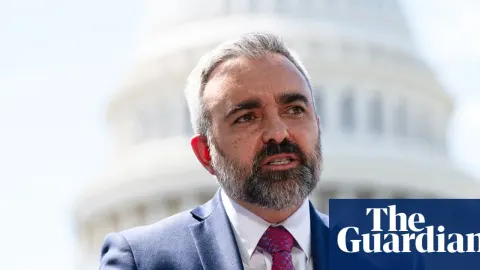
A stark new analysis from congressional circles and financial observers has warned that a full-scale conflict involving Iran could result in a staggering $300 billion shock to the global economy. This figure represents not just the cost of military engagement, but the secondary impacts on energy prices, mortgage rates, and wage stagnation in the West. MarketWatch reported that such a scenario would likely drive up energy costs significantly, forcing the Federal Reserve to maintain higher interest rates for longer, which directly squeezes American and global consumers. The report suggests that the Trump administration and Congress are under increasing pressure to find diplomatic or economic de-escalation routes to avoid a domestic cost-of-living crisis.
In Tehran, the reaction to these global warnings has been unexpectedly bearish in the short term. Despite the ominous headlines, the domestic gold and coin market saw a notable correction. The Emami coin dropped from 197,000,000 to 193,500,000 Toman, a decline of 1.8%. Similarly, Gold 18k fell by 0.5% to 19,795,696 Toman per gram. This downward movement suggests that local traders may have already priced in the maximum level of geopolitical fear, or are reacting to a temporary stabilization in the USD/IRR rate, which moved slightly from 180,400 to 180,100 (-0.2%). It is a classic example of a 'sell the news' event where the reality of the price action defies the intensity of the headlines.
Academic Integrity vs. AI: ArXiv Issues One-Year Ban Policy
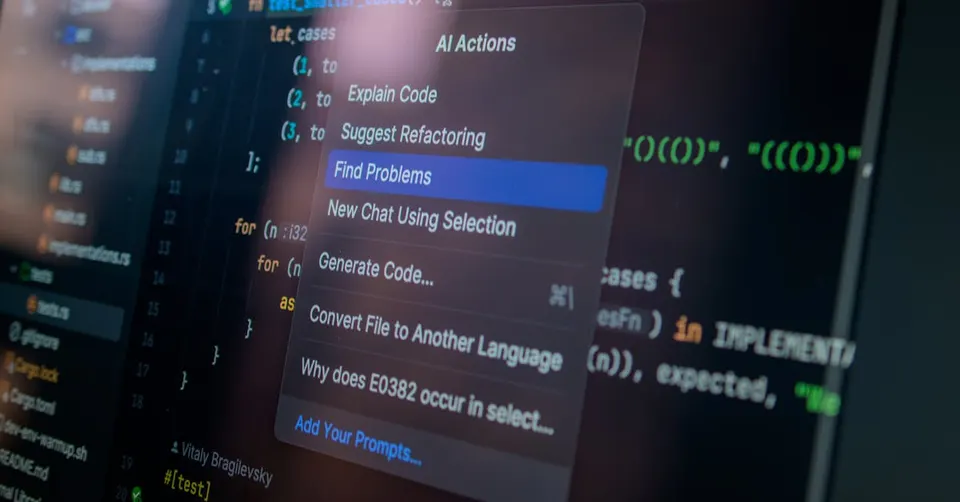
In the world of technology and research, the prominent repository ArXiv has announced a landmark policy to preserve the integrity of scientific literature. The platform will now ban authors for a full year if they are found to have submitted papers where generative AI performed the bulk of the research and writing without proper disclosure or oversight. This move is a direct response to the flood of low-quality, AI-generated 'slop' that has begun to infiltrate academic circles, threatening to undermine the credibility of peer-reviewed and pre-print research. By imposing a significant penalty, ArXiv aims to discourage the 'lazy' use of Large Language Models (LLMs) while still allowing for legitimate AI-assisted data analysis.
This policy shift reflects a broader struggle across the tech industry to define the boundaries of human-AI collaboration. As AI-powered platforms like Nectar Social continue to raise massive amounts of capital—such as their recent $30 million Series A led by Menlo Ventures—the commercial incentive to automate everything is higher than ever. However, the ArXiv ban serves as a necessary friction point, reminding the market that in sectors where 'truth' and 'originality' are the primary currencies, human accountability cannot be fully outsourced. For tech investors, this signals a maturing phase of the AI boom where the focus is shifting from 'what can AI do' to 'where should AI not be allowed to lead.'
Market Summary and The Road Ahead
As of 23:00 Tehran time, the financial landscape remains a study in contradictions. While global gold prices sit at a historic high of $4,541.20 per ounce, the local Iranian market is cooling off from its recent peaks. Bitcoin remains relatively stable at $78,248, failing to make a decisive move as the market digests news of the U.S. government's potential $1.5 billion debt repurchase strategy for convertible notes. The stability in the USD/IRR pair around the 180,000 mark indicates a temporary equilibrium, but the $300 billion 'war shock' warning acts as a reminder that this calm could be disrupted by a single policy shift or regional escalation.
Investors should keep a close eye on the results of the Modena investigation and any further diplomatic signals from the U.S.-China-Taiwan triangle. President Trump’s recent comments regarding Taiwan as a 'bargaining chip' have already rattled the semiconductor sector, and any further volatility there could have a ripple effect on global tech stocks like ACI Worldwide, which is currently trailing the S&P 500 significantly. For the Iranian trader, the current dip in coin prices might be seen as a buying opportunity or a warning of a deeper correction; however, the fundamentals of the currency market suggest that the 180,000 Toman level for USD remains the most critical psychological barrier to watch in the coming hours.
Frequently Asked Questions
Why is the gold price in Tehran dropping despite war warnings?
What was the motive behind the Modena car attack?
How does a potential Iran conflict affect US mortgage rates?
What are the new rules for AI on ArXiv?
How Sanctions Trigger Currency Depreciation: The Iranian Rial’s Slide
When a country faces extensive economic sanctions, its currency often loses value rapidly. Sanctions restrict access to foreign capital, limit trade, and can freeze overseas assets, all of which shrink the supply of hard currency (like dollars or euros) needed to buy the local money. With fewer dollars flowing in, demand for the domestic currency falls, while the government may still need to fund imports, creating a classic supply‑demand imbalance that pushes the exchange rate higher – meaning more local units are required for one foreign unit.
In Iran’s case, the rial has been under pressure for years, but the looming threat of a broader regional conflict in 2026 amplified investor anxiety. As the market priced in a possible war, risk‑averse investors fled to safe‑haven assets such as gold, driving up Tehran’s gold premiums while the rial continued to weaken. The $300 billion war warning mentioned in the headline acted as a catalyst, turning already‑fragile confidence into a sharp sell‑off of the rial.
Currency depreciation has a cascade of effects. First, imported goods become more expensive, fueling inflation and eroding real wages. Second, the government may intervene by raising official exchange rates or imposing multiple exchange‑rate systems, which can create arbitrage opportunities and further market distortions. Third, citizens often turn to alternative stores of value—gold, foreign currency, or even cryptocurrencies—to preserve wealth, which explains the observed softening of gold prices in Tehran as demand stabilizes after the initial shock.
Understanding this mechanism helps investors and policymakers anticipate the broader economic fallout of geopolitical tensions. A depreciating currency not only reshapes trade balances but also reshapes household consumption patterns, fiscal budgets, and the overall stability of the financial system.
For a deeper dive, see the references below which explain the technical underpinnings of currency devaluation, the specific case of the Iranian rial, and the role of sanctions in shaping exchange‑rate dynamics.
Topics
Related Articles