Trump Aborts Iran Strikes Amid Claims of Peace Deal as Lincoln Memorial Pool Turns ‘American Blue’
لغو حملات ترامپ به ایران در آستانه توافق احتمالی؛ رونمایی از استخر ۱۴ میلیون دلاری واشینگتن
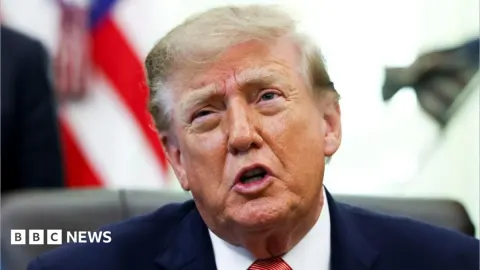
President Trump has abruptly canceled planned military strikes on Iran, claiming a peace agreement is reaching its final stages despite firm denials from Tehran. The news has sent oil prices to an eight-week low, even as a controversial $14.2 million makeover of the Lincoln Memorial reflecting pool draws mixed reviews in Washington.
At time of publishing
USD
178,900
Toman
Gold 18K
18.19M
Toman / gram
Bitcoin
$63,695
US Dollar
Tether
176,501
Toman
The Brink of Peace or a Rhetorical Pause?
In a dramatic late-night pivot, President Donald Trump announced the cancellation of what he described as "scheduled strikes and bombings" against Iranian targets. The U.S. President claimed that negotiations have reached the "highest level of leadership" and that a peace agreement is on the verge of being signed. This sudden de-escalation follows weeks of intense regional friction that had pushed the global economy to the edge. However, the optimism coming from the White House was quickly met with skepticism from Tehran. Iran’s semi-official Fars news agency reported that no documents have been approved and that the Iranian leadership has not signed off on any text, suggesting a significant disconnect between the two sides' public narratives.
For the global markets, this uncertainty is a double-edged sword. While the immediate threat of a full-scale kinetic conflict has receded, the lack of a verified agreement keeps the geopolitical risk premium high. We are seeing a classic "buy the rumor, sell the news" dynamic in energy markets, where global oil prices settled at their lowest in nearly eight weeks following the announcement. For Iranian observers, the critical question remains whether this is a genuine diplomatic breakthrough or a tactical pause by the Trump administration to reassess its leverage before the next round of pressure.
---
A $14.2 Million ‘Blue’ Makeover and Domestic Distractions
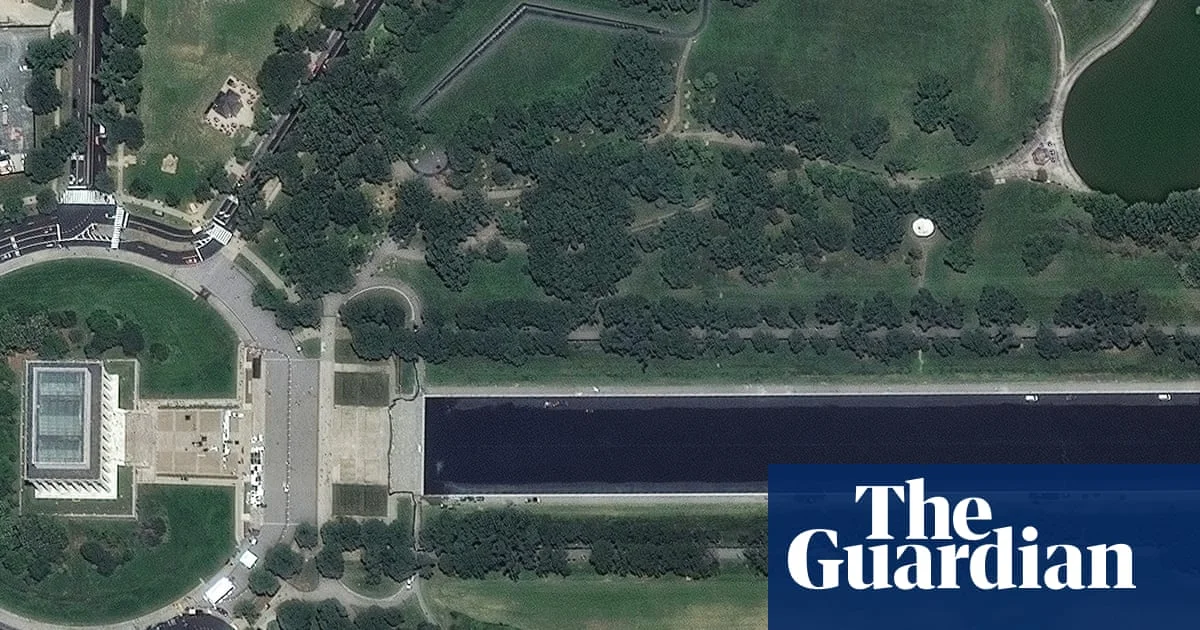
While the world watched the Persian Gulf, Washington D.C. was fixated on a different kind of water: the Lincoln Memorial reflecting pool. President Trump’s controversial $14.2 million makeover of the iconic site is officially complete, featuring a new "American flag blue" tint that has left many visitors underwhelmed. The project, which Trump initially claimed would cost only $1.8 million, was awarded via a no-bid contract to a company previously employed at his golf resorts. Critics argue the project is a vanity exercise that distracts from more pressing national security issues, while supporters view it as a symbolic restoration of American pride.
This aesthetic overhaul of the National Mall serves as a backdrop to a bizarre domestic environment where federal authorities are also investigating a massive etching of the numbers "8647" into the grass nearby. These events highlight a presidency that remains deeply focused on symbolic gestures and domestic optics, even as it navigates high-stakes nuclear diplomacy. For the Iranian public, these domestic American stories provide a glimpse into the idiosyncratic nature of the Trump administration, where policy shifts are often as unpredictable as the President’s aesthetic preferences.

---
UK Defense Crisis and Regional Instability
The ripple effects of the U.S. stance on Iran are causing political earthquakes elsewhere, most notably in London. UK Defence Secretary John Healey resigned on Thursday, citing a long-brewing funding crisis and a "derisory" investment offer from the Starmer government. Healey’s departure leaves the United Kingdom without a clear defense strategy just weeks before a critical NATO summit. The resignation was reportedly accelerated by the ongoing tensions in the Middle East, as the UK struggles to balance its commitment to regional security with a domestic budget that is stretched to its limits. This vacuum in British leadership could complicate any multilateral efforts to enforce a potential peace deal with Iran.

Meanwhile, the humanitarian cost of regional instability continues to mount. On the Afghan-Pakistan border, at least 13 civilians, mostly women and children, were killed in airstrikes. While Pakistan claimed to be targeting militant camps, the United Nations has confirmed the civilian casualties reported by the Taliban government. This tragedy serves as a grim reminder that while the "big powers" negotiate in high-level summits, the peripheral conflicts fueled by regional tension continue to claim innocent lives, further destabilizing a region already on the brink of economic collapse.
---
Market Impact: Gold Surges Despite Toman Stability
In the Iranian domestic market, the reaction to Trump’s de-escalation has been surprisingly cautious. The USD/IRR exchange rate saw a marginal increase, moving from 178,800 to 178,900 Toman (+0.1%). This stability suggests that local traders are waiting for more concrete evidence of a deal before committing to a massive sell-off of hard currency. However, the gold market told a different story. Gold 18k per gram surged by 2.3%, rising from 17,782,907 to 18,189,667 Toman. Similarly, the Emami coin rose 0.6% to reach 182,000,000 Toman.
This discrepancy between a steady Dollar and rising Gold suggests that Iranian investors are still hedging against "headline risk." The memory of previously failed negotiations and the contradictory reports from Tehran and Washington have led many to seek the ultimate safe haven. While the drop in global oil prices might eventually ease some inflationary pressure, the immediate sentiment in Tehran remains one of guarded skepticism. Until a signed document is presented, the Toman is likely to remain in this high-tension holding pattern, sensitive to every tweet and official denial.
Watch
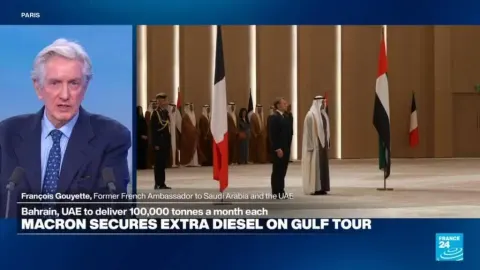
Trump calls off latest threats to strike Iran, citing progress in negotiations • FRANCE 24 English
FRANCE 24 English
Frequently Asked Questions
Why did Trump cancel the strikes on Iran?
How did the Iranian gold market react to the news of de-escalation?
What is the controversy surrounding the Lincoln Memorial reflecting pool?
Gold as a Safe‑Haven Asset During Geopolitical Turmoil
Gold has long been regarded as a safe‑haven asset – a store of value that investors turn to when confidence in other markets wanes. Unlike equities or currencies, gold does not rely on a single country's fiscal health or monetary policy; its intrinsic scarcity and global acceptance give it a unique resilience. When headlines scream of potential wars, sanctions, or sudden policy shifts – such as a U.S. president aborting planned strikes on Iran or hinting at a peace deal – investors often scramble for the perceived safety of the metal.
Historical data backs up this intuition. During the 1990‑1991 Gulf War, gold prices jumped roughly 15 % as oil markets destabilised. A decade later, the Arab Spring and the 2011 Libyan civil war saw another surge, and in 2020 the U.S.–Iran tensions combined with a pandemic‑driven flight to safety pushed gold above US$2,000 per ounce. Each episode demonstrates a clear pattern: heightened geopolitical risk fuels demand for gold, which in turn lifts its price in U.S. dollars.
The mechanism is straightforward. Gold is priced globally in dollars, so when investors buy gold, they need to convert their local currency into USD, increasing demand for the greenback and for the metal simultaneously. In Iran, where the official USD/IRR exchange rate is heavily managed, a surge in gold demand can widen the gap between the official and market rates, putting pressure on the local currency and prompting the central bank to intervene. Moreover, because gold does not generate cash flow, its price movements often reflect pure risk sentiment rather than fundamentals.
In June 2026, the news cycle is dominated by President Trump’s decision to call off a planned strike on Iran amid rumors of a diplomatic breakthrough. The speculation sparked a modest rally in gold, with prices edging up by about 2 % in a single day. Traders are watching two key indicators: the trajectory of oil prices, which tend to fall when conflict de‑escalates, and the USD/IRR exchange dynamics, which can amplify gold’s appeal for Iranian investors seeking to preserve wealth. Understanding gold’s safe‑haven role helps investors gauge whether a price move is a fleeting reaction or the start of a longer‑term shift.