NATO Summit Under Fire: Kyiv Strikes Spark Call for Action as Bitcoin Defies Geopolitical Gravity
نشست ناتو زیر سایه حملات کییف؛ فراخوان برای تصمیمات قاطع همزمان با مقاومت بیتکوین در برابر بحران
President Zelenskyy demands 'strong decisions' from NATO in Ankara after Russian strikes kill 14 in Kyiv, while Bitcoin holds steady at $62,800. Global energy shifts accelerate as Germany increases reliance on U.S. LNG following the Strait of Hormuz closure.
At time of publishing
USD
175,250
Toman
Gold 18K
17.72M
Toman / gram
Bitcoin
$62,870
US Dollar
Tether
175,018
Toman
NATO Summit Tension and the Crypto Risk Appetite
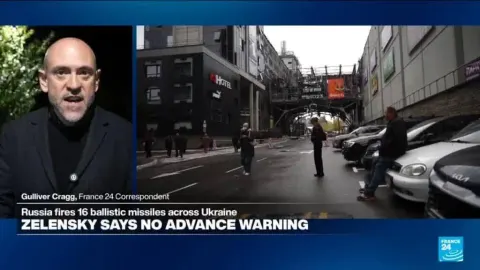
As world leaders gather in Ankara for the high-stakes NATO summit, the atmosphere has been darkened by a wave of Russian missile strikes on Kyiv that left 14 dead and over 100 injured. President Volodymyr Zelenskyy has wasted no time in calling for "strong decisions" from the alliance, specifically targeting the need for more robust air defense systems and a clear path toward membership. The timing of the attack seems calculated to test NATO's resolve at a moment when European security feels more fragile than ever. In response, the UK has already moved to sanction Russian entities involved in the development of chemical agents like Novichok, signaling that the West is looking for non-military ways to tighten the noose around Moscow's strategic capabilities.
For the financial markets, this escalation provides a complex backdrop. Despite the immediate geopolitical shock, Bitcoin (BTC) has shown remarkable resilience, holding steady at $62,870. The broader crypto market is actually seeing a resurgence in "altcoin optimism," with the Altcoin Season indicator reaching its highest point in three months. This suggests that while traditional investors might be retreating to safe havens, crypto traders are viewing the current volatility as a consolidation phase rather than a precursor to a crash. The demand for USDT in the Iranian market remains high, reflecting a local preference for digital assets as a hedge against both regional instability and the 1.0% daily rise in the USD/IRR rate.

Germany’s Energy Pivot and the Hormuz Factor
Germany is undergoing a radical transformation of its energy infrastructure, driven by the ongoing closure of the Strait of Hormuz and the subsequent loss of Middle Eastern supplies. New data from the Bundesnetzagentur reveals that the share of American Liquefied Natural Gas (LNG) in Germany’s total gas supply has risen to 12% in the first half of 2026. This shift underscores a growing dependence on the United States as Europe’s industrial engine seeks to insulate itself from the volatility of the Persian Gulf. The transition has not been cheap, but it has been necessary to prevent a total industrial standstill in the face of the Iran-related energy shock.
This trend has significant implications for global trade flows. As Germany and other European nations lock in long-term contracts with American suppliers, the geopolitical leverage of traditional energy hubs in the Middle East is being diluted. For the Iranian economy, which remains sidelined by sanctions and regional conflict, this represents a lost opportunity to capitalize on European demand. Instead, the market is seeing a hardening of the US-Europe energy alliance, which likely means that even if the Strait of Hormuz reopens, the structural shift toward American energy may be permanent.

U.S. Policy Shifts: Trump’s War on Wind and FIFA’s Reversal
In the United States, the political landscape is being reshaped by President Donald Trump’s aggressive stance against renewable energy. The administration has recently issued executive orders aimed at halting all wind-energy leases and permits, citing a "personal vendetta" against the industry that Trump has long criticized. This move has sparked outrage among unionized workers who have spent years building a career in the green energy sector. With over $2.6 billion already paid in settlements to buy out existing leases, the economic cost of this policy pivot is becoming clear, raising questions about the long-term stability of U.S. infrastructure investments.
On a different front, the international sporting world is reacting with shock after FIFA lifted the suspension of American striker Folarin Balogun just ahead of a crucial World Cup match against Belgium. The decision to reverse a one-game ban has been met with accusations of favoritism toward the U.S. team, adding a layer of diplomatic friction to an already tense international climate. While seemingly unrelated to the energy crisis, these events contribute to a sense of American exceptionalism and policy unpredictability that is keeping global markets on edge. For investors, the takeaway is clear: political volatility in the West is now as much of a risk factor as traditional geopolitical hotspots.

Tehran’s Social Divide and Market Reality
Inside Iran, the social atmosphere remains deeply polarized as the third day of funeral processions for the late Supreme Leader continues. While state media reports massive crowds and a unified front calling for revenge against the US and Israel, social media paints a different picture. Many residents of Tehran have reportedly taken flight, choosing to leave the city rather than participate in the state-mandated mourning. This internal friction highlights the widening gap between the government's narrative and the reality of a population exhausted by economic hardship and political isolation.
Economically, the market is reacting with its usual caution. The USD sell rate has climbed to 175,250 Toman, a 1.0% increase over the last 24 hours, while the gold market remains relatively flat. The Emami coin is holding at 177,000,000 Toman, reflecting a lack of new liquidity rather than a stabilization of value. As the country navigates this leadership transition, the primary concern for the average citizen remains the erosion of purchasing power. The government's focus on regional rhetoric stands in stark contrast to the immediate need for economic reform and currency stabilization.
Frequently Asked Questions
Why is Germany increasing its dependence on U.S. LNG?
How is Bitcoin reacting to the escalation in Ukraine?
What is the impact of Trump's wind energy policy on the U.S. economy?
Bitcoin as a "Safe Haven" Asset During Geopolitical Instability
The concept of a "safe haven" asset is fundamental to understanding how investors navigate times of geopolitical instability, such as the Kyiv missile strikes or potential Strait of Hormuz closures mentioned in the headlines. A safe haven asset is one expected to retain or increase in value during periods of market turbulence, offering refuge when other investments decline. Traditionally, assets like gold, certain government bonds (e.g., U.S. Treasuries), and strong fiat currencies (like the Japanese Yen or Swiss Franc) have served this role, as their value is seen as independent of, or even inversely correlated with, broader economic or political turmoil.
In recent years, Bitcoin has emerged as a controversial contender for safe haven status. Proponents argue that its decentralized nature, limited supply cap, and independence from any single government or financial system make it an ideal "digital gold." They suggest that in times of state-sponsored financial instability, currency debasement, or geopolitical conflict, Bitcoin could offer a truly sovereign store of value, outside the reach of traditional power structures, thereby "defying geopolitical gravity" in a unique way.
However, the reality of Bitcoin's performance during crises is far more complex and often contradictory. Despite its theoretical appeal, Bitcoin frequently exhibits high volatility and a significant correlation with risk-on assets, particularly technology stocks. Its price movements are often influenced by global liquidity trends, speculative trading, and broader market sentiment rather than consistently acting as an uncorrelated hedge against geopolitical events. For example, during some periods of heightened global tension, Bitcoin has fallen alongside traditional markets, undermining its claim as a reliable safe haven.
Ultimately, while the idea of Bitcoin as a safe haven asset is compelling and continues to be debated, its relatively short history and observed market behavior suggest it has yet to consistently fulfill this role in the way traditional assets do. Its price can indeed appear to "defy gravity" at times, but this is often due to its unique market dynamics rather than a consistent flight-to-safety mechanism. Investors seeking true safe havens typically prioritize stability and a proven track record over potential for high returns during crises.