
Tehran Mourns Amid Market Volatility; Samsung Plans 20% Chip Hike as Ukraine Faces Missile Shortage
سوگواری در تهران همزمان با نوسان بازار؛ طرح سامسونگ برای افزایش ۲۰ درصدی قیمت تراشه و بحران موشکی در اوکراین
Millions gather in Tehran for the funeral of the late Supreme Leader as the USD rises 1% amid transition uncertainty. Meanwhile, Samsung signals a massive price hike for memory chips, and Ukraine warns of a critical interceptor shortage following deadly strikes in Kyiv.
At time of publishing
USD
175,250
Toman
Gold 18K
17.73M
Toman / gram
Bitcoin
$62,817
US Dollar
Tether
174,652
Toman
Tehran Stands Still as Transition Uncertainty Inches Markets Higher
Massive crowds have flooded the streets of Tehran today for the funeral procession of the late Supreme Leader, Ali Khamenei. International observers and state media report a city paralyzed by a 10-hour public tribute, with authorities estimating millions in attendance. The event follows the start of what state narratives describe as a conflict involving U.S. and Israeli forces, a claim that has cast a long shadow over the region's stability. While the streets are filled with mourners, the financial markets are reacting with characteristic caution. The transition period in any major regional power often triggers a flight to safety, and Iran is no exception as the nation grapples with both internal mourning and external military pressures.
In the currency markets, the Iranian Toman saw a notable shift as the formal mourning period began. The USD sell rate moved from 173,550 to 175,250 Toman, marking a 1.0% increase within the last 24 hours. This uptick reflects a broader anxiety among retail investors and businesses regarding the continuity of economic policy and the potential for further geopolitical escalation. Despite the volatility in the forex market, the gold sector remained relatively stagnant; 18k gold per gram held steady at approximately 17,733,967 Toman, showing a negligible 0.0% change. This divergence suggests that while the dollar is being used as a primary hedge against immediate political shifts, the domestic gold market may be waiting for more definitive signals regarding the new leadership's stance on inflation and international relations.

Ukraine Warns of Interceptor Crisis After Deadly Kyiv Strikes
The conflict in Eastern Europe has reached a new fever pitch as Kyiv endured its second massive missile assault in less than a week. At least 14 people were reported killed in the capital region, with dozens more injured as Russian strikes targeted residential areas alongside energy infrastructure. President Volodymyr Zelenskyy has used the tragedy to highlight a critical vulnerability: Ukraine is running dangerously low on interceptor missiles. According to reports, Sunday's attack involved over 68 missiles and 351 strike drones, a volume of fire that is rapidly depleting the sophisticated air defense systems provided by Western allies. This shortage comes at a pivotal moment as the NATO summit in Ankara approaches, where Kyiv is expected to demand "strong decisions" and immediate hardware transfers.
The strategic implications of this shortage are profound. Without a reliable umbrella of interceptors, Ukraine’s energy grid—already fragile—faces total collapse before the winter months, and its burgeoning domestic defense industry could be neutralized. Kyiv is reportedly pivoting its foreign policy to sign major defense deals with at least seven NATO countries by the end of the year, aiming to transform from a mere recipient of aid into a co-producer of military hardware. However, the immediate reality on the ground remains grim, as the lack of defensive munitions leaves major population centers exposed to the kind of high-velocity strikes seen this morning in Odesa and the capital.

Samsung’s 20% Price Hike Signals Global Tech Inflation
In the world of global markets and technology, Samsung Electronics is reportedly preparing to send shockwaves through the supply chain. The South Korean giant is proposing a 20% increase in the average selling price of its dynamic random access memory (DRAM) chips. This move is a direct response to persistent bottlenecks in the industry and the skyrocketing demand for high-performance hardware driven by the AI boom. As one of the world's primary suppliers of memory, a price hike of this magnitude from Samsung will inevitably lead to higher costs for everything from smartphones and laptops to enterprise-grade servers. For consumers already battling global inflation, this signals that the downward trend in electronics pricing seen in late 2025 has officially reversed.
Beyond the price hike, Samsung is also exploring a potential U.S. listing, a strategic maneuver that could decouple its valuation from the South Korean market's "Korea Discount." By listing in the United States, Samsung aims to tap into deeper pools of capital and align itself more closely with other semiconductor titans like NVIDIA and Intel. This comes as the broader semiconductor sector continues to reward investors; recent data shows that semiconductor ETFs were among the top performers in June. However, for the average user and smaller tech firms, the 20% jump in component costs represents a significant hurdle that may force a slowdown in hardware upgrades and infrastructure expansion as we head into the second half of 2026.
Bitcoin Struggles for Direction as Sharpe Ratio Hits Multi-Year Low
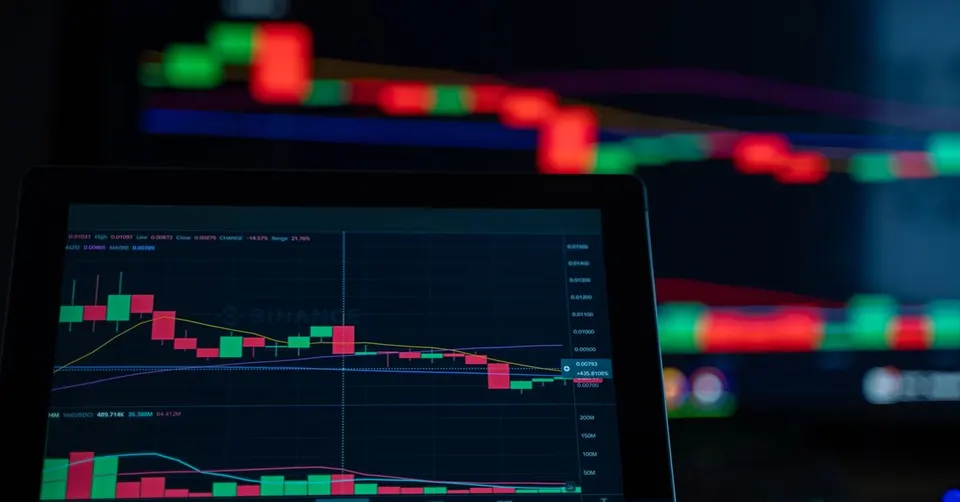
Bitcoin remains in a precarious position, trading at $62,817 as it fails to break through the critical $65,000 resistance level. Analysts are pointing to the $60,400 mark as the most vital support zone for the week; a failure to hold this level could trigger a deeper correction toward the $50k range. Adding to the bearish sentiment is the fact that Bitcoin’s Sharpe Ratio—a measure of risk-adjusted return—has slid to its lowest levels since the 2022 market crash. This technical indicator suggests that, for the time being, investors would have been statistically better off holding risk-free assets like U.S. Treasuries rather than the volatility of the crypto market.
Despite the lackluster price action, the institutional infrastructure for crypto continues to mature. Ripple recently saw its preliminary license in Luxembourg upgraded to full compliance with Europe’s MiCA regulations. This allows Ripple to offer its services across all 30 European Economic Area countries, providing a regulated bridge for cross-border payments. While these regulatory wins provide a long-term foundation for the industry, the immediate market remains tethered to macroeconomic fears and the shifting liquidity environment in the U.S. and Asia. For now, the "wait and see" approach dominates the digital asset space as traders look for a catalyst to reignite the bull run.
Watch
'Genuine admiration and emotion' in Tehran's streets as Iran mourns supreme leader • FRANCE 24
FRANCE 24 English
Frequently Asked Questions
Why is the USD rising in Iran today?
How will Samsung's 20% price hike affect consumers?
What is the significance of the $60.4K level for Bitcoin?
Understanding Inflation: Its Causes and Global Impact
Inflation, a term frequently heard in economic discussions, refers to the sustained increase in the general price level of goods and services in an economy over a period. When inflation rises, each unit of currency buys fewer goods and services than it did previously, effectively eroding purchasing power. This phenomenon is critical to understanding "market volatility" and currency fluctuations, such as the "USD IRR price," where a weakening local currency often signals underlying inflationary pressures.
The primary drivers of inflation typically fall into two categories: demand-pull and cost-push. Demand-pull inflation occurs when aggregate demand for goods and services outstrips an economy's ability to produce them, leading consumers to bid up prices. Cost-push inflation, on the other hand, arises when the cost of producing goods and services increases, forcing businesses to raise their prices to maintain profit margins. Factors like rising wages, higher raw material costs (e.g., energy, commodities), or disruptions in global supply chains—like those affecting chip production, potentially contributing to a "Samsung DRAM price hike"—can fuel cost-push inflation.
Monetary policy also plays a crucial role. Excessive growth in the money supply, often a result of central bank policies, can devalue currency and lead to inflation as "too much money chases too few goods." Furthermore, geopolitical events, such as conflicts or trade disputes, can exacerbate inflationary pressures by disrupting supply chains, increasing uncertainty, and driving up commodity prices. This interconnectedness explains how events far away can significantly impact local market stability and currency values, contributing to the broader "Iran economic transition."
The consequences of high or volatile inflation are profound. It creates economic uncertainty, discouraging long-term investment and making future financial planning difficult for individuals and businesses alike. Unchecked inflation can diminish savings, redistribute wealth arbitrarily, and even lead to social unrest. Governments and central banks actively employ various tools, primarily monetary policy adjustments like interest rate changes, to manage inflation and maintain price stability—a key objective for fostering a healthy and predictable economic environment.