Pentagon’s $87B War Bill Sparks Senate Fury as Houthi Blockade Strangles Global Oil and Toman Hits 190k
لایحه ۸۷ میلیارد دلاری پنتاگون برای جنگ؛ محاصره نفتی حوثیها و عبور تتر از مرز ۱۹۰ هزار تومان
U.S. Defense Secretary Pete Hegseth is facing intense questioning over a massive $87.6 billion funding request for the war against Iran, while a new Houthi blockade on Saudi Arabia has forced major refiners like Indian Oil to abandon the Strait of Hormuz.
At time of publishing
USD
189,900
Toman
Gold 18K
18.44M
Toman / gram
Bitcoin
$66,355
US Dollar
Tether
190,000
Toman
The $87.6 Billion Bill: Pentagon Faces Senate Backlash Over War Costs
U.S. Defense Secretary Pete Hegseth and General Dan Caine, Chairman of the Joint Chiefs of Staff, appeared before the Senate Appropriations Committee today to defend a staggering $87.6 billion supplemental funding request. The hearing, chaired by Senator Susan Collins, turned contentious as lawmakers demanded transparency regarding the true cost of the ongoing US-Israel conflict with Iran. Of the total request, approximately $67.1 billion is specifically earmarked for active combat operations, highlighting that the war is consuming resources at a rate far exceeding the White House's initial projections. The Pentagon has warned that it is effectively running out of cash to sustain the current tempo of operations, creating a political firestorm in Washington.
This funding request represents a critical juncture in U.S. foreign policy. Critics argue that the administration has been under-reporting the financial burden of the regional escalation, while supporters insist that failing to fund the military now would invite even greater instability. For the Iranian market, this signal from Washington suggests a prolonged military engagement rather than a swift de-escalation. As the U.S. prepares for a long-term presence, the pressure on the Iranian economy continues to mount, reflected in the weakening of the Toman as markets price in the likelihood of sustained sanctions and military pressure.

Maritime Chokehold: Houthi Blockade and the Death of Hormuz Shipping
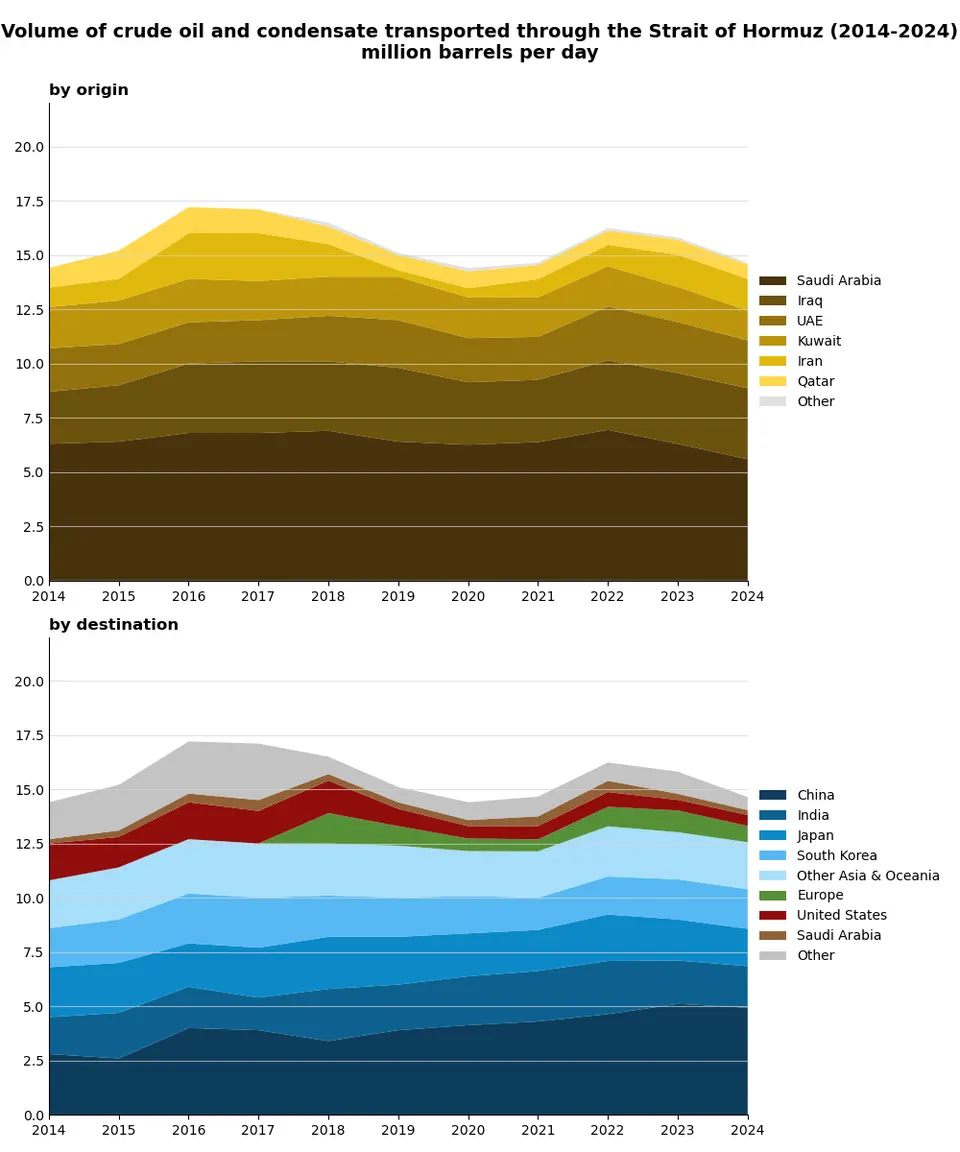
The geopolitical landscape shifted significantly this hour as the Iran-backed Houthi militia declared a total Red Sea blockade on Saudi Arabia. This move effectively opens a new, more dangerous front in the regional war, threatening millions of barrels of Saudi crude that had previously found a way to market. The impact was immediate: India’s largest state refiners, including Indian Oil Corp (IOC) and Mangalore Refinery & Petrochemicals, have officially suspended crude loadings from Iraq. The decision came after several attacks on commercial tankers made the Strait of Hormuz too expensive and dangerous to navigate. IOC notably abandoned plans to load the VLCC Lila Jamnagar, a 2-million-barrel supertanker, citing unacceptable risks.
What this means for the global economy is a fundamental breakdown of the energy supply chain. With the Strait of Hormuz and now the Red Sea becoming virtual no-go zones for major insurance-backed vessels, the cost of energy is set to spike globally. Kazakhstan has also suspended major oil exports through the Black Sea following drone attacks, further tightening the global supply. For Iranian readers, this maritime chaos is a double-edged sword; while it drives up the global price of oil, the increased regional risk and the slowdown in trade routes are putting immense pressure on the Toman, which has seen significant volatility in the last 24 hours as liquidity dries up in traditional trade channels.
Market Pulse: Toman Breaks 190k as Bitcoin Enters 'Overbought' Territory
In the financial markets, the Iranian Toman continues its downward trajectory against the U.S. Dollar. In the open market, the USD sell rate moved from 188,500 to 189,900 (+0.7%), while Tether (USDT) has officially breached the psychological 190,000 Toman mark. This devaluation is mirrored in the gold market, where 18k gold rose from 18,167,967 to 18,440,371 Toman per gram (+1.5%), and the Emami coin surged to 186,000,000 Toman (+1.6%). The flight to hard assets is accelerating as the combination of the Pentagon’s war budget and the shipping blockade creates a perfect storm of domestic inflation and external risk.
Meanwhile, in the crypto space, Bitcoin is trading near $66,355. However, technical analysts are sounding the alarm as the Relative Strength Index (RSI) indicates that the premier digital asset is currently in 'overbought' territory. This suggests that while sentiment remains bullish due to institutional interest, a short-term correction may be on the horizon. For Iranian investors, the high price of USDT at 190,000 Toman makes entry into the crypto market increasingly expensive, creating a barrier for those looking to hedge against Toman devaluation. The market is currently caught between the high global demand for Bitcoin and the local scarcity of affordable foreign currency.
Frequently Asked Questions
Why is the Pentagon requesting an additional $87.6 billion?
How is the Houthi blockade affecting global oil markets?
What does the 'overbought' RSI signal mean for Bitcoin investors?
Strategic Maritime Chokepoints: The World's Economic Arteries
Strategic maritime chokepoints are narrow sea passages that are crucial for international trade, particularly for the global energy supply. These geographical bottlenecks, such as the Suez Canal, the Strait of Hormuz, and the Bab-el-Mandeb Strait (at the southern end of the Red Sea), concentrate vast amounts of shipping traffic into confined areas. Their importance cannot be overstated; a significant portion of the world's oil and natural gas, along with countless other goods, transits through these routes daily, making them indispensable arteries of the global economy.
Disruptions to these chokepoints, whether due to conflict, piracy, or political instability, can have immediate and far-reaching economic consequences. For instance, the recent Houthi blockade in the Red Sea, as mentioned in the headline, forces shipping to reroute around Africa, significantly increasing transit times, fuel costs, and insurance premiums. This directly impacts global supply chains, driving up consumer prices and potentially fueling inflation. The vulnerability of these routes to geopolitical tensions highlights their critical role in determining the stability of energy markets and the broader world economy.
Beyond economic costs, these chokepoints are also flashpoints for geopolitical competition and military engagement. Nations invest heavily in naval power and diplomatic efforts to secure these routes, as their closure or control by hostile actors could cripple economies and exert immense political leverage. The "Pentagon's $87B War Bill" and discussions around the "US Iran war budget" underscore the immense financial and strategic resources dedicated to safeguarding these vital passages, reflecting the high stakes involved in maintaining open and secure maritime trade. Understanding these chokepoints is key to grasping the intricate connections between geopolitics, energy security, and global economic stability.