
Maduro’s Brooklyn Trial and $95 Oil: The Geopolitical Noose Tightens Around Tehran’s Allies
دادگاه مادورو در بروکلین و نفت ۹۵ دلاری: حلقه محاصره ژئوپلیتیک علیه متحدان تهران تنگتر میشود
As Nicolás Maduro faces a US judge in a landmark drug trafficking case, global oil prices have breached $95 amid threats of strikes on Iranian infrastructure. In Tehran, gold prices have surged 3.3% as markets brace for a prolonged and costly regional conflict.
At time of publishing
USD
191,500
Toman
Gold 18K
19.06M
Toman / gram
Bitcoin
$65,585
US Dollar
Tether
191,208
Toman
The Fall of an Ally: Maduro in a Brooklyn Courtroom
In a scene that would have been unthinkable just a year ago, Venezuelan President Nicolás Maduro and his wife, Cilia Flores, appeared in a Brooklyn federal court this Wednesday. The hearing marks a critical juncture in the US drug trafficking case against the leader of Iran’s closest Latin American ally. Maduro, 63, was brought to New York following a stunning January raid by US forces in Caracas. His defense team continues to argue that the capture was an illegal act of war, but the US judiciary appears unmoved, proceeding with charges that link the Miraflores Palace to a multi-decade cocaine smuggling conspiracy.
For the Iranian leadership, the sight of Maduro in a US jail cell is a chilling reminder of the current administration's reach. Venezuela and Iran have spent years building a "sanction-busting" alliance, sharing fuel, gold, and military technology to bypass Western restrictions. The removal of Maduro from power and his subsequent trial in New York signals a collapse of one of the key pillars of Tehran’s extra-regional influence. This development suggests that the era of "sovereign immunity" for leaders designated as narco-terrorists by Washington has effectively ended, creating a high-stakes precedent for other sanctioned heads of state.
Oil Hits $95 as Trump Eyes Iranian Infrastructure
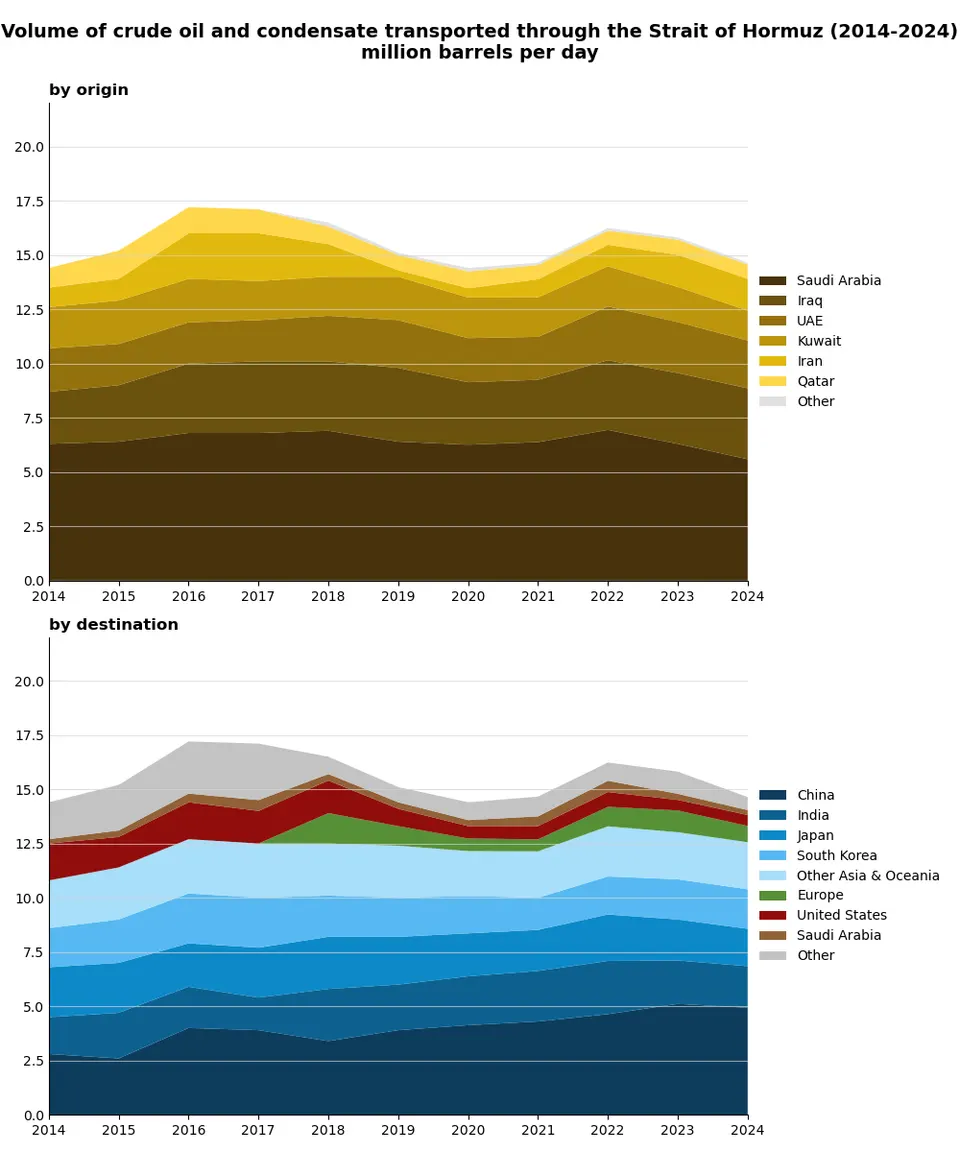
Global energy markets are in a state of high alarm as Brent crude surged past $95 per barrel for the first time in six weeks. The rally was triggered by a dramatic escalation in rhetoric from President Trump, who warned that the United States is prepared to target Iranian civilian infrastructure—including bridges and power plants near Tehran—should the Islamic Republic attempt to close the Strait of Hormuz. This follows eleven consecutive nights of US strikes against targets in Iran, a campaign that Defense Secretary Pete Hegseth claims has already cost the US treasury over $37 billion.
This shift in targeting strategy from purely military assets to dual-use infrastructure marks a significant turning point in the conflict. While previous administrations avoided civilian-adjacent targets to prevent humanitarian crises, the current White House appears to be using the threat of total economic paralysis to force a capitulation. For global markets, the risk is no longer just a temporary supply disruption but a permanent degradation of the region's ability to export energy. Asian refiners, who had hoped for a de-escalation, are now scrambling for alternative supplies as the "Hormuz risk premium" returns to the pricing models with a vengeance.
Tehran Markets: Gold Surges as Toman Weakens
The domestic financial landscape in Iran is reflecting the heightened war fever. In the last 24 hours, the price of 18-karat gold jumped from 18,440,371 to 19,056,743 Toman, a massive 3.3% increase that signals a flight to safety among local investors. Similarly, the Emami gold coin rose 1.6% to reach 189,000,000 Toman. The US Dollar also maintained its upward trajectory, moving from 189,900 to 191,500 Toman (+0.8%). These movements are not merely speculative; they represent the public's loss of confidence in the Toman as a store of value during an active shooting war.
The economic pressure is being compounded by the massive costs of the conflict. With US officials seeking an additional $70 billion in war funding, the financial disparity between the combatants is becoming a central theme. For the average Iranian, these macro-level shifts translate to immediate pain at the checkout counter. As the cost of gold and hard currency rises, the price of imported goods and basic staples follows suit, creating an inflationary spiral that the government—already struggling with sanctions and military expenditures—is finding nearly impossible to contain.
Terrorism Charges and the Rushdie Legacy
In Buffalo, New York, the legal system is opening a second front against Iranian-linked violence. Hadi Matar, the man convicted of the 2022 stabbing of author Salman Rushdie, is now facing federal terrorism charges. Despite already serving a 25-year sentence for attempted murder, the new federal trial seeks to establish a direct link between Matar’s actions and foreign terrorist ideologies. This trial is significant because it moves the case beyond a simple criminal act into the realm of state-sponsored or ideologically motivated international terrorism.
This legal move is widely seen as a symbolic strike against the long-standing fatwa and the rhetoric emanating from Tehran regarding the author. By pursuing a life sentence under terrorism statutes, US prosecutors are aiming to deter future "lone wolf" attacks that are incentivized by foreign rewards. For the geopolitical landscape, the trial serves as a persistent irritant in any potential back-channel diplomacy, ensuring that the issue of human rights and the targeting of dissidents remains at the forefront of the US-Iran confrontation.
Frequently Asked Questions
Why is the Maduro trial affecting Iranian market sentiment?
What specific infrastructure has Trump threatened to strike in Iran?
Why did gold prices in Tehran rise faster than the USD exchange rate?
How does the Salman Rushdie trial impact current US-Iran relations?
Understanding Economic Sanctions as a Geopolitical Tool
Economic sanctions are a powerful, non-military foreign policy tool used by countries or international organizations to influence the behavior of other states, entities, or individuals. They typically involve restrictions on trade, financial transactions, travel, or access to technology, aiming to impose economic costs on the target until it complies with specific demands, such as halting nuclear programs, respecting human rights, or ceasing support for terrorism. The goal is to exert pressure without resorting to armed conflict, often by limiting a target's ability to earn revenue, access international financial systems, or acquire critical goods.
These measures can take various forms, including comprehensive embargoes that prohibit nearly all trade, or targeted sanctions that focus on specific sectors, individuals, or entities. For instance, financial sanctions might freeze assets, restrict access to global banking networks, or limit a country's ability to trade in its national currency on international markets, leading to significant depreciation against major currencies like the USD. Energy sanctions, particularly on oil exports, are common against petrostates, directly impacting their primary source of revenue and global oil supply dynamics, as suggested by the mention of $95 oil and the Strait of Hormuz.
The impact of sanctions is multifaceted. While intended to compel policy changes, they can also have severe humanitarian consequences, affecting ordinary citizens' access to essential goods and services, and fostering parallel or black markets. On a geopolitical level, sanctions can isolate a country, weaken its economy, and limit its influence, but they can also provoke defiance, encourage self-sufficiency, or push targeted states to seek new alliances. The effectiveness of sanctions is a subject of ongoing debate, often depending on their design, enforcement, and the political will of the sanctioning bodies.
In the context of the provided headline, the "geopolitical noose tightening" around Tehran's allies implies the strategic application of such economic pressures. Restricting oil exports, impacting currency stability (like the USD/IRR exchange rate), and limiting access to international finance are all classic outcomes of a robust sanctions regime. Understanding economic sanctions is crucial for grasping how global powers attempt to shape international behavior and the complex economic and political ripple effects that ensue, from commodity prices to the stability of national economies.