
Dividend Traps and Tech Hikes: Why Global Markets are Shifting as Tehran’s USD Dips to 188,900
تله سود سهام و گرانی گوگل؛ همزمان با کاهش نرخ دلار به ۱۸۸,۹۰۰ تومان در بازار تهران
Tehran markets see a 1.7% drop in USD prices while global investors struggle with the technicalities of dividend payouts. From Google's confirmed Pixel 11 price hikes to media bias scandals at CBS, the final weekend of July 2026 is reshaping financial and tech expectations.
At time of publishing
USD
188,900
Toman
Gold 18K
18.14M
Toman / gram
Bitcoin
$64,352
US Dollar
Tether
188,510
Toman
The Dividend Trap: Why Selling on Time Isn't Always Enough
A major story hitting the markets this hour involves an investor who sold $80,000 in shares on June 30, expecting a hefty dividend, only to find the proceeds sitting in a settlement fund without the expected payout. This confusion highlights a critical lesson for both global and local investors: the importance of the 'ex-dividend' date versus the 'record' date. When you sell a stock on or after the ex-dividend date, you are still entitled to the dividend, but the technical lag in settlement cycles—often T+1 or T+2—can lead to significant anxiety if the funds don't appear where expected. For many, this is a reminder that market mechanics are just as important as market direction.
In Tehran, this lesson in precision coincides with a cooling period across the domestic exchange. The USD has moved from 192,200 to 188,900 Toman, marking a -1.7% decrease over the last 24 hours. This retreat is mirrored in the gold market, where 18k gold fell from 18,687,381 to 18,137,956 Toman per gram, a sharp -2.9% drop. Investors who jumped in during the recent peak are now facing the reality of a market correction, proving that in volatile environments, timing your entry and exit is the difference between wealth preservation and significant paper losses.
Google’s 'AI Tax' and the Future of Hardware Costs
Google has essentially confirmed that the upcoming Pixel 11 will see a price hike, a move signaled by Shakil Barkat, the company’s Vice President of Devices and Services. This isn't just about corporate greed; it is a direct consequence of the global AI arms race. The explosion of AI data centers has created a massive bottleneck in RAM supply, driving up the cost of components that are essential for modern smartphones to run localized AI models. As Google and its competitors pack more processing power into handheld devices, the consumer is increasingly being asked to foot the bill for the infrastructure required to support these advanced features.
This trend represents a broader shift in the tech economy. We are moving away from the era of 'cheaper, faster, better' toward a period where high-end technology becomes a luxury good due to resource scarcity. For Iranian consumers, who already face significant purchasing power challenges, these global price hikes combined with local currency fluctuations make the latest tech even more inaccessible. The 'AI tax' is becoming a reality, and it means that the cost of staying technologically relevant is rising faster than average wage growth.

Media Integrity Under Fire: The CBS Bias Scandal
Geopolitics and media narrative hit a flashpoint this hour as Cecilia Vega, a former '60 Minutes' correspondent, alleged that she felt significant pressure from CBS executives to incorporate 'political bias' into her reporting. Speaking at the National Association of Hispanic Journalists conference, Vega’s comments have sent shockwaves through the industry. This revelation comes at a time when public trust in mainstream media is at historic lows, and it suggests that even the most prestigious news programs are not immune to internal corporate or political pressures to shape the news rather than just report it.
Why this matters to the global reader is the impact on market sentiment and policy perception. When major news outlets are accused of systemic bias, it distorts the information flow that investors and citizens rely on to make decisions. In the context of U.S.-Iran relations or global economic forecasts, biased reporting can lead to miscalculations by both the public and policymakers. The story serves as a stark reminder that in an era of information warfare, the source of the news is often as important as the news itself.
Nvidia’s Rare Signal and the Climate Hedge
Nvidia’s stock is currently exhibiting a technical pattern it hasn't seen in years, signaling a potential shift in the momentum of the AI-driven bull market. As the backbone of the current tech boom, Nvidia’s performance is often a bellwether for the broader S&P 500. While the stock has been a juggernaut, this new behavior suggests that investors are starting to demand more concrete returns on AI investments rather than just speculative growth. It is a moment of maturity for the sector that could lead to increased volatility in the coming weeks.
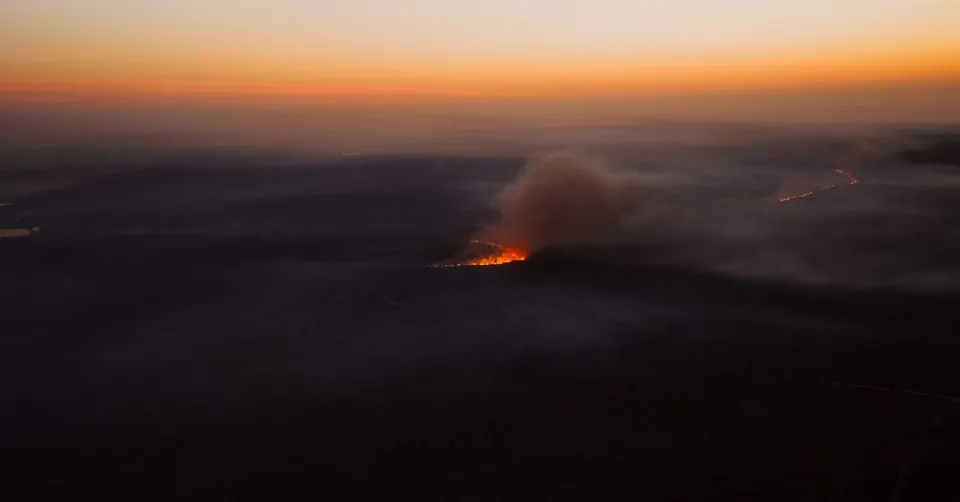
Meanwhile, as wildfires rage across France, Spain, and the UK’s Cairngorms, a new financial frontier is emerging: weather derivatives. Crypto advocates are arguing that tokenizing weather risks could be the most important real-world use case for blockchain. By allowing 'Main Street' to hedge against climate-related financial disasters—like crop failure or property damage—through decentralized prediction markets, technology is attempting to solve a problem that traditional insurance has failed to address adequately. As the environment becomes more unpredictable, these financial tools may become essential for survival in the 21st-century economy.
Frequently Asked Questions
Why didn't the investor receive their dividend after selling shares on June 30?
Why is Google increasing the price of the Pixel 11?
What is the 'rare signal' being observed in Nvidia's stock?
How can crypto 'weather derivatives' help with wildfires?
Understanding Weather Derivatives: Hedging Climate Risk in Modern Finance
Weather derivatives are financial contracts whose payoff depends on a measurable weather variable—temperature, rainfall, snowfall, or wind speed—over a specified period and location. Unlike traditional insurance, which compensates for actual loss, weather derivatives settle based on the index outcome, making them useful for businesses that experience revenue swings tied to weather but cannot prove direct damage. For example, a utility company may sell a heat‑wave call option that pays out if average July temperatures exceed a certain threshold, offsetting higher electricity demand costs.
The market for weather derivatives grew out of the 1990s when the Chicago Mercantile Exchange (CME) launched the first weather futures contracts. Since then, the market has expanded to include swaps, options, and more exotic structures, often customized by over‑the‑counter (OTC) dealers. The contracts are typically settled in cash, using data from reputable weather stations or satellite observations, which reduces basis risk—the mismatch between the contract's index and the actual conditions experienced by the hedger.
In recent years, blockchain technology has sparked interest in tokenizing weather derivatives, creating “weather‑linked crypto assets.” By issuing these contracts on a distributed ledger, issuers can achieve greater transparency, fractional ownership, and faster settlement. Projects such as the WeatherXM platform and the World Weather Index (WWI) token aim to bring weather risk management to a broader set of participants, including small farmers and renewable‑energy developers who previously lacked access to traditional OTC markets.
Understanding weather derivatives is crucial for investors and companies alike because climate variability is increasingly influencing profit margins across sectors—from agriculture and tourism to energy and retail. As climate change intensifies, the demand for sophisticated weather‑risk tools will likely grow, making these instruments a key component of modern portfolio risk management.
For those interested in deeper study, the CME Group’s educational resources, academic papers on climate finance, and regulatory guidance from bodies such as the Commodity Futures Trading Commission (CFTC) provide valuable insight into the mechanics, pricing models, and regulatory environment surrounding weather derivatives.