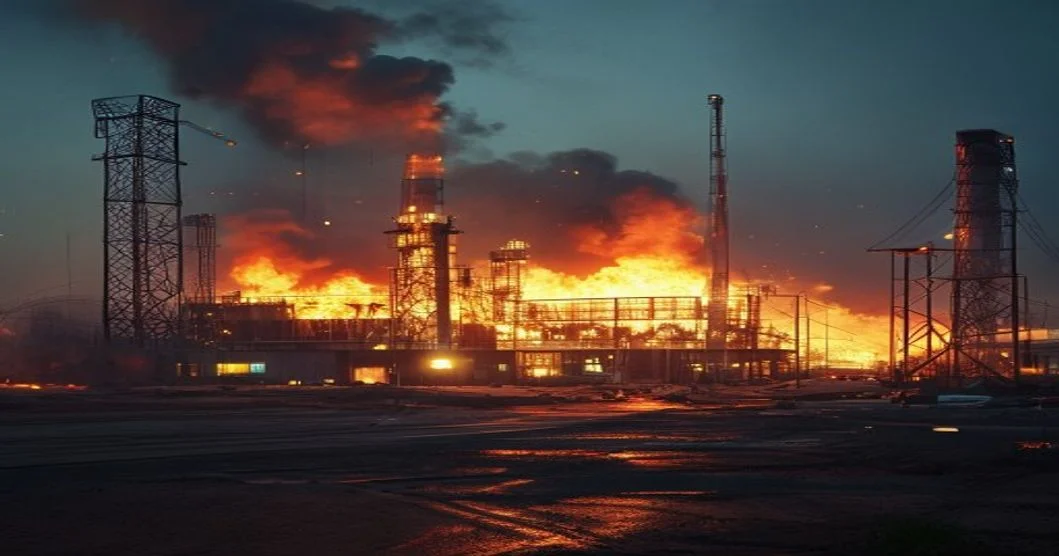
Oil Infrastructure Under Fire: Houthi Strikes and Caspian Tensions Shake Markets as Gold Prices Dip
حمله به زیرساختهای نفتی و تنش در دریای خزر؛ عقبنشینی قیمت طلا در میانه بحرانهای منطقهای
Regional conflict escalates as Houthi forces target Saudi oil facilities and a new front opens in the Caspian Sea, while US military pauses strikes amid reports of dwindling munition stockpiles. Despite the geopolitical heat, Iranian markets saw a slight cooling this morning, with gold and USD prices retreating.
At time of publishing
USD
188,800
Toman
Gold 18K
17.82M
Toman / gram
Bitcoin
$64,250
US Dollar
Tether
188,510
Toman
The Regional Powder Keg: Houthi Strikes and Caspian Accusations
The geopolitical landscape shifted violently this morning as Houthi forces launched a targeted campaign against Saudi Arabian oil facilities, marking a significant escalation in the regional proxy war. This development coincides with a bizarre and dangerous expansion of the conflict into the Caspian Sea. Tehran has officially accused Ukraine of a deadly attack on an Iranian commercial vessel in those waters, a claim that, if true, suggests the war in Eastern Europe and the Middle East are becoming increasingly intertwined. Simultaneously, the Iranian Army's spokesperson claimed that nearly all U.S. infrastructure in Erbil has been destroyed, though these claims remain unverified by independent international observers.
For the global energy market, these strikes on Saudi infrastructure represent a direct threat to supply stability at a time when the global economy is already on edge. The Caspian Sea incident is particularly concerning because it introduces a new theater of naval warfare in a region previously considered a safe zone for Iranian transit. For Iranian readers, this escalation usually signals a spike in currency volatility; however, the market's initial reaction has been surprisingly muted, perhaps waiting for a clearer picture of the retaliatory measures from Riyadh or Washington.

U.S. Military Pause: Stockpile Shortages or Strategic Shift?
After nearly two weeks of nightly bombardments against Iranian-linked targets, the U.S. military has notably held its fire for another consecutive night. This pause comes amid growing reports from Washington that the Pentagon is grappling with dwindling stockpiles of Patriot interceptors and other critical air defense munitions. The high intensity of the recent campaign has forced a tactical re-evaluation, as the U.S. cannot afford to deplete its strategic reserves while other global flashpoints remain active. This logistical bottleneck suggests that the Trump administration’s "maximum pressure" through kinetic strikes may be hitting a physical limit.
This development provides a brief breathing room for regional diplomacy, though it also emboldens local actors who perceive the pause as a sign of American overextension. If the U.S. is indeed running low on specialized interceptors, it may shift its strategy toward more economic and cyber-based deterrents. For the Iranian economy, a reduction in direct military strikes often leads to a temporary stabilization of the Rial, as the immediate fear of a full-scale war recedes. However, the underlying tension remains, and any sign of renewed U.S. aggression could quickly reverse this trend.

Europe in Flames: Wildfires and Corporate Accountability
While the Middle East burns metaphorically, Southern Europe is burning literally. More than 300,000 people have been evacuated across France and Spain as wildfires rage out of control, triggering one of the largest peacetime civilian evacuations in French history. The city of Bordeaux is currently under threat, and the closure of the A63 highway has crippled logistics between France and the Spanish border. This environmental catastrophe is not just a climate story; it is an economic one, as tourism and agricultural sectors in the Mediterranean basin face billions in potential losses, further straining the Eurozone's recovery efforts.
In the background of these crises, a significant legal battle in the UK has reached a turning point. The family of Adrian Howe, a former Vodafone manager, is pushing for "Adrian’s Law" to protect franchisees after allegations that corporate giants like Vodafone "unjustly enriched" themselves at the expense of small business owners. This follows a massive settlement involving 62 former franchisees. These parallel stories—of climate disaster and corporate malpractice—highlight the growing pressure on Western governments to prioritize domestic stability and consumer protection over global expansion, a sentiment echoed at the recent Australian Labor Party national conference where internal cohesion was the primary focus.

Iranian Market Snapshot: A Surprising Morning Dip
Contrary to what one might expect during a period of regional escalation, the Iranian markets opened with a downward correction this morning. The USD/IRR rate moved from 188,900 to 188,800, a minor decrease of 0.1%. More significantly, Gold 18k per gram fell from 18,137,956 to 17,821,690 Toman, marking a 1.7% drop. The Emami coin also followed this trend, dropping from 184,500,000 to 182,000,000 Toman (-1.4%). This suggests that the market had already priced in the "worst-case scenario" of the past week and is now reacting to the reports of the U.S. military pause.
Investors should remain cautious, as the gold ounce remains historically high at $4,053.70. The current dip in domestic prices may be a short-term window for those looking to hedge against future volatility, but the geopolitical triggers—specifically the Houthi-Saudi situation—remain live. If oil prices spike in response to the facility attacks, the pressure on the Toman will likely return. For now, the 187,000 level for USD buy-ins remains a key support zone that traders are watching closely as the day progresses.
Frequently Asked Questions
Why did gold prices in Iran drop despite regional escalation?
What is the significance of the Caspian Sea conflict?
How serious is the U.S. munition shortage reported in Washington?
What are the key support levels for USD/IRR right now?
Gold as a Safe‑Haven Asset: Why Geopolitical Turmoil Moves the Market
When wars flare or sanctions tighten, investors often rush to assets they believe will preserve value. Gold has earned the nickname safe‑haven because it is tangible, globally recognized, and historically holds purchasing power when fiat currencies wobble. Unlike stocks or bonds, gold does not depend on a single country's fiscal health, making it attractive during crises such as Houthi attacks on Saudi oil infrastructure or rising tensions in the Caspian Sea.
The mechanics are simple: heightened geopolitical risk raises the risk premium investors demand for holding riskier assets. As that premium climbs, money flows out of equities and into gold, pushing its price up. Conversely, when the immediate threat appears to recede—say, after a cease‑fire or a diplomatic de‑escalation—some of that capital returns to riskier markets, and gold can experience a sharp dip, as seen in recent weeks when the market priced in a potential easing of Middle‑East hostilities.
Gold’s role is also amplified in economies under heavy sanctions, such as Iran. With the rial (IRR) facing severe depreciation against the US dollar, Iranians often turn to gold as a store of wealth, which can create a separate domestic demand curve that is less sensitive to global sentiment. This dual market dynamic can cause the international price of gold to move in one direction while local Iranian gold markets move another, adding another layer of complexity for traders watching the commodity.
Investors should remember that gold is not a guaranteed hedge; its price can be volatile and is influenced by other factors like real‑interest rates, inflation expectations, and currency movements. Nevertheless, understanding the safe‑haven narrative helps explain why headlines about oil strikes, missile stockpiles, or wildfires can trigger noticeable swings in gold prices.
In practice, monitoring geopolitical news alongside macro‑economic indicators—such as US Treasury yields, inflation data, and exchange‑rate trends—provides a clearer picture of when gold might act as a refuge and when it could simply be riding a short‑term market mood.
Topics
Related Articles