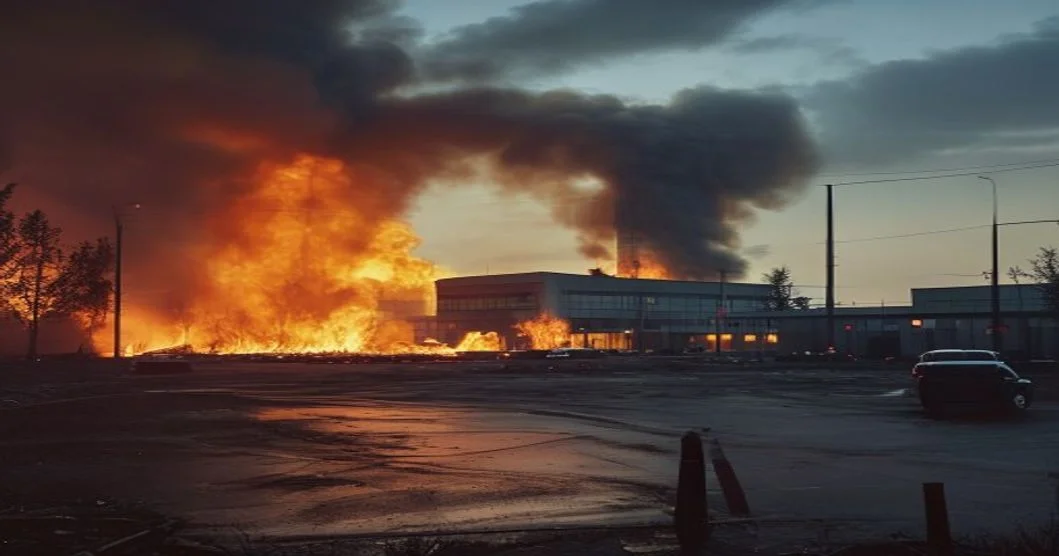
Wildfire Nears UK Nuclear Plant as Iran-US Conflict Spreads to Egyptian Borders
آتشسوزی در نزدیکی نیروگاه هستهای انگلیس؛ گسترش درگیریهای ایران و آمریکا به مرزهای مصر
A massive wildfire in Suffolk has sparked nuclear safety fears, while drone strikes in Egypt signal a dangerous expansion of the regional conflict. Meanwhile, US economic data shows consumers are burning through savings to keep up with inflation.
At time of publishing
USD
192,900
Toman
Gold 18K
18.69M
Toman / gram
Bitcoin
$64,629
US Dollar
Tether
193,661
Toman
Nuclear Safety Fears as Wildfire Rages Near Suffolk Coast
A massive wildfire has erupted in the scenic coastal region of Suffolk, England, covering nearly 250 acres and coming within a few miles of a critical nuclear power station. The blaze, which broke out amid a period of prolonged dryness, has forced local fire services into a high-stakes containment operation. While the nuclear facility remains operational and is reportedly under no immediate threat, the proximity of such a large-scale fire to national energy infrastructure has reignited concerns about the vulnerability of power grids to climate-driven disasters. This event follows a week where more than half of England was declared to be in a state of drought, highlighting a systemic failure to manage water resources and land safety during extreme heat cycles.
For the energy markets, this incident serves as a reminder of the 'physical risks' associated with the transition to a more volatile climate. If the fire were to breach the station's perimeter or force a precautionary shutdown, it would significantly tighten the UK’s power supply, potentially driving up electricity prices across Western Europe. Experts are currently investigating the cause of the fire, but the incident has already put local residents on edge, as smoke plumes are visible for miles. The government’s ability to protect high-risk infrastructure is now under intense public scrutiny, especially as these drought-related fires become more frequent.

---
A New Front? Drone Attacks in Egypt and Diplomatic Warnings
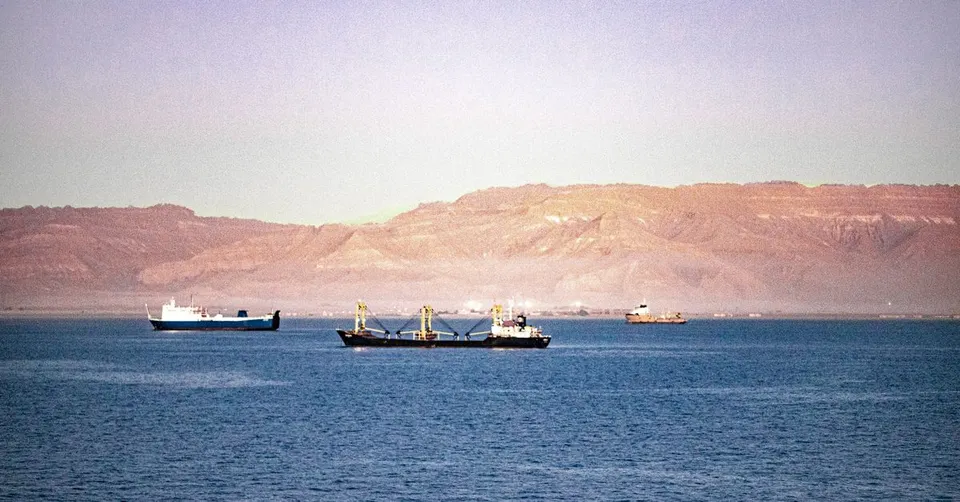
The geopolitical landscape has darkened significantly as the conflict between the United States and Iran appears to be spreading beyond the immediate Levant. A recent drone attack at an Egyptian port near the Suez Canal has sent shockwaves through global shipping lanes. This strike is particularly alarming because it targets one of the world's most vital maritime chokepoints. While the US and Iran have been exchanging direct strikes in Iraq and Syria, the expansion into Egyptian territory suggests a 'Phase II' of the war that aims to disrupt global commerce. In response, Iranian Foreign Minister Abbas Araghchi has issued a stern warning to Cyprus, urging Nicosia to prevent foreign forces from using military bases on the island for strikes against Iran, indicating that Tehran is looking to pre-emptively neutralize any Western staging grounds in the Mediterranean.
This escalation is not just a military concern but a massive economic risk. The Suez Canal handles roughly 12% of global trade; any sustained threat to its safety would force ships to take the long route around Africa, skyrocketing shipping costs and reigniting global inflation. For the Iranian public, these developments are a double-edged sword. While the government frames these actions as a 'war of resistance' and a demonstration of regional strength, the reality on the ground involves renewed US strikes on domestic targets like Ahvaz and Qeshm Island. The diplomatic tension with Cyprus further isolates the region, as Tehran attempts to draw red lines around any territory that hosts a Western military presence.
---
The US Consumer Paradox: Spending High, Savings Depleted
New economic data from the United States reveals a worrying trend for the global economy: Americans are still spending, but they are doing so by draining their savings at an unsustainable rate. While consumer spending rose in June, the personal savings rate has plummeted to near-record lows. This suggests that the 'resilience' of the US economy is being fueled by a desperate attempt to maintain lifestyle standards in the face of persistent inflation. Although the PCE inflation gauge—the Federal Reserve's preferred metric—actually fell for the first time since the pandemic, the damage to household balance sheets is already done. This 'saving-less' spending pattern puts the US economy on a precarious footing, as any sudden increase in unemployment or a market downturn could lead to a sharp contraction in consumption.
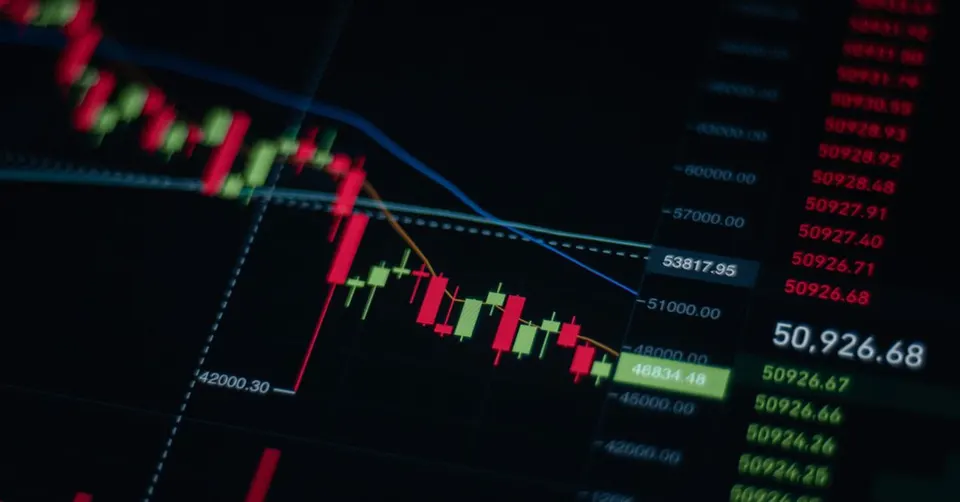
For investors, this data is a riddle. On one hand, the drop in PCE inflation gives the Federal Reserve more room to avoid further interest rate hikes, which is usually a positive signal for stocks and risk assets like Bitcoin. On the other hand, the depletion of consumer savings indicates that the primary engine of global growth is running on fumes. In the crypto markets, Bitcoin has firmed toward $65,000 as Treasuries begin to out-yield the 'carry trade,' a rare technical occurrence that suggests investors are repositioning for a shift in the Fed's long-term strategy. The markets are currently in a 'wait and see' mode, balancing the hope of lower rates against the fear of a consumer-led recession.
---
Market Brief: Toman and Gold Retreat Slightly
In the local Iranian markets, the past 24 hours have seen a slight correction in the price of hard currency and gold. The USD/IRR exchange rate moved from 193,600 to 192,900, representing a modest decline of -0.4%. This movement suggests a temporary stabilization as traders digest the latest news from the frontlines and the US economic data. Similarly, Gold 18k fell from 18,791,264 to 18,691,998 Toman per gram (-0.5%), while the Emami coin dropped from 188,500,000 to 188,000,000 Toman (-0.3%). These minor dips are likely a result of profit-taking after the recent volatility, rather than a fundamental shift in the market's long-term bearish outlook on the Toman.
Despite the slight cooling of prices, the underlying tension remains high. With Bitcoin hovering around $64,629 and the global ounce of gold at a staggering $4,097.50, the demand for safe-haven assets remains the dominant theme. Iranian investors continue to look toward USDT and gold coins as a hedge against the ongoing regional conflict. The fact that the Toman has not plummeted further despite the strikes in Ahvaz and Qeshm suggests that much of the 'war risk' may already be priced into the current exchange rates, though any further escalation at the Suez Canal could quickly shatter this fragile stability.
Frequently Asked Questions
Is the Suffolk nuclear power station in immediate danger from the wildfire?
Why is the drone strike in Egypt significant for global markets?
Why are US consumers saving less despite lower inflation figures?
Geopolitical Chokepoints: The Vulnerable Arteries of Global Trade
The recent news of a drone attack near the Suez Canal amidst broader regional tensions highlights a critical concept in international relations and economics: geopolitical chokepoints. These are narrow maritime passages or land routes that are strategically vital for global trade, particularly for the movement of energy resources and manufactured goods. Examples include the Suez Canal, the Strait of Hormuz, the Strait of Malacca, and the Bab-el-Mandeb Strait. These chokepoints act as the world's economic arteries, enabling the efficient flow of commerce between major production hubs and consumption markets.
The immense significance of these chokepoints means that any disruption, whether due to political instability, armed conflict, piracy, or even natural disasters, can have profound global repercussions. When a chokepoint is threatened or blocked, shipping routes must often divert, leading to longer transit times, increased fuel consumption, and higher insurance premiums. These additional costs are then passed on through the supply chain, potentially leading to increased prices for consumers and contributing to inflationary pressures worldwide.
The vulnerability of these critical passages directly impacts global supply chains. A drone attack, as mentioned in the keywords, or the escalation of a regional conflict, like the Iran-US tensions spreading to Egyptian borders, can quickly transform localized instability into a global economic challenge. Nations reliant on these routes for their energy imports or raw materials face heightened risks of supply shortages and price volatility, directly impacting their energy security and economic stability. Understanding the role and vulnerability of geopolitical chokepoints is therefore crucial for comprehending the interconnectedness of global security and economic prosperity.
Topics
Related Articles