Trump Signals 'Rapid Deal' to Avert Iran Strikes; Domestic Gold Prices Plunge 2.3% as Markets Pivot
توقف مشروط حملات نظامی ترامپ علیه ایران؛ سقوط ۲.۳ درصدی قیمت طلا در پی سیگنالهای توافق
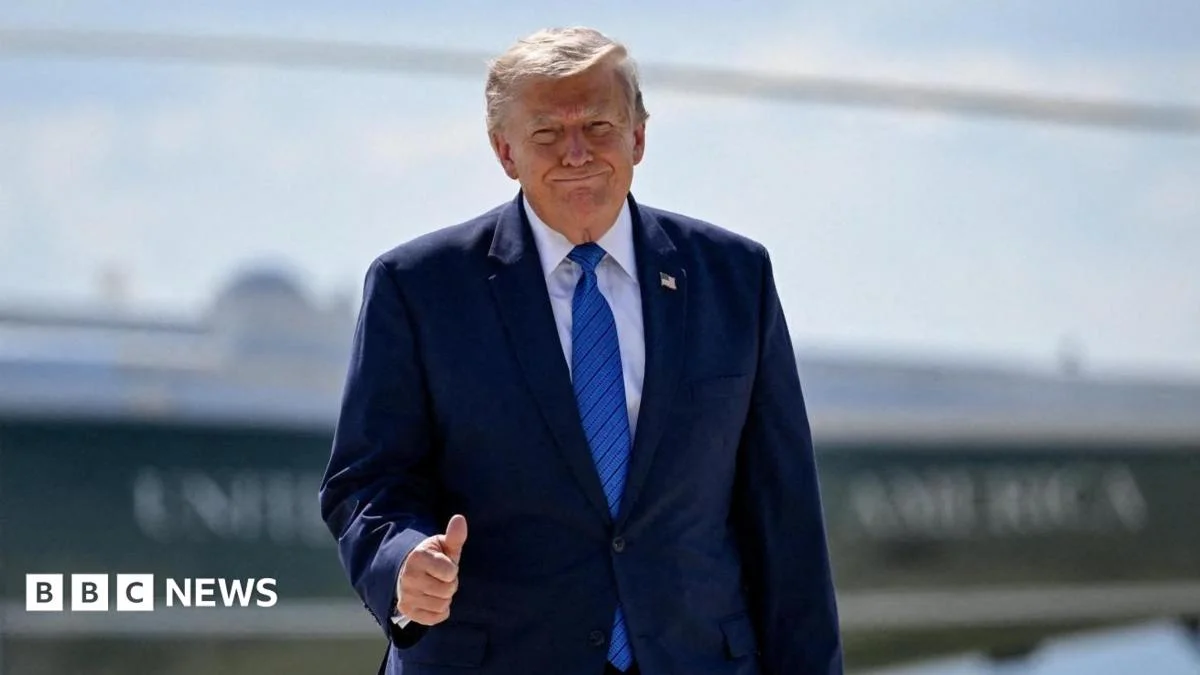
President Trump has reportedly paused planned strikes on Iran, claiming regional neighbors have brokered a framework for a 'rapid deal.' This geopolitical shift has sent domestic gold prices tumbling by 2.3% in Tehran, even as the US Dollar remains resilient.
At time of publishing
USD
194,600
Toman
Gold 18K
18.29M
Toman / gram
Bitcoin
$63,416
US Dollar
Tether
192,007
Toman
The 'Rapid Deal' Gamble: Trump Pauses Military Action
In a move that has sent shockwaves through global and regional diplomatic circles, President Donald Trump announced this morning that he is cancelling planned military strikes against Iran, contingent on the swift finalization of a new agreement. According to reports from BBC World, Trump claimed that several Middle Eastern nations approached Washington, urging a de-escalation as the "perimeters" of a potential deal have allegedly been established. This pivot suggests a return to the 'maximum pressure' mixed with 'maximum deal-making' strategy that characterized his previous administration, though the specific terms of this proposed framework remain shrouded in mystery. The timing of this announcement is critical, as it follows a period of heightened tensions that many feared would boil over into direct kinetic conflict. By framing the pause as a response to regional requests, the White House is attempting to shift the burden of proof onto Tehran to show good faith in negotiations. For the average Iranian reader, this signifies a precarious window of opportunity; while the threat of immediate strikes has receded, the demand for a "rapid" resolution suggests that the window for diplomacy is narrow and could be slammed shut if Washington's expectations are not met in the coming days.
Domestic Markets React: Gold Slumps While USD Holds Firm
The immediate reaction in the Tehran markets has been one of cautious volatility, specifically within the precious metals sector. Despite the global gold ounce price sitting at a staggering $4,043.70, the domestic price of 18-karat gold has seen a sharp decline, moving from 18,733,551 to 18,294,935 Toman, marking a 2.3% drop in just 24 hours. Similarly, the Emami coin fell from 188,000,000 to 185,000,000 Toman (-1.6%). This downward trend suggests that the 'war premium'—the extra cost added to assets due to the fear of conflict—is rapidly evaporating as traders price in the possibility of a diplomatic breakthrough. Interestingly, the US Dollar has not followed gold's lead into a downward spiral. The USD/IRR exchange rate actually saw a marginal increase, moving from 194,400 to 194,600 Toman (+0.1%). This divergence indicates that while the fear of immediate bombing has subsided, the underlying economic anxieties regarding structural inflation and long-term sanctions remain deeply embedded in the currency market. Investors appear to be moving out of gold and into the dollar as a more liquid form of preservation, waiting to see if the promised 'rapid deal' actually materializes or if this is merely a temporary lull in a larger storm. ---
Europe’s Identity Crisis: From Euro Redesigns to Far-Right Shifts
While the Middle East grapples with the threat of conflict, Europe is facing its own internal struggle over identity and policy. The European Union is currently embroiled in a massive public debate over the redesign of euro banknotes, with over 6 million people participating in a survey to decide between cultural figures like Marie Curie and Beethoven or more 'neutral' symbols like birds and rivers. This isn't just an aesthetic choice; it represents a deeper struggle within the EU to build a shared identity at a time when nationalistic sentiments are rising across the continent. Critics argue that choosing cultural icons could alienate certain member states, while proponents see it as a necessary step to strengthen the European project.

This debate over symbols is mirrored by a much harsher reality on Europe's borders. In Spain’s Ceuta enclave, the influence of far-right parties is no longer marginal; it is now setting the tone for the entire continent's response to the migration crisis. Eleven years after Europe's relatively open-door policy in 2015, the political landscape has shifted dramatically toward securitization and exclusion. This shift in European sentiment is a crucial data point for global observers, as it signals a more inward-looking Europe that may be less willing to engage in the multilateral diplomacy or economic assistance programs that were once staples of its foreign policy.
Regional Ties and the Arbaeen Pilgrimage
Amidst the high-level geopolitical maneuvering, the ground-level reality of regional cooperation is being highlighted by the ongoing Arbaeen pilgrimage. Iranian state media has been vocal about the "unbreakable" bond between the Iranian and Iraqi nations, using the religious event as a backdrop to project regional unity. Governor Mohammad Reza Mavalizadeh of Khuzestan Province emphasized that the shared devotion to Imam Hossein serves as a cultural and social bridge that transcends political volatility. For many Iranians, the pilgrimage route along the Euphrates provides a rare moment of solace and spiritual focus in an otherwise chaotic economic and political environment. However, this narrative of unity is complicated by the broader regional context, including the United Nations' recent expressions of concern over ongoing demolitions in southern Lebanon despite ceasefire agreements. The contrast between the peaceful images of pilgrims in palm groves and the reports of continued destruction in neighboring territories highlights the fragmented nature of Middle Eastern stability. While religious and cultural ties remain strong, they are often overshadowed by the hard realities of military occupation and the strategic interests of regional powers, leaving the public caught between spiritual devotion and geopolitical uncertainty.
Frequently Asked Questions
Why did gold prices drop while the US Dollar rose slightly?
What does Trump mean by a 'rapid deal'?
How is the European far-right affecting global geopolitics?
Why Gold Prices React to Geopolitical Tensions
Gold has long been regarded as a safe‑haven asset – a store of value that investors turn to when political or economic uncertainty spikes. When headlines warn of potential military action, such as a possible Iranian strike, investors anticipate heightened risk and often flood the market with buying orders for gold, pushing its price up. Conversely, when diplomatic breakthroughs appear – for example, a rapid U.S.‑Iran nuclear deal – the perceived risk diminishes and the demand for gold can fall sharply, leading to price drops like the 2.3 % plunge observed in Tehran’s domestic market.
The mechanism behind this price swing is rooted in risk‑adjusted returns. In turbulent times, equities and currencies may become volatile, eroding expected returns. Gold, which does not pay interest or dividends, compensates by offering price appreciation that is uncorrelated with most financial assets. This negative correlation makes gold an attractive hedge, and the risk premium investors demand for holding other assets shrinks when the geopolitical threat recedes, causing gold to lose its premium.
Exchange‑rate dynamics amplify the effect. In countries where the local currency is weakening against the dollar – such as Iran’s rial amid sanctions – gold priced in the local currency can become more expensive even if the international spot price is stable. When a de‑escalation reduces the pressure on the domestic currency, the USD/IRR exchange rate may stabilise or even strengthen, further contributing to a domestic gold price decline.
It is also worth noting that global commodity markets are interconnected. A major currency redesign, like the new euro banknotes, can shift investor attention and liquidity across asset classes, subtly influencing gold demand. However, the dominant driver remains the collective market perception of geopolitical risk, which can swing gold prices dramatically within days.
Understanding this relationship helps investors anticipate short‑term price movements and decide whether to use gold as a hedge or as a speculative instrument. By monitoring diplomatic developments, sanction regimes, and currency trends, one can better gauge when gold is likely to rise as a refuge or fall as calm returns to the markets.
Topics
Related Articles