Paris Trial for Far-Right Activists Begins as Tehran’s ELECOMP Showcases Tech Resilience Amid Economic Shifts
آغاز محاکمه جنجالی راستگرایان در پاریس و نمایش تابآوری تکنولوژی در الکامپ تهران
A high-profile murder trial in Paris highlights the rising tide of far-right extremism in Europe, while Tehran concludes its flagship ELECOMP exhibition focused on digital economy growth. Meanwhile, UK housing data shows a surprise price drop and a tragic cargo plane crash in Miami claims five lives.
At time of publishing
USD
225,500
Toman
Gold 18K
23.34M
Toman / gram
Bitcoin
$79,431
US Dollar
Tether
226,206
Toman
Far-Right Trial in Paris Reopens Wounds of Political Violence
The trial of two prominent far-right activists, Loik Le Priol and Romain Bouvier, began this Monday in Paris, centered on the 2022 killing of Federico Martin Aramburu, a former Argentine rugby international. The case has become a focal point for concerns regarding the radicalization of European political fringes. Aramburu was shot dead in the early hours of March 19, 2022, following an altercation at a bar in the upscale Saint-Germain-des-Pres district. The suspects, both linked to the now-dissolved ultra-right group GUD, face charges of murder and attempted murder, which could carry life sentences if they are convicted.
This trial is not merely a criminal proceeding but a significant cultural moment for France and the broader European Union. It comes at a time when far-right movements are gaining unprecedented mainstream traction across the continent, as seen in recent electoral shifts in Germany and France itself. For the Iranian diaspora and international observers, the proceedings serve as a barometer for how European judiciaries handle politically motivated violence. The defense is expected to argue that the shooting was not premeditated, while prosecutors aim to prove that the suspects' ideological backgrounds played a definitive role in the escalation of the conflict.

ELECOMP 2026: Tehran Navigates a Digital Future Under Sanction Pressure
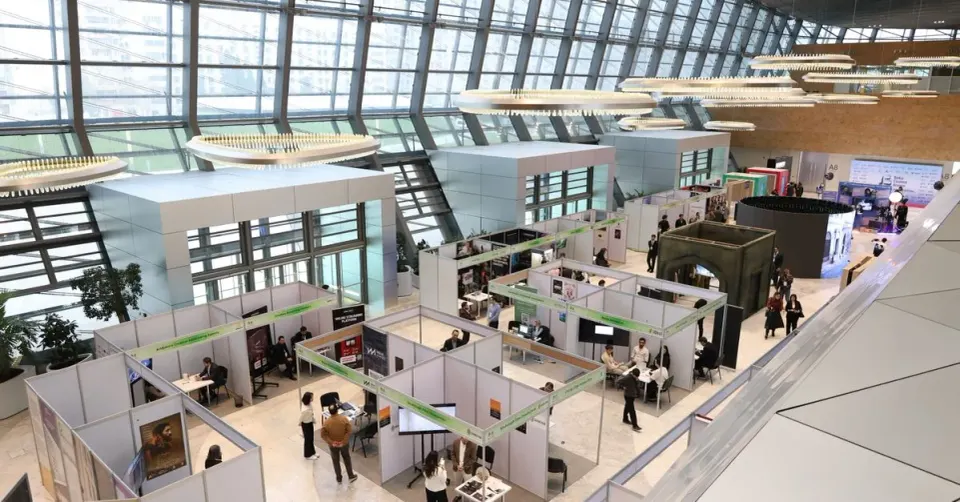
The 29th International Exhibition of Electronics, Computer, and E-Commerce (ELECOMP) recently concluded at the Tehran International Exhibition Centre, serving as a critical platform for Iran's domestic tech sector. Amidst ongoing international sanctions and economic isolation, the event showcased a shift toward self-reliance in software development and hardware assembly. Thousands of visitors and hundreds of local firms gathered to discuss the expansion of Iran's digital economy, which the government increasingly views as a vital alternative to traditional oil-based revenue. The focus this year was heavily weighted toward e-commerce platforms and fintech solutions that can operate independently of global financial networks.
While the exhibition highlights the ingenuity of Iranian engineers and startups, it also underscores the growing digital divide. The lack of access to high-end global components and the ongoing issues with internet stability remain significant hurdles for the industry. However, the sheer scale of ELECOMP 2026 suggests that the local tech ecosystem is maturing. For Iranian investors, the tech sector remains one of the few areas where domestic capital can find growth, even as the national currency faces continued volatility. The event serves as a reminder that despite geopolitical constraints, the drive for technological modernization remains a core pillar of the urban Iranian economy.
Global Economic Cooling: UK House Prices and Miami Aviation Tragedy
In the global economic sphere, Lloyds Bank reported that UK house prices fell by 0.4% year-on-year in August, marking the first such decline in nearly three years. The average property cost dropped to £298,468, a figure that came in below the expectations of most economists. This cooling of the British property market is largely attributed to the cumulative effect of high interest rates and a general sense of geopolitical uncertainty that has made prospective buyers more cautious. For global markets, this is a clear signal that the era of rampant property price inflation in Western hubs may be reaching a plateau, potentially influencing central bank decisions on interest rate cuts in the coming months.
Simultaneously, the aviation and logistics sector was hit by tragedy as an Amazon cargo plane, a Boeing 767-300, overran the runway and caught fire at Miami International Airport. The accident resulted in five fatalities and five serious injuries, raising fresh questions about the safety protocols and maintenance of aging cargo fleets. While the immediate market impact on Amazon and Boeing was relatively contained, the incident adds to a string of safety concerns involving Boeing aircraft that have plagued the company's reputation over the past several years. Investigators are currently focusing on the mechanical state of the aircraft and the weather conditions at the time of the landing.

Iranian Market Snapshot: Minor Retraction in Currency and Gold
The domestic Iranian market saw a slight cooling trend over the past 24 hours. The USD/IRR rate moved from 226,700 to 225,500, representing a -0.5% decrease. This minor appreciation of the Toman suggests a temporary stabilization in the currency market, though it remains within a historically high range. Similarly, the gold market reflected this downward pressure, with 18k gold per gram moving from 23,355,187 to 23,339,027 (-0.1%). The Emami coin also saw a decrease, falling from 234,000,000 to 233,000,000 Toman (-0.4%).
These movements are largely seen as technical corrections following recent volatility. While the slight drop in gold and USD prices might offer a brief window of relief for some buyers, the underlying economic fundamentals—driven by inflation and regional tensions—suggest that the market remains sensitive to external shocks. Investors are keeping a close eye on international developments, particularly the trial in Paris and ongoing ceasefire negotiations in the Middle East, as these factors often dictate the sentiment in the Tehran bazaar more effectively than domestic policy announcements.
Frequently Asked Questions
Why is the Paris trial of Le Priol and Bouvier significant?
What was the main outcome of ELECOMP 2026 in Tehran?
Why did UK house prices fall for the first time in three years?
Understanding Inflation: Its Impact on Currencies and Asset Prices
Inflation is a fundamental economic concept that describes the rate at which the general level of prices for goods and services is rising, and subsequently, purchasing power is falling. When you hear about "economic shifts" or the fluctuating "USD IRR price" and "Gold price Iran," inflation is often the underlying force at play. It's not just about things getting more expensive; it's about your money buying less than it used to, impacting everything from daily groceries to long-term investments.
One of the most immediate and significant impacts of high inflation is on a country's currency. As prices rise domestically, the purchasing power of the local currency diminishes, often leading to currency depreciation against major foreign currencies like the US Dollar. This is particularly evident in economies facing persistent high inflation, where the exchange rate, such as the "USD IRR price," can see substantial and rapid changes. This depreciation makes imported goods more expensive and can erode the savings of individuals and businesses.
In response to inflationary pressures, investors often seek safe-haven assets. Gold is a classic example, frequently referred to as an "inflation hedge." When traditional currencies lose value, gold tends to retain or even increase its value, making it an attractive option during times of economic uncertainty and rising prices, as reflected in the "Gold price Iran" keyword. However, other assets react differently. Real estate, for instance, can initially see price increases during mild inflation, but if central banks raise interest rates aggressively to combat high inflation, borrowing costs surge, which can lead to a slowdown or even a fall in property values, as suggested by the "UK house prices fall" keyword.
Navigating an inflationary environment presents significant challenges for both individuals and governments. Businesses must adapt their pricing strategies and supply chains, while governments often implement monetary policies, such as adjusting interest rates, to stabilize prices. Understanding inflation is crucial for making informed financial decisions, from managing personal finances to comprehending broader economic headlines about market shifts and resilience.
Topics
Related Articles