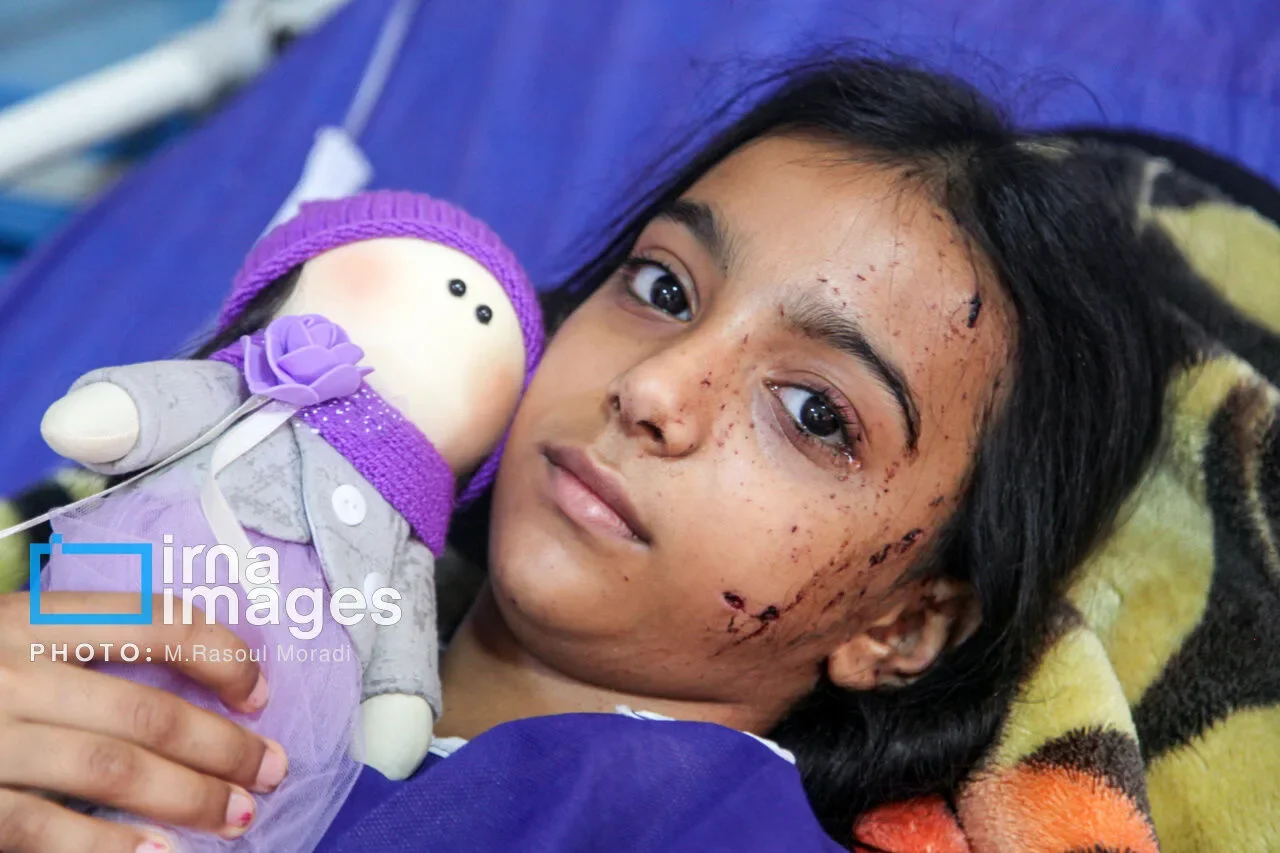
US Strike Kills Civilians in Iran Wedding; German Far-Right Gains; Bitcoin Holds Steady
حمله آمریکا به عروسی در ایران؛ پیروزی راستگرایان در آلمان؛ بیتکوین روی ۷۹ هزار دلار ماند
A US airstrike in Iran's Hormozgan province has tragically turned a wedding into a funeral, killing four people and injuring dozens. Meanwhile, Germany's far-right AfD party has secured a key state election victory, signaling a potential shift in European politics. In the crypto world, Bitcoin has maintained its position above $79,000 despite recent economic data.
At time of publishing
USD
224,000
Toman
Gold 18K
23.02M
Toman / gram
Bitcoin
$79,466
US Dollar
Tether
223,978.048
Toman
US Airstrike Kills Four at Iranian Wedding in Hormozgan
A US airstrike on September 1st in Iran's Hormozgan Province has resulted in the deaths of four individuals, including a child, and left 68 others injured. The attack targeted a house where a wedding ceremony was underway, transforming a celebration into a tragedy. Images from the scene depict the devastating aftermath, with significant damage to the building and surrounding areas. While the US has not officially commented on the specific incident, the strike comes amid heightened regional tensions and ongoing concerns about maritime security in the Persian Gulf.
This event, if directly attributable to US forces, raises serious questions about targeting protocols and the potential for civilian casualties in military operations. The incident is likely to further inflame anti-American sentiment within Iran and could have implications for regional stability. For Iranians, such events contribute to a climate of fear and uncertainty, potentially impacting economic confidence and the stability of the local currency, the Toman, as geopolitical risks are perceived to increase.
Germany's AfD Secures Key State Election Victory Amidst European Political Shifts
Germany's far-right Alternative for Germany (AfD) party has achieved a significant victory in a key state election in Saxony-Anhalt, signaling a growing trend of right-wing populism across Europe. While the party narrowly missed securing an outright majority, its strong performance has sent ripples through the political landscape, prompting responses from other major political factions. The election outcome is being closely watched as a barometer for upcoming national and European elections, with concerns mounting over the potential for further gains by far-right and nationalist parties.
This electoral success for the AfD is attributed to a range of factors, including public dissatisfaction with current government policies, concerns over immigration, and broader anxieties about economic stability. The party has capitalized on these sentiments, presenting itself as an alternative to the established political order. The implications of this victory extend beyond Germany, potentially influencing the policy debates and political discourse in neighboring countries and across the continent, particularly concerning issues of national sovereignty, trade, and migration.
Bitcoin Stabilizes Above $79,000 Despite Economic Data; Zcash Sees Volatility
Bitcoin (BTC) has demonstrated resilience, holding its ground above the $79,000 mark despite recent economic data indicating a stronger-than-expected US jobs report. The market had anticipated that robust payroll figures would increase the likelihood of a September interest rate hike by the Federal Reserve, a move typically seen as a headwind for risk assets like cryptocurrencies. However, Bitcoin and other major cryptocurrencies have largely shrugged off these concerns, indicating a potential decoupling from traditional equity market reactions or a belief that the market has already priced in such possibilities.
While Bitcoin remains relatively stable, other cryptocurrencies are experiencing significant price action. Zcash (ZEC) has seen a remarkable surge, with some reports indicating a 45% increase over the past week, partly driven by innovative tokenomics in smaller altcoins like ZCAT which distribute Zcash rewards to holders. This divergence highlights the varied dynamics within the crypto market, where specific project developments and speculative interest can lead to substantial price swings independent of broader market trends. For Iranian investors, who often turn to cryptocurrencies amid economic uncertainty, such volatility underscores both the potential for gains and the inherent risks involved, with USDT remaining a key stablecoin proxy within the Toman market.
Qatar Prepares to Restart LNG Exports as Tankers Head to Gulf
QatarEnergy is reportedly making preparations to resume liquefied natural gas (LNG) loadings, with six empty LNG carriers observed en route to the Persian Gulf. Ship-tracking data indicates these vessels are either in the Gulf of Oman or approaching it, suggesting a potential restart of export operations. This development follows QatarEnergy's successful shipment of an LNG cargo through the Strait of Hormuz at the end of July, several weeks after a previous carrier had faced issues. The movement of these tankers is being closely monitored as a sign of Qatar's readiness to navigate the crucial maritime chokepoint and resume its significant role in global energy markets.
The potential restart of Qatari LNG exports is significant for global energy supply dynamics. Qatar is one of the world's largest LNG exporters, and any disruption or resumption of its shipments can influence international gas prices and availability, particularly in Asia and Europe. The successful navigation of the Strait of Hormuz, a vital artery for global trade, remains a key factor in ensuring the smooth flow of these energy resources. For regional players and global energy consumers, the active movement of these LNG tankers signals a return to more stable export operations, easing concerns about potential supply shortages.
Watch
"Jubilation and Pain": The German far-right marches to victory in key state election • FRANCE 24
FRANCE 24 English
Frequently Asked Questions
What was the immediate impact of the US airstrike on the wedding in Hormozgan?
What does the AfD's victory in the German state election signify?
Why did Bitcoin remain stable despite the strong US jobs report?
What is the significance of Qatar preparing to restart LNG exports?
International Humanitarian Law and Civilian Protection
International Humanitarian Law (IHL), often referred to as the "laws of war" or "laws of armed conflict," is a set of rules that seeks to limit the effects of armed conflict for humanitarian reasons. It protects persons who are not or are no longer participating in hostilities and restricts the means and methods of warfare. Its primary goal is to strike a balance between military necessity and humanitarian considerations, ensuring that even in times of war, a minimum level of humanity is maintained. IHL is largely codified in the four Geneva Conventions of 1949 and their Additional Protocols.
A cornerstone of IHL is the principle of distinction. This principle mandates that parties to an armed conflict must at all times distinguish between civilians and combatants, and between civilian objects and military objectives. Attacks may only be directed against combatants and military objectives. Civilians and civilian objects – such as homes, schools, hospitals, and places of worship – are protected from direct attack. Any intentional targeting of civilians or civilian objects constitutes a war crime.
Beyond distinction, IHL also includes the principle of proportionality. This means that even when attacking a legitimate military objective, an attack is prohibited if it is expected to cause incidental loss of civilian life, injury to civilians, or damage to civilian objects that would be excessive in relation to the concrete and direct military advantage anticipated. Furthermore, parties to a conflict must take all feasible precautions in attack to avoid, or at least minimize, civilian casualties and damage to civilian objects, including verifying targets and giving effective advance warning when circumstances permit.
Adherence to IHL is a complex challenge in modern warfare, particularly in densely populated areas or when non-state actors are involved. When violations occur, particularly grave breaches, individuals can be held accountable for war crimes before national or international courts. The tragic mention of civilian casualties in the headline underscores the critical importance of IHL and the ongoing global efforts to ensure its respect and implementation, even amidst the chaos and fog of war.
Topics
Related Articles