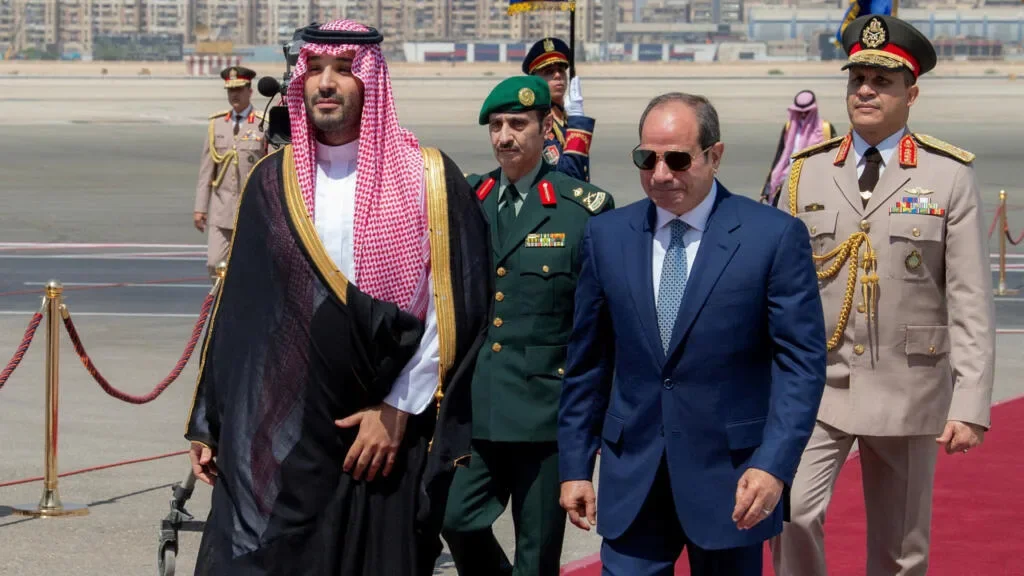
Red Sea Tensions Spike Oil Prices as Houthis Threaten Saudi Arabia; Congress 'Asleep' on AI Regulation
تنشها در دریای سرخ قیمت نفت را بالا برد؛ حوثیها عربستان را تهدید میکنند و کنگره آمریکا در برابر هوش مصنوعی 'خواب است'
Escalating Houthi attacks on Saudi Arabia are intensifying regional conflict, threatening critical Red Sea shipping lanes and pushing global oil prices higher. Meanwhile, US Senator Bernie Sanders has sharply criticized Congress for its perceived inaction and lack of understanding regarding the urgent need for AI regulation, highlighting a growing legislative vacuum in the tech sector. Locally, Iranian markets saw slight dips in USD, gold, and coin prices amidst these global and regional uncertainties.
At time of publishing
USD
231,000
Toman
Gold 18K
23.25M
Toman / gram
Bitcoin
$76,708
US Dollar
Tether
230,169
Toman
Red Sea Tensions Escalate, Threatening Global Shipping and Oil Markets
The Arabian Peninsula finds itself at a new flashpoint as Houthi forces intensify their attacks on Saudi Arabia, drawing the kingdom back into the quagmire of the Yemen conflict and raising alarm bells for global shipping routes. These renewed hostilities, particularly targeting Saudi cities, pose a significant threat to the Bab al-Mandab strait, a narrow and critical waterway at the southern end of the Red Sea. This strait is a vital artery for global trade, especially for oil shipments heading to Asia, becoming even more crucial as the Strait of Hormuz in the Persian Gulf faces its own persistent geopolitical risks. The United Nations has simultaneously issued dire warnings about a burgeoning humanitarian crisis in Yemen, estimating that 100,000 Yemenis have already been displaced amidst the escalating conflict.
Despite official denials from Tehran, senior sources within the European Union’s energy security complex, as reported by OilPrice.com, indicate that the Islamic Revolutionary Guard Corps (IRGC) commanders in Tehran orchestrated the recent 8 September attacks on Saudi Arabia. Furthermore, IRGC officers on the ground in Yemen are alleged to have coordinated these strikes, underscoring Iran’s persistent, albeit covert, involvement in supporting Houthi operations for years through funding, arming, and training. This alleged backing forms the backbone of the "Mecca Alliance" warning to Iran, emphasizing that the international community views Tehran as complicit in these destabilizing actions. The direct consequence of these mounting tensions is a noticeable spike in global oil prices, reflecting heightened risk premiums associated with disruptions to these critical maritime chokepoints.
For Iranian readers, the escalating regional instability in the Red Sea and Yemen has tangible implications. While global oil prices are rising due to supply concerns, the domestic Iranian market shows a more complex picture. Increased regional risk typically fuels demand for safe-haven assets, but the specific dynamics of the Iranian economy, already grappling with sanctions and internal pressures, can lead to varied responses. The broader geopolitical climate, characterized by such flashpoints, influences currency expectations and trade dynamics, potentially leading to higher costs for imported goods and further uncertainty for businesses and households alike. The ongoing regional friction serves as a constant reminder of the external pressures influencing daily economic realities within Iran.
Global Stocks Resilient Amidst Yields, Local Markets See Slight Dip
Global stock markets have largely managed to weather the storm of rising Treasury yields, demonstrating a surprising degree of resilience in recent months. This fortitude has primarily been attributed to robust corporate earnings growth, which has provided a significant buffer against the gravitational pull of higher bond rates. Investors have seemingly focused on the strong performance of companies, allowing equity valuations to hold firm even as the cost of borrowing for governments, and by extension, corporations, has steadily increased. This dynamic has created a period where traditional market indicators, which would typically signal a downturn in stocks when yields rise, have been somewhat decoupled.
However, analysts are now suggesting that this period of relative immunity might be nearing its end. The continued ascent of bond rates, particularly for long-term Treasury yields, could eventually begin to erode corporate profitability and investor confidence. As the cost of capital climbs, businesses may face increased pressure on their margins, potentially impacting future earnings growth and making equities less attractive compared to safer, higher-yielding bonds. This shift could trigger a re-evaluation of risk assets globally, potentially leading to a broader market correction if the balance between earnings growth and borrowing costs tips unfavorably.
In contrast to the global oil market's price spike, the local Iranian market experienced a slight downward movement across key indicators over the past 24 hours. The USD/IRR exchange rate moved from 231,200 to 231,000, a marginal decrease of -0.1%. Similarly, Gold 18k/gram saw a minor dip from 23,292,857 to 23,246,687 (-0.2%), and the Emami coin, often seen as a significant hedge, declined more notably from 234,000,000 to 231,500,000 (-1.1%). These modest declines in local currency and gold prices, despite the regional oil tensions, could reflect a complex interplay of internal market dynamics, potential profit-taking, or a localized reaction to broader economic uncertainties that are distinct from the immediate global energy market's response.
[IMAGE: Stock market trading screen displaying charts and figures with a blurred image of a Federal Reserve building in the background]
US Congress Criticized for Inaction on AI Regulation
Senator Bernie Sanders has sharply criticized the United States Congress, accusing lawmakers of being "asleep at the wheel" when it comes to regulating artificial intelligence. Speaking at an AI conference, Sanders voiced strong concerns about the rapid advancement of AI technologies without adequate legislative oversight, going so far as to call the president's perceived ignorance on the issue "truly embarrassing." This public rebuke highlights a growing apprehension among some policymakers regarding the potential societal implications of unchecked AI development, ranging from job displacement and privacy concerns to ethical dilemmas and the spread of misinformation.
The senator's remarks underscore a significant gap between technological innovation and governmental response. As AI capabilities expand at an unprecedented pace, legislative bodies often struggle to understand the complexities, anticipate future challenges, and formulate effective policies. This regulatory vacuum creates a landscape of uncertainty for both developers and the public. Without clear guardrails, there are fears that the benefits of AI might be overshadowed by unintended consequences or even malicious applications, leading to calls for more proactive and informed engagement from elected officials to shape the future of this transformative technology responsibly.
The perceived congressional inertia on AI regulation carries substantial implications for the tech industry and the broader economy. A lack of clear legal and ethical frameworks can either stifle innovation due to ambiguity or, conversely, allow for rapid, unregulated expansion that might later necessitate drastic, disruptive interventions. For Iranian businesses and tech enthusiasts, observing the global debate on AI governance is crucial, as international standards and regulatory trends often influence local policy discussions and the landscape for technological adoption and development. This debate in the US reflects a worldwide challenge in balancing innovation with necessary oversight, a balance that will ultimately define the trajectory of AI's integration into society.

Frequently Asked Questions
What are the key waterways threatened by the escalating Yemen conflict?
What is the 'Mecca Alliance' and why is it warning Iran?
How do rising US Treasury yields affect global stock markets?
What are Senator Sanders' main concerns regarding AI regulation in the US?
How have local Iranian market prices (USD, Gold, Coin) reacted to these global and regional developments?
The Bab al‑Mandab Strait: A Maritime Chokepoint Shaping Global Oil Prices
The Bab al‑Mandab is a narrow sea corridor that links the Red Sea with the Gulf of Aden, sitting between the Arabian Peninsula and the Horn of Africa. At its narrowest point the strait is only about 20 km wide, making it one of the world’s most critical maritime chokepoints. More than a million barrels of crude oil and refined products pass through daily, alongside a huge volume of container traffic that fuels global trade. Because the strait is the only sea route for oil from the Persian Gulf to Europe and the United States that does not require a long detour around Africa, any disruption can instantly reverberate through world markets.
Geopolitical tensions in the Red Sea—particularly the Houthi insurgency in Yemen and the involvement of regional powers such as Iran—have turned the Bab al‑Mandab into a flashpoint. When the Houthis launch missiles or drones at commercial vessels, shipping companies may reroute around the Cape of Good Hope, adding thousands of nautical miles and weeks of transit time. The extra distance raises transportation costs, reduces the effective supply of oil, and pushes spot prices higher. This risk premium is reflected in the price spikes seen whenever news of attacks emerges, as traders price in the possibility of a sudden supply shock.
The concept of a “chokepoint” is central to understanding why the Bab al‑Mandab matters more than its modest size suggests. In maritime economics, a chokepoint is a narrow passage that concentrates traffic and therefore amplifies the impact of any blockage—whether due to conflict, piracy, or natural hazards. The Strait of Hormuz, the Suez Canal, and the Panama Canal are other classic examples. Because oil markets are highly sensitive to supply disruptions, even a brief interruption at a chokepoint can trigger price volatility that ripples through the global economy.
Policymakers and industry players monitor the strait closely, investing in naval escorts, satellite surveillance, and alternative routing strategies. International bodies such as the International Energy Agency (IEA) regularly assess the risk of Red Sea disruptions in their outlooks, highlighting the need for diversified supply chains and strategic petroleum reserves. Understanding the strategic importance of the Bab al‑Mandab helps explain why a regional conflict can quickly become a global economic concern.
Topics
Related Articles