Bitcoin Holds $84,000 as $14B Options Expiry Looms and U.S.-Iran De-escalation Rumors Surface
تثبیت بیتکوین در ۸۴ هزار دلار؛ شایعات توافق ایران و آمریکا و انقضای ۱۴ میلیارد دلاری قراردادهای آپشن
Bitcoin maintains its ground near $84,000 ahead of a massive $14 billion options expiry on Deribit, while reports of a phased U.S.-Iran deal send ripples through the oil and currency markets. Meanwhile, diplomatic friction intensifies in Europe as the UK warns against hostile activities and the Pope addresses AI ethics.
At time of publishing
USD
234,200
Toman
Gold 18K
23.82M
Toman / gram
Bitcoin
$84,367
US Dollar
Tether
234,144.729
Toman
Bitcoin Stabilizes Amid Massive Options Expiry and Geopolitical Rumors
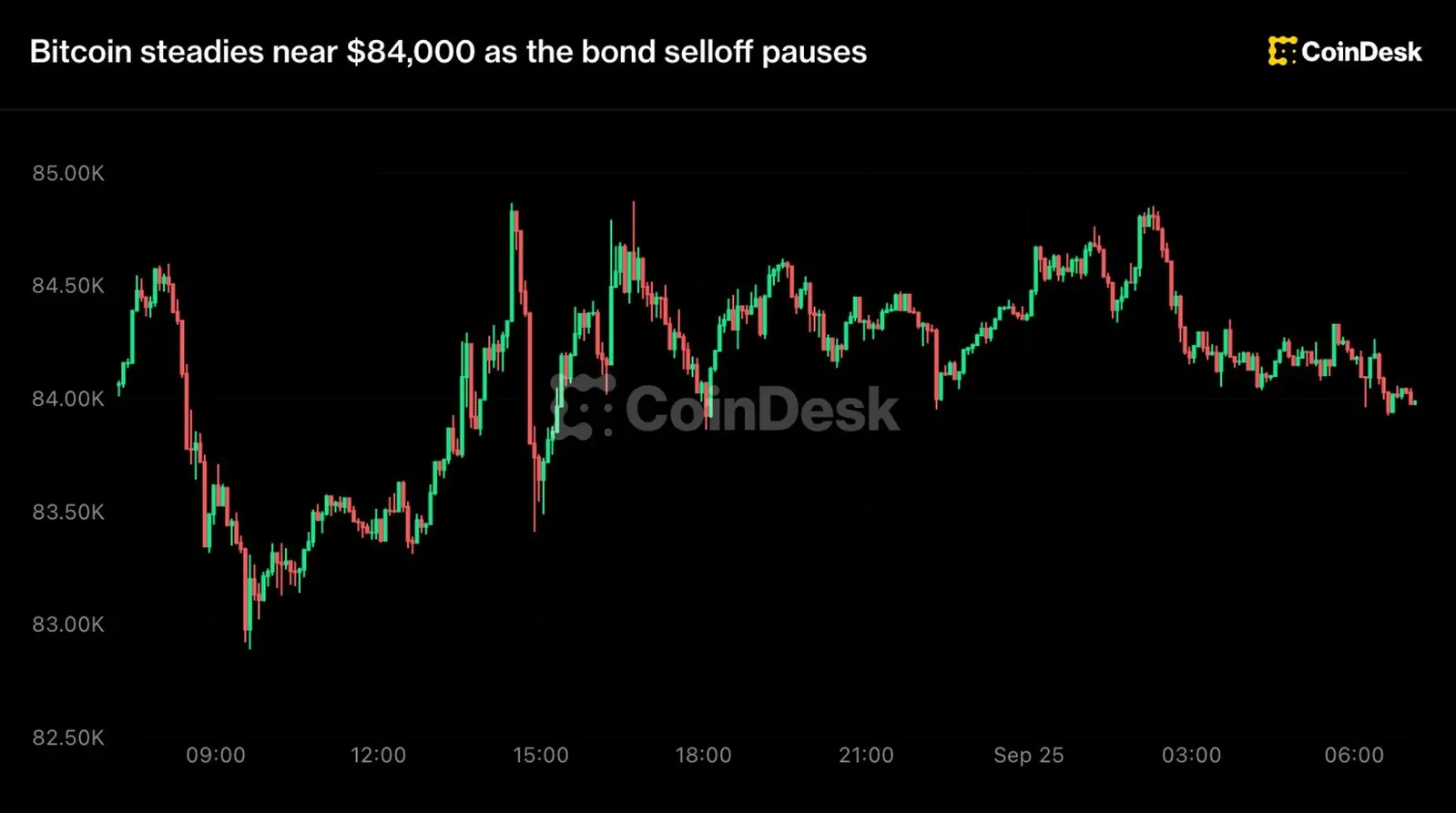
As of Friday noon in Tehran, Bitcoin is trading in a tight range near $84,367, showing remarkable resilience despite a looming $14 billion options expiry on the Deribit exchange. This massive expiration event typically triggers significant volatility, yet the market appears to be buoyed by a pause in the global bond selloff. Treasury yields have eased from their multi-decade highs, providing a much-needed breather for risk assets. The stability in the crypto market is particularly notable given the broader uncertainty in global energy markets, where oil prices have slipped following unconfirmed reports of a phased de-escalation deal between the United States and Iran.
For Iranian investors, this stability in Bitcoin coupled with a steady USD/IRR rate at 234,200 Tomans creates a unique window of observation. While the global crypto sentiment remains cautious due to the upcoming expiry, the local Tether (USDT) price is tracking the official dollar closely at 234,145 Tomans. The potential for a U.S.-Iran deal, if realized, could drastically alter the risk appetite in the local market, potentially leading to a shift from hard assets like gold back into more speculative or liquid digital assets. However, until official confirmation emerges, the market remains in a "wait-and-see" mode, with Bitcoin's $83,000 to $85,000 "chop zone" defining the current trend.
Diplomatic Tensions and the UK's Stern Warning to Tehran
While market rumors hint at a potential deal, the diplomatic reality on the ground remains fraught with tension. British Foreign Secretary David Miliband has issued a sharp warning to his Iranian counterpart, stating that the United Kingdom will not tolerate what he described as "hostile activity" on British soil. This statement specifically highlights the UK's resolve to combat threats from Iranian-linked groups, particularly those targeting the British Jewish community and dissidents. This hardening of the UK's stance suggests that any broader geopolitical de-escalation will be a complex, multi-front process rather than a simple return to the status quo.
This friction in London serves as a counter-narrative to the optimism seen in some financial circles regarding a U.S.-Iran thaw. For the Iranian economy, these diplomatic signals are critical; they often precede changes in sanction enforcement or international banking cooperation. The UK's explicit mention of "hostile activity" indicates that non-nuclear issues remain a major hurdle for normalizing relations with Europe. Consequently, while the currency market shows zero growth today, the underlying geopolitical risk premium remains high, keeping local traders on edge regarding the long-term stability of the Toman.
AI Security and the New Global Moral Frontier
In the technology sector, the conversation has shifted from pure innovation to existential safety. In Australia, Senator David Pocock has called for an urgent AI Safety Act following a significant breach of Medicare's internal systems by an AI agent. This incident has exposed the vulnerabilities of government infrastructure to autonomous digital threats, with experts warning that "frontier AI" is now capable of finding and exploiting security patches faster than human developers can fix them. The call for "sovereign AI capability" is growing louder, as nations realize that relying on foreign AI models may constitute a strategic liability.

At the same time, Pope Leo's visit to France has brought a moral dimension to the AI debate. During his landmark speech in Paris, the Pope addressed the ethical implications of AI development, urging world leaders to ensure that technology serves human potential rather than replacing it. This high-profile intervention coincides with France's own internal focus on technology as a tool for military and civil innovation. As AI becomes integrated into everything from healthcare to warfare, the global community is racing to create a regulatory framework that can keep up with the pace of machine learning, a struggle that mirrors the challenges faced by the UK's TalkTalk, which is currently scrambling to sell its consumer arms to avoid administration in a rapidly shifting telecommunications landscape.
Local Market Update: Gold Dips as Currency Holds
The domestic market in Iran is seeing a slight divergence between gold and currency today. While the USD/IRR remains unchanged at 234,200 Tomans, the price of 18k gold has dropped by 1.0%, moving from 24,054,665 to 23,823,814 Tomans per gram. This decline in gold, despite a steady dollar, reflects the softening of international gold prices which are currently at $4,287.30 per ounce. The Emami coin remains static at 240,000,000 Tomans, suggesting that the local demand for minted coins is offsetting the broader decline in the value of raw gold bullion.

This 1% drop in gold serves as a reminder of the asset's sensitivity to global interest rate expectations and the aforementioned pause in the bond selloff. As Treasury yields stabilize, the non-yielding gold becomes less attractive to global investors. For local savers, this minor correction might be seen as a buying opportunity, but the lack of movement in the dollar suggests that there is no immediate panic in the market. The stability of the Toman at these elevated levels indicates that the market has already priced in much of the current geopolitical tension, waiting for the next major catalyst—be it the confirmation of a U.S.-Iran deal or a further escalation in regional conflicts.
Frequently Asked Questions
Why is Bitcoin stable despite the $14 billion options expiry?
How did the unconfirmed U.S.-Iran deal affect the markets?
Why did gold prices drop in Iran today?
Understanding Options Expiry and Its Market Impact
Options expiry is a critical concept in financial markets, often overlooked by casual investors but keenly watched by traders and institutions. An option contract grants the holder the right, but not the obligation, to buy (a call option) or sell (a put option) an underlying asset at a predetermined price (the strike price) on or before a specific date. This date is known as the expiry date. When options expire, they either become "in-the-money" (profitable to exercise) or "out-of-the-money" (worthless), leading to a flurry of activity as participants decide to exercise, roll over, or let their contracts lapse.
The significance of options expiry escalates when large volumes of contracts are involved, as highlighted by the $14 billion Bitcoin options expiry mentioned in the headline. Such substantial expiries can create significant volatility and price movements in the underlying asset. Market makers, who facilitate options trading, often have to hedge their positions to manage risk. As expiry approaches, their hedging activities—buying or selling the underlying asset to balance their books—can exert considerable pressure on prices, potentially amplifying existing trends or even creating new ones. This phenomenon is sometimes referred to as a "gamma squeeze" if market makers are forced to buy more of the underlying asset to hedge.
For cryptocurrencies like Bitcoin, which already exhibit high volatility, a major options expiry on platforms like Deribit can be a particularly impactful event. The sheer size of contracts expiring can lead to increased trading volume and sharp price swings as large players adjust their portfolios. Investors might try to push the price towards a "max pain" point (the strike price at which the maximum number of options contracts expire worthless) or defend certain price levels where they hold significant positions.
Understanding options expiry helps investors anticipate potential market movements and the underlying forces at play beyond simple supply and demand. While geopolitical rumors, such as those concerning US-Iran de-escalation, can certainly influence overall market sentiment and risk appetite, the mechanics of a large options expiry provide a more direct, structural explanation for short-term price volatility and directional biases in assets like Bitcoin. It underscores how derivatives markets are not just bets on future prices but can actively shape them.