Battle for Bab al-Mandab Intensifies as Toman Edges Higher; Araghchi Slams Netanyahu's 'Gamble'
نبرد در بابالمندب و عقبنشینی جزیی دلار؛ واکنش تند عراقچی به ماجراجوییهای نتانیاهو
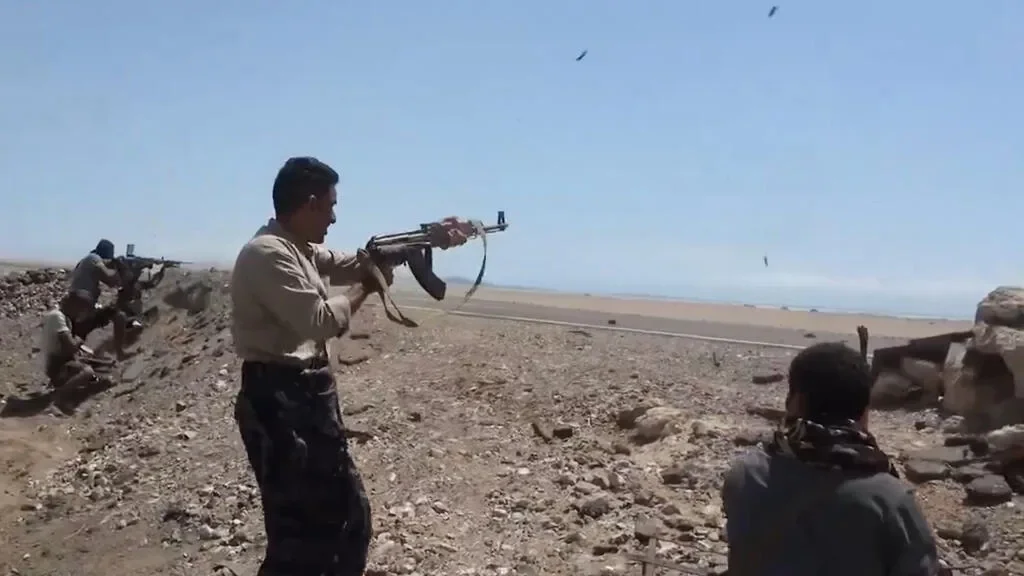
Saudi-backed forces in Yemen have launched a significant counter-offensive to reclaim the strategic Bab al-Mandab strait from Houthi control. Meanwhile, Tehran's top diplomat has escalated rhetoric against Israel as the Iranian Toman saw a slight 0.6% recovery against the US dollar.
At time of publishing
USD
265,700
Toman
Gold 18K
26.49M
Toman / gram
Bitcoin
$82,861
US Dollar
Tether
265,149
Toman
Strategic Shift at the Bab al-Mandab Strait
The geopolitical landscape of the Red Sea has taken a sharp turn this Saturday, October 10, 2026, as Saudi-backed Yemeni government forces announced a major advance against Houthi rebels near the Bab al-Mandab strait. This move follows a week of preparation after the internationally recognized government initiated a counter-offensive to roll back territory lost during the Houthis' lightning offensive last month. The strait, a critical chokepoint for global oil and commercial shipping, remains one of the most volatile maritime corridors in the world, and any shift in control here has immediate ramifications for global supply chains and insurance premiums for tankers.
For Iran, this escalation is particularly sensitive. As a primary supporter of the Houthi movement, Tehran views the control of these waterways as a vital component of its regional leverage. The success of a Saudi-backed offensive could signal a weakening of the 'Axis of Resistance's' maritime reach, potentially easing the pressure on international shipping but increasing the risk of a wider regional conflagration. Traders in the Persian Gulf are watching closely, as prolonged instability often translates into higher risk premiums for regional currencies and energy prices.

Rhetorical Escalation: Araghchi vs. Netanyahu
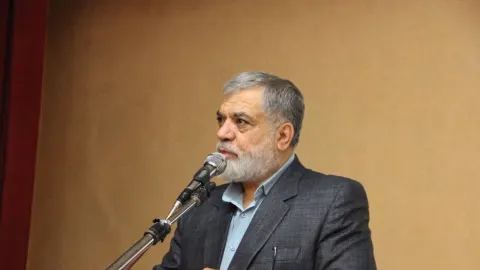
In a display of increasingly blunt diplomacy, Iranian Foreign Minister Abbas Araghchi has publicly labeled Israeli Prime Minister Benjamin Netanyahu a “degenerate gambler.” Speaking to state media, Araghchi accused the Israeli leader of sacrificing American lives and resources in a desperate bid to escape international justice and domestic legal troubles. This language reflects a hardening of Tehran's stance following recent regional setbacks and suggests that the diplomatic channels for de-escalation are currently blocked by a wall of mutual distrust and high-stakes political survival.
The timing of these comments is significant, coming as Israel continues its multi-front operations. By framing Netanyahu as a 'wanted war criminal,' Tehran is attempting to seize the moral high ground in the court of global public opinion, particularly targeting Western audiences who are increasingly critical of the humanitarian toll in Gaza and Lebanon. However, such rhetoric also signals to the markets that the risk of a direct confrontation remains elevated, preventing any significant long-term cooling of the gold and foreign exchange markets in Iran.
Palestinian Election Delay and Regional Stagnation
Further complicating the regional puzzle, the Palestinian Authority, led by the aging Mahmoud Abbas, has formally announced a delay in national elections until late 2027. This decision comes despite intense Western pressure to renew the democratic legitimacy of the Palestinian leadership, which has not held a major election in nearly two decades. The delay is widely seen as an attempt by the Fatah-led administration to avoid a potential surge in support for rival factions, including Hamas, amidst the current chaos.
This political stagnation in Ramallah ensures that a unified Palestinian voice remains elusive, complicating any long-term peace proposals or reconstruction plans for Gaza. For regional observers, this means the status quo of instability is likely to persist. When political avenues for change are closed, the vacuum is often filled by more radical elements, a cycle that has repeated itself in the Levant for decades. This persistent uncertainty continues to weigh on investor sentiment across the Middle East, keeping capital flight a constant concern for regional central banks.

Market Update: Toman Gains Ground Amid Global Shifts
On the domestic front, the Iranian Toman showed signs of resilience this Saturday. The USD/IRR exchange rate moved from 267,400 to 265,700, representing a 0.6% appreciation for the Toman. This slight recovery comes after a period of intense volatility and suggests that the central bank may be intervening to stabilize the rate or that the market has already priced in the current level of regional tension. Meanwhile, Gold 18k per gram saw a marginal decrease, moving from 26,508,610 to 26,485,525 Toman (-0.1%), while the Emami coin remained flat at 270,000,000 Toman.
In the broader tech and financial world, AI agents are becoming a daily reality for many, with new tools integrating directly into text messaging services. Companies like OpenAI are promising a new standard for privacy with their latest 'Dots' agents, though skepticism remains high regarding data security. As these AI tools begin to handle more financial and personal data, the intersection of tech privacy and market efficiency will become a key theme for the remainder of 2026. For now, Bitcoin remains under pressure, trading at $82,861 as security concerns continue to weigh on the crypto sector.
Frequently Asked Questions
چرا نبرد در بابالمندب برای بازار ایران اهمیت دارد؟
دلیل اصلی کاهش قیمت دلار در روز شنبه چه بود؟
تعویق انتخابات فلسطین چه تأثیری بر ثبات منطقه دارد؟
Geopolitical Risk and Currency Valuation
Understanding how global events ripple through national economies is crucial for any curious reader. One key concept is geopolitical risk, which refers to the potential for political events, conflicts, or instability in one region to have significant economic consequences worldwide. When headlines mention intensifying battles in strategic locations like Bab al-Mandab and simultaneous movements in a currency like the Iranian Toman, it highlights a direct link between regional conflict and a nation's economic stability, particularly its currency's value.
Geopolitical risk affects currency valuation through several mechanisms. Firstly, heightened instability can deter foreign investment, as investors seek safer havens, leading to capital flight and a depreciation of the local currency. Secondly, conflicts, especially those impacting critical trade routes, can disrupt supply chains, increase shipping costs, and drive up commodity prices (like oil), leading to inflation within affected economies. Central banks might then struggle to manage these inflationary pressures, further eroding confidence in the currency. Lastly, the perception of increased risk can simply lead market participants to demand a higher premium to hold a country's assets, thus weakening its currency.
The Strait of Bab al-Mandab, connecting the Red Sea to the Gulf of Aden, is a prime example of a global chokepoint. A substantial portion of the world's maritime trade, including oil and container shipments, passes through this narrow waterway. Any conflict or disruption here, such as attacks on commercial vessels, can immediately send shockwaves across global markets. For a country like Iran, whose economy is already navigating complex international relations and sanctions, disruptions to global trade routes or regional conflicts can exacerbate existing economic pressures, making its currency, the Toman, particularly sensitive to such geopolitical developments.
When the Toman "edges higher" amidst such conflict, it's a complex signal. While often currency appreciation is a sign of strength, in highly volatile or sanctioned economies, it can sometimes reflect specific market dynamics, government interventions, or even a temporary flight from other assets, rather than fundamental economic improvement. However, the overarching principle remains: the greater the geopolitical uncertainty surrounding a region or a nation, the more volatile and potentially vulnerable its currency becomes to sudden shifts in investor sentiment and economic fundamentals.
This intricate dance between global politics and national economics underscores why understanding geopolitical risk is vital. It's not just about distant conflicts; it's about recognizing how these events directly influence trade, investment, inflation, and ultimately, the purchasing power and stability of currencies, impacting everyday lives far beyond the immediate battlegrounds.
Topics
Related Articles