Canadian Military Incident, Strait of Hormuz Tensions Flare, French Unrest
حادثه نظامی کانادا، تنشها در تنگه هرمز و ناآرامیهای فرانسه
A deadly incident at a Canadian military base in Alberta has prompted an investigation, while tensions in the Strait of Hormuz have resurfaced with reports of fires on two tankers. Meanwhile, widespread protests and unrest continue to grip France over economic concerns.
At time of publishing
USD
262,500
Toman
Gold 18K
25.84M
Toman / gram
Bitcoin
$81,625
US Dollar
Tether
262,361.559
Toman
Deadly Incident at Canadian Forces Base Wainwright
A "deadly incident" has occurred at Canadian Forces Base Wainwright in Alberta, resulting in fatalities and injuries. The Department of National Defence confirmed the event, but provided no immediate details regarding the cause or the number of casualties. An investigation is underway to determine the circumstances surrounding the incident.
This event raises immediate concerns about safety protocols and operational security within Canada's military infrastructure. The lack of transparency regarding the cause could fuel speculation and anxiety. The implications for military readiness and morale are yet to be assessed, but any loss of life within the armed forces is a significant blow.
---
Tensions Escalate in Strait of Hormuz
Iran's IRGC has reported that two oil tankers caught fire after allegedly striking mines in the Strait of Hormuz. According to state media, the vessels were carrying approximately two million barrels of crude oil each and were reportedly using an unauthorized route. This incident, if confirmed, represents a significant escalation of maritime security concerns in the vital waterway.
The Strait of Hormuz is a critical chokepoint for global oil supplies, and any disruption carries substantial economic implications. The IRGC's statement, particularly its mention of unauthorized routes, could be interpreted as an attempt to shift blame or justify potential actions. The market impact is immediate, with oil prices showing upward pressure and increased volatility expected as traders assess the risk to supply.
---
Widespread Unrest in France
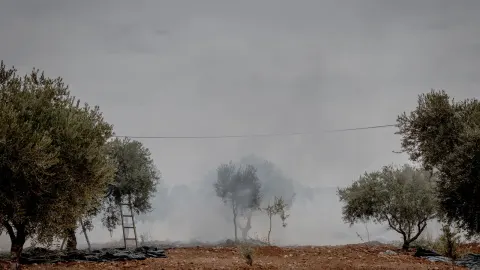
France is experiencing significant unrest as protests against the rising cost of living and poor educational conditions have escalated into national demonstrations and riots in several cities. Tens of thousands have participated in peaceful marches, but these have been accompanied by significant disorder.
The protests highlight deep-seated economic grievances among the French populace, exacerbated by current inflationary pressures. The student movement's expansion into a national issue underscores a broader dissatisfaction with government policies and economic conditions. This ongoing instability could impact economic activity within France and potentially influence broader European market sentiment, particularly concerning consumer spending and industrial output.

Frequently Asked Questions
What caused the incident at Canadian Forces Base Wainwright?
What is the significance of the Strait of Hormuz for global oil supply?
What are the main grievances of the protesters in France?
How are the markets reacting to these geopolitical events?
Why the Strait of Hormuz Matters: A Strategic Chokepoint Explained
The Strait of Hormuz is a narrow waterway—about 21 miles (34 km) wide at its narrowest point—linking the Persian Gulf with the Gulf of Oman and the open ocean. Despite its modest size, it funnels roughly a fifth of the world’s petroleum consumption, including crude oil and refined products from Saudi Arabia, Iraq, Kuwait, and the United Arab Emirates. Because so much of the global oil supply must pass through this corridor, any disruption can ripple through energy markets, affecting gasoline prices and economic stability far beyond the Middle East.
Historically, the strait has been a flashpoint for geopolitical tension. During the Iran‑Iraq War (1980‑88), Iran mined the waters and attacked shipping to pressure its adversaries, prompting the U.S. Navy’s “Operation Earnest Will” to escort Kuwaiti tankers. More recently, Iran has repeatedly threatened to close or restrict passage in response to sanctions or perceived threats, using the chokepoint as leverage in diplomatic negotiations. These threats are not merely rhetorical; the narrowness of the channel means that a small number of naval vessels or even a single incident—like a tanker fire—can halt traffic for hours or days.
The legal framework governing the strait is anchored in the United Nations Convention on the Law of the Sea (UNCLOS), which guarantees the right of “innocent passage” for commercial ships through international straits used for navigation. However, the convention also allows coastal states to take measures necessary for national security, creating a gray area that states like Iran can exploit. This ambiguity fuels uncertainty: shipping companies may reroute vessels around the Cape of Good Hope—a journey that adds thousands of nautical miles, increases fuel consumption, and raises freight costs.
Economically, the strait’s importance is reflected in oil price volatility. When news breaks of a potential closure or a security incident, benchmark prices such as Brent and WTI often spike within minutes, illustrating the market’s sensitivity to supply‑chain risks. Analysts therefore monitor naval deployments, diplomatic statements, and even satellite imagery of ship movements to gauge the likelihood of disruptions. Understanding the strategic dynamics of the Strait of Hormuz helps explain why seemingly distant events—like a Canadian military incident or protests in France—can intersect with Middle‑East energy security.
In short, the Strait of Hormuz is more than a geographic narrow; it is a strategic chokepoint where geography, international law, and great‑power politics converge. Its stability underpins the global energy system, making it a focal point for both diplomatic negotiation and military preparedness.
Topics
Related Articles