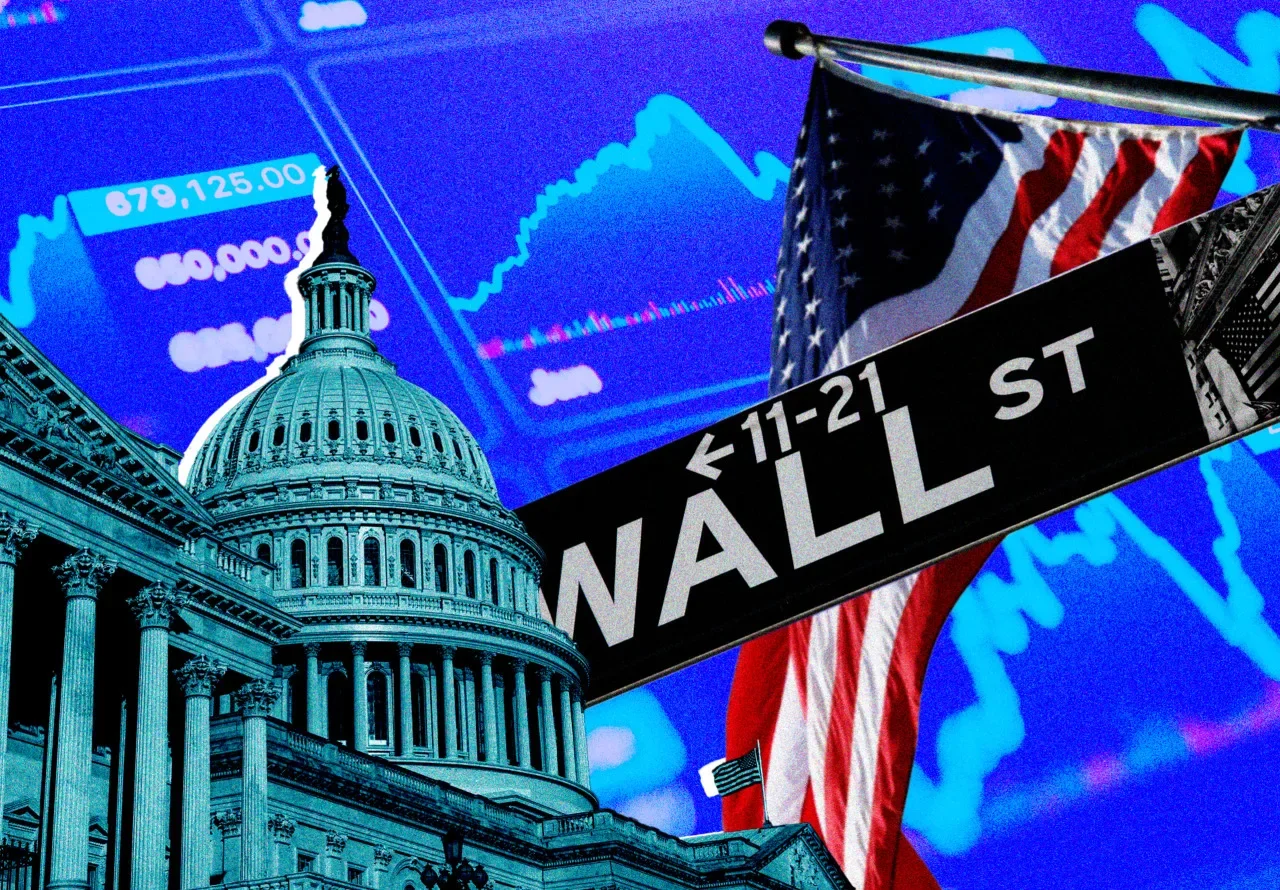
Post-Election Relief: Why Global Markets Are Betting on a November Surge Despite Midterm Volatility
بازگشت امید به بازارهای جهانی؛ چرا انتخابات میاندورهای آمریکا کلید صعود بورس و طلا خواهد بود؟
Historical data reveals that the S&P 500 typically rallies by over 15% following US midterms, regardless of the winning party. As the Federal Reserve faces mounting pressure for transparency, global investors are positioning for a year-end surge that could redefine risk appetite.
At time of publishing
USD
269,500
Toman
Gold 18K
26.01M
Toman / gram
Bitcoin
$80,242
US Dollar
Tether
269,148.38
Toman
The Historical Promise of Post-Election Relief
As the world watches the US midterm elections with bated breath, historical market data offers a surprisingly optimistic outlook for investors. Since 1950, the nine-month period following Election Day has seen the S&P 500 deliver an average return of 15.5%. This phenomenon, often referred to as a "relief rally," occurs because financial markets despise uncertainty far more than they dislike any specific political outcome. Once the votes are tallied and the legislative landscape is settled, institutional capital that has been sitting on the sidelines typically floods back into risk assets, driving prices higher across the board.
This cycle appears to be repeating in 2026, even as current volatility shakes retail confidence. The reason this matters for the global economy is the sheer gravity of US equities; when Wall Street rallies, it increases global liquidity, which often trickles down into commodities like gold and high-beta assets like Bitcoin. For Iranian observers, this shift in global sentiment is a double-edged sword. While it may buoy the value of gold—which reached $3,996.90 per ounce today—it also strengthens the US dollar's global position, potentially adding further pressure to emerging market currencies like the Toman.
The Federal Reserve’s Communication Crisis
The potential for a post-election rally is being complicated by a perceived leadership vacuum at the Federal Reserve. Chairman Kevin Warsh has come under fire for what analysts are calling "nonanswers" regarding the central bank's long-term strategy. Investors are increasingly frustrated by the Fed's inability to communicate clearly in an era where traditional economic health no longer dictates stock market returns. The disconnect between "Main Street" and "Wall Street" has widened, largely driven by the massive influence of AI and tech giants that seem immune to broader economic slowdowns.
What investors truly need right now is not just a pause in interest rate hikes, but a coherent narrative. If the Fed continues to provide vague guidance, the anticipated post-election surge could be stifled by a lack of institutional trust. For the Iranian market, this central bank ambiguity directly impacts the USD/IRR rate. Today, we saw the USD sell rate rise from 267,800 to 269,500 Toman, a 0.6% increase within 24 hours. This move reflects a hedging strategy by local traders who fear that global central bank instability will lead to a stronger dollar in the medium term.
Geopolitical Shifts and Regional Lifelines
Beyond the financial centers of New York and Washington, significant political realignments are taking place. In the UK, the Conservative party is grappling with a scandal involving Jack Ross, a former adviser to Kemi Badenoch, who was suspended over allegations related to contract killer claims. This internal chaos within the Tory party signals a continued period of instability for the British Pound, which currently sells for 360,450 Toman in Tehran. Meanwhile, in the US, the shift of former Democratic strongholds like Shasta, California, toward the MAGA movement suggests a profound shift in the American electorate that could lead to more isolationist trade policies in the coming years.
In response to these global shifts, Tehran is looking toward regional consolidation. Ambassador Reza Amiri-Moghaddam recently emphasized the importance of Iran-Pakistan border trade, describing it as a vital interest for both "brotherly nations." These regional corridors are becoming essential lifelines as Western sanctions and global market volatility tighten their grip. For the average Iranian, these agreements are more than just diplomatic rhetoric; they represent the potential for more stable supply chains and a buffer against the inflationary pressures that have pushed the price of 18k gold to 26,005,355 Toman per gram today.

The Disconnect of the Digital Age
The modern economy is facing a unique challenge: the decoupling of corporate profits from the reality of the working class. As AI search changes upend online publishing and traditional industries, the stock market is increasingly driven by technological speculation rather than job growth or consumer spending. This is evident in the current Bitcoin price, which holds steady at $80,242 despite significant geopolitical tension. For savers, this means that traditional metrics for judging "value" are becoming obsolete, requiring a more diversified approach to wealth preservation that includes both hard assets like gold and digital assets like crypto.
Frequently Asked Questions
Why do markets usually rally after US midterm elections?
How does the US election affect the price of the Toman?
What is the 'communication crisis' at the Federal Reserve?
Understanding the Post-Election Rally in Financial Markets
The idea of a "post-election rally" is a recurring theme in financial markets, particularly in the context of U.S. elections. This phenomenon suggests that after a period of heightened uncertainty and volatility leading up to an election, markets often experience a surge in investor confidence and stock prices in the immediate aftermath. This isn't a guaranteed outcome, but it's a pattern frequently observed and anticipated by market participants, as highlighted by the headline's mention of a "November Surge Despite Midterm Volatility."
The primary driver behind a post-election rally is the reduction of uncertainty. Financial markets inherently dislike unpredictability; investors struggle to price assets when the future policy landscape—concerning taxation, regulation, trade, or fiscal spending—is unclear. Once election results are known, regardless of which party wins, a degree of clarity emerges. This allows investors to better assess potential policy directions and adjust their strategies accordingly, often leading to a collective sigh of relief and a renewed willingness to invest, pushing asset prices upward.
Historically, this rally can also be attributed to a "honeymoon period" for a new administration or a sense of stability if the incumbent party maintains control. While the S&P 500 and other major indices might experience choppy trading in the months preceding an election due to speculative betting and political rhetoric, the resolution of the electoral contest often provides a catalyst for upward movement. It's important to remember that while election cycles can influence market sentiment, fundamental economic factors, corporate earnings, global geopolitical events (like regional trade dynamics, which could impact USD/IRR or Gold prices), and central bank monetary policy (as influenced by figures like Kevin Warsh and the Federal Reserve) ultimately play a more significant and sustained role in market performance.
Therefore, while the prospect of a post-election rally can fuel short-term optimism and trading strategies, astute investors always consider the broader economic landscape. The concept helps explain why global markets might be "betting on a November surge" even amidst prior volatility, but it's a pattern, not a prophecy, and should be weighed against all other prevailing economic indicators.
Topics
Related Articles