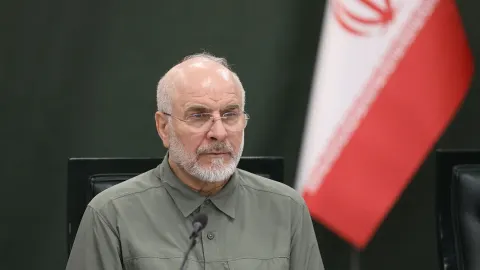
Bryan Adams Trolls Trump Over Iran Policy as Tehran Rebukes Canada-UAE Island Claims
ترانه اعتراضی برایان آدامز علیه ترامپ و تنش دیپلماتیک تهران با کانادا و امارات
Canadian rock star Bryan Adams has released a pointed musical critique of President Trump’s 'executive order' diplomacy regarding Iran, while Tehran issues a stern condemnation of Canadian and Emirati claims over the three Persian Gulf islands. In the markets, the USD rose to 271,200 Toman as gold prices saw a sharp 1.1% retreat.
At time of publishing
USD
271,200
Toman
Gold 18K
26.14M
Toman / gram
Bitcoin
$80,768
US Dollar
Tether
271,551
Toman
Rocker Bryan Adams Takes Aim at Trump’s Iran Strategy
Canadian musician Bryan Adams has made a striking return to the political spotlight with a new song titled 'Lake Ontario,' which functions as a scathing critique of U.S. President Donald Trump. In the lyrics, Adams characterizes Trump’s approach to international diplomacy as a series of petulant 'executive orders' that disrupt regional peace. Most significantly for Middle Eastern observers, Adams explicitly references the U.S. administration’s failures in Iran, singing that when things didn’t go his way in Tehran, the president acted 'like a baby tossing the toys from the pram.' This cultural pushback from one of Canada’s most iconic voices highlights the growing international friction between the two North American neighbors over global security and trade policies.
For the Iranian reader, this isn't just celebrity gossip; it represents a deepening rift in the Western alliance that often dictates the intensity of sanctions. Adams’ lyrics contrast the 'First Nations' history of the region with the modern era of unilateral decrees, suggesting that Trump’s 'Lake America' mentality is pushing the world to the brink. As the U.S. midterm elections approach, such high-profile cultural interventions serve to embolden critics of the current administration’s 'maximum pressure' tactics, which have directly contributed to the volatility of the Toman in recent months.

Tehran Rebukes Canada-UAE Joint Declaration on Three Islands
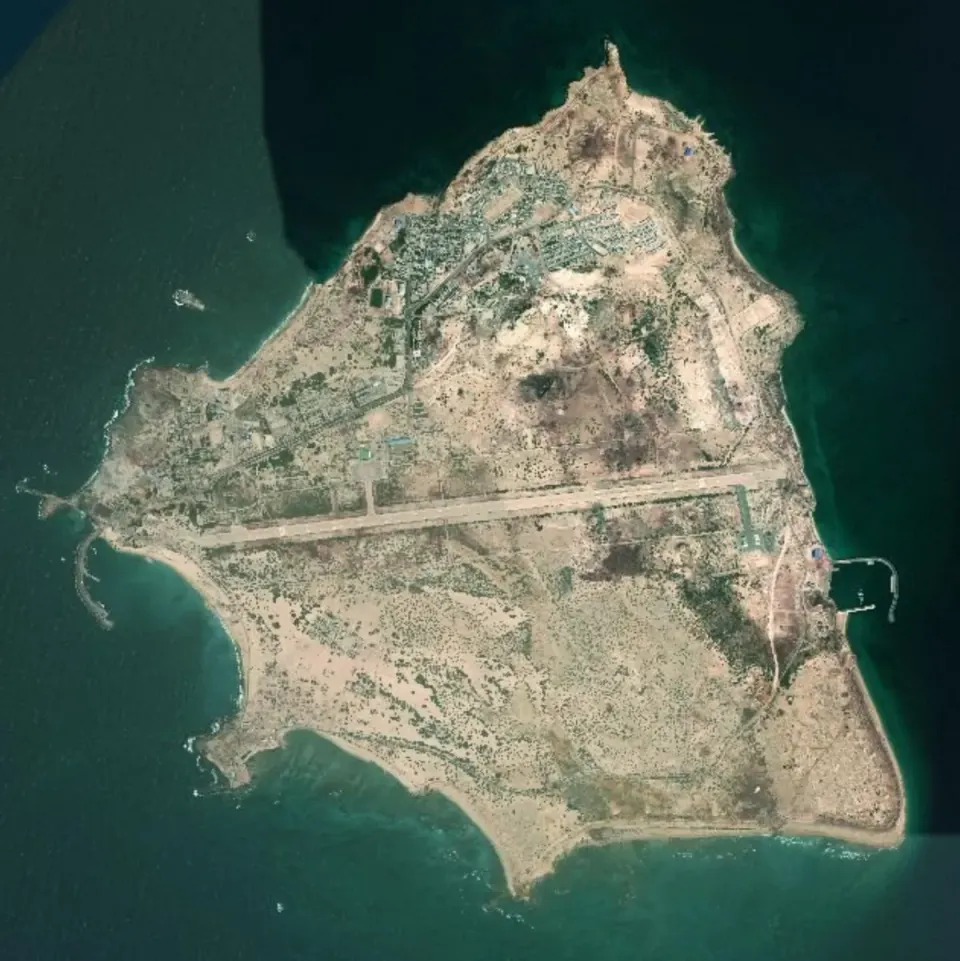
In a sharp escalation of regional diplomatic tension, Iranian Foreign Ministry spokesperson Esmaeil Baqaei has strongly condemned a joint statement issued by the Crown Prince of Abu Dhabi and the Prime Minister of Canada. The declaration questioned Iran’s sovereignty over the three Persian Gulf islands of Abu Musa, Greater Tunb, and Lesser Tunb. Baqaei characterized the move as a blatant violation of the UN Charter and international law, reiterating that these islands belong to Iran 'in perpetuity.' This incident marks a rare and direct involvement of Canada in a territorial dispute that has historically been confined to the Persian Gulf monarchies and Tehran.
This development comes at a sensitive time for the Iranian economy. Diplomatic friction with a G7 nation like Canada, combined with the UAE's renewed territorial claims, often acts as a catalyst for market anxiety. The Toman responded with a slight depreciation, as the USD sell rate moved from 270,700 to 271,200 (+0.2%) over the last 24 hours. While the physical islands remain under Iranian control, the rhetorical battle in the international arena continues to weigh on investor confidence, particularly regarding future trade corridors and maritime security in the Strait of Hormuz.
The Rise of Mohsen Rezaei in Iran’s Wartime Defense
Domestically, the political landscape in Tehran is shifting as Mohsen Rezaei, the veteran military commander and former IRGC chief, finds himself at the center of Iran’s current defense strategy. IRNA reports that this is 'Rezaei’s moment,' as he transitions from a long-standing political figure to a key architect of wartime readiness. His increasing visibility suggests that the Iranian government is prioritizing military experience and hardline security expertise as regional tensions with Israel and the U.S. remain at a fever pitch. Rezaei’s return to a central operational role is seen by many as a signal that Tehran is hardening its stance against external threats.
What this means for the average citizen is a further consolidation of power within the security apparatus. As the state focuses on 'steadfastness and resilience,' as echoed by Baqaei’s recent statements, the economic focus remains on survival rather than liberalization. This 'wartime footing' is reflected in the gold markets, where the 18k gram price dropped from 26,432,429 to 26,143,866 (-1.1%) as investors perhaps move toward more liquid assets like the U.S. Dollar or Tether, which currently sits at 271,551 Toman. The presence of a military-heavy inner circle often precedes more rigid economic controls and a focus on domestic self-sufficiency.
Global Risk: Ebola Evacuation and the Met Police Scandal
On the international stage, two disparate stories are adding to a sense of global instability. In Nigeria, investigators are pressing for answers after an Ebola patient was evacuated under mysterious circumstances. As Africa’s most populous nation, any health crisis in Nigeria has the potential to disrupt global energy markets and shipping routes. Meanwhile, in the United Kingdom, the Metropolitan Police has referred itself to a watchdog over a failed warning letter involving the Duchess of Sussex, Meghan Markle. While these events may seem disconnected, they contribute to a 'risk-off' environment where global capital becomes more cautious, often leading to the kind of volatility seen in Bitcoin, which is currently struggling to maintain its footing above $80,768.

For Iranian observers, these stories highlight the fragility of the international order. Whether it is a health crisis in West Africa or a policing scandal in London, the interconnectedness of modern geopolitics means that any loss of institutional trust can ripple through the global economy. In Tehran, where the Emami coin fell 0.6% to 266,500,000 Toman today, the cumulative effect of these global uncertainties is a continued preference for hard currency and a wary eye on the upcoming U.S. elections, where the industry has already spent $176 million to influence a voter base that remains largely indifferent to the crypto sector.
Frequently Asked Questions
Why is Bryan Adams' new song relevant to the Iranian economy?
What is the significance of Canada's involvement in the three islands dispute?
Why did gold prices fall in Tehran despite the rise in USD?
What does Mohsen Rezaei's new role signify for Iran's policy?
How International Sanctions Shape Currency Exchange Rates: The Iranian Rial Example
International sanctions are more than political statements; they are powerful economic tools that can reshape a country’s entire financial system. When a major economy like the United States imposes secondary sanctions on a target nation, it often restricts access to the U.S. dollar and the global banking network. For Iran, a series of U.S. sanctions over its nuclear program and regional activities have effectively cut off many Iranian banks from SWIFT and limited the ability of foreign firms to transact in dollars with Iranian counterparts. The immediate consequence is a sharp reduction in dollar liquidity inside Iran, which forces the market to rely on a much smaller pool of foreign currency.
With fewer dollars available, the supply‑demand balance tilts dramatically, causing the official exchange rate set by the Central Bank to diverge from the black‑market rate. In October 2026, the unofficial USD/IRR rate was projected to hover around 500,000 rials per dollar, far above the official rate of roughly 300,000. This gap reflects the premium that market participants are willing to pay to obtain hard currency for essential imports such as medicine, food, and industrial parts. The premium also fuels inflation, as imported goods become more expensive, eroding real wages and purchasing power.
Sanctions also encourage the development of alternative payment mechanisms. Iran has experimented with barter trade, the use of non‑U.S. currencies like the euro or yuan, and even cryptocurrency platforms to bypass restrictions. While these workarounds can provide temporary relief, they rarely match the depth and stability of the dollar‑based system, and they introduce new risks such as regulatory crackdowns and volatility.
Understanding the mechanics of sanctions‑induced exchange‑rate pressure helps investors, policymakers, and ordinary citizens anticipate the broader economic fallout. It also highlights why diplomatic negotiations often focus on lifting sanctions as a pathway to stabilising a nation’s currency and curbing runaway inflation.
For a deeper dive, see the references below, which cover the theory of sanctions, the specifics of the Iranian rial, and recent market reactions.
Topics
Related Articles