
Tragedy in Ilam: Pezeshkian Orders Emergency Response as Energy Crisis Haunts ASEAN Summit
فاجعه جادهای در ایلام: دستور ویژه پزشکیان و سایه سنگین بحران انرژی بر اجلاس آسهآن
President Pezeshkian has mobilized national resources following a deadly bus crash in Ilam, while global leaders at the ASEAN summit grapple with energy disruptions caused by the ongoing conflict involving Iran and Israel.
At time of publishing
USD
269,000
Toman
Gold 18K
24.79M
Toman / gram
Bitcoin
$64,333
US Dollar
Tether
270,732
Toman
Emergency Response in Ilam as Domestic Pressure Mounts
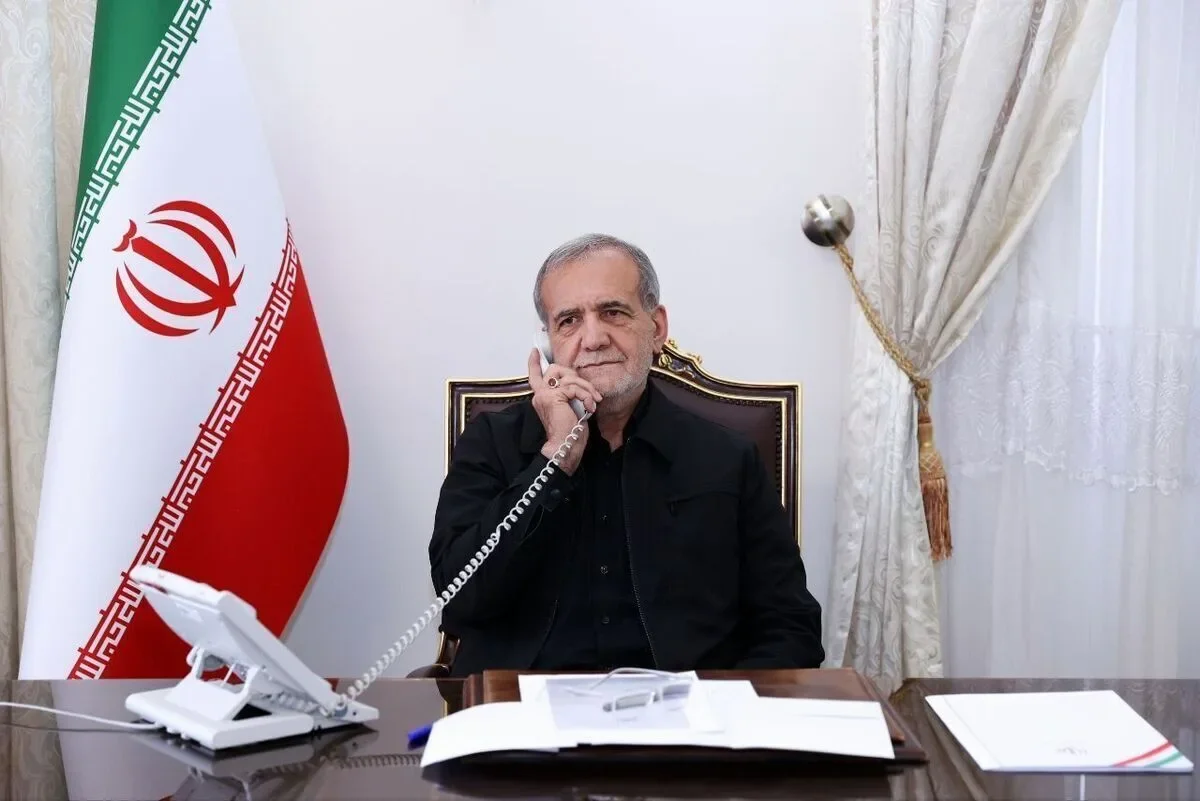
President Masoud Pezeshkian has issued a directive for the immediate mobilization of all medical and emergency resources following a catastrophic bus accident in Ilam Province. The incident, which has claimed multiple lives, occurred in the western region of Iran and has prompted a swift, high-level response from the administration. Pezeshkian’s call for 'special instructions' highlights the government's attempt to show proactive management in the face of infrastructure failures and public safety concerns, which often become flashpoints for broader social discontent.
For the average Iranian, such tragedies are a grim reminder of the deteriorating state of national transport infrastructure, often exacerbated by years of underinvestment and economic isolation. While the President’s involvement signals a priority on disaster management, the underlying issues of road safety and vehicle quality remain systemic. In the current economic climate, where the USD has crept up to 269,000 Toman (+0.1%), the cost of modernizing these sectors continues to soar, leaving the public vulnerable to recurring domestic crises.

ASEAN Summit Grapples with the 'Iran War' Shadow
The global political center of gravity has shifted to Asia this week as world leaders gather for the ASEAN summit. However, the mood is somber as the bloc, which is heavily dependent on energy imports, faces significant disruptions due to the escalating conflict between the U.S., Israel, and Iran. Discussions in the summit are increasingly focused on how the 'Iran War' is not just a regional skirmish but a systemic threat to the global energy supply chain. This has accelerated a desperate push across Southeast Asia to transition toward renewable energy to mitigate the risk of fuel shortages.
The International Energy Agency (IEA) has noted that the Middle East conflict has significantly reduced fuel trade in recent months. For nations in the ASEAN bloc, the volatility in the Strait of Hormuz is no longer a distant geopolitical concern but a direct threat to their industrial stability. As these countries scramble to find alternative suppliers, the pressure on global oil markets remains high, creating a feedback loop that sustains high energy prices and inflation globally, further complicating the economic outlook for trade-dependent nations.
Iraq’s Crackdown on the Shadow Oil Economy
In a significant move across the border, Iraqi Prime Minister Mohammed Shia al-Sudani has dismissed nine high-ranking officials following an investigation into massive oil smuggling operations. The probe uncovered illegal refineries and smuggling rings operating in regions considered strongholds of Kataib Hezbollah, a powerful pro-Iran militia. This crackdown is a rare and bold step by the Baghdad government to assert control over its sovereign resources and curtail the financial pipelines that sustain non-state actors in the region.
This development is critical for the Iranian economy as well, as shadow trade and regional smuggling have long served as informal valves for capital flow under the weight of international sanctions. By targeting these networks, Iraq is signaling a shift toward more transparent governance, potentially under pressure from international financial monitors. If these smuggling routes are effectively closed, it could further squeeze the regional influence of pro-Iran groups and limit the 'grey market' revenues that have historically bypassed official banking channels.
Market Turmoil: Ethereum Plunges as Copper Follows AI Sentiment
In the financial markets, the last 24 hours have been characterized by sharp volatility. Ethereum (ETH) experienced a significant rout, falling 10% to trade at $1,790.69, even as Bitcoin (BTC) managed to hold relatively steady at $64,333. The crypto market's nervousness is being mirrored in traditional commodities, with copper sliding to its lowest level in four months. Analysts are attributing this 'metals malaise' to a cooling of sentiment around AI-linked stocks, particularly following the high-profile exit of key figures at tech giants like Nvidia.
The correlation between AI growth expectations and industrial metals like copper is becoming increasingly tight. As investors question whether the AI boom has reached a temporary ceiling, the demand for the physical infrastructure required to power the next generation of data centers is being re-evaluated. For investors in Iran, where gold remains a primary hedge, the stability of 18k gold at 24,793,388 Toman per gram offers a stark contrast to the double-digit percentage swings seen in the global digital asset space today.
Frequently Asked Questions
چرا حادثه اتوبوس در ایلام به سطح ریاستجمهوری کشیده شد؟
تأثیر درگیریهای ایران و اسرائیل بر اجلاس آسهآن چیست؟
علت سقوط ۱۰ درصدی قیمت اتریوم چیست؟
برکناری مقامات در عراق چه ارتباطی با ایران دارد؟
Understanding Oil Smuggling and Sanctions Evasion
Oil smuggling is the illegal movement of crude oil or refined products across borders to avoid taxes, tariffs, or international sanctions. It thrives in regions where political instability, weak regulatory frameworks, and high price differentials intersect. In the Middle East, the porous borders between Iran, Iraq, and the Gulf states provide fertile ground for networks that transport oil under false documentation or through hidden pipelines, often financed by criminal syndicates and sometimes by state actors seeking to circumvent embargoes.
Sanctions evasion works hand‑in‑hand with smuggling. When a country like Iran faces comprehensive sanctions that restrict its ability to sell oil on the global market, it may resort to covert channels to keep revenue flowing. These channels can involve ship‑to‑ship transfers in international waters, falsified certificates of origin, or the use of front companies in third‑party jurisdictions. The proceeds are then laundered through a variety of financial instruments, including cryptocurrencies such as Ethereum, which have seen price volatility partly driven by speculative activity linked to sanction‑busting transactions.
The economic consequences are far‑reaching. Smuggled oil undermines legitimate market pricing, depresses global oil prices, and distorts supply statistics used by organizations like the International Energy Agency (IEA). Moreover, the illicit revenue fuels conflict, as armed groups and corrupt officials use it to finance weapons purchases, perpetuating instability in regions already grappling with energy shortages. For neighboring economies, the influx of cheap, untaxed oil can erode tax bases and create unfair competition for domestic producers.
Governments combat smuggling through a mix of maritime patrols, satellite monitoring, and tighter customs controls, but the cat‑and‑mouse game persists. International cooperation—such as joint investigations by the United Nations, the United States Treasury’s Office of Foreign Assets Control (OFAC), and regional bodies like ASEAN—remains crucial. Transparency initiatives, like the Extractive Industries Transparency Initiative (EITI), aim to track legitimate oil revenues and expose irregularities, offering a partial antidote to the shadow economy of oil smuggling.
For readers interested in the broader implications, consider how energy security, geopolitical rivalries, and financial innovation intersect in the realm of sanctions evasion. Understanding these dynamics helps explain why a seemingly isolated bus crash in Ilam can be framed within a larger narrative of energy crises, regional summits, and the ever‑present challenge of enforcing international law.
Topics
Related Articles

