

Gulf Tensions Escalate with Second Strike on Bahrain as Global Gold Markets Retreat
تنش در خلیج فارس با دومین حمله به بحرین؛ عقبنشینی قیمت طلا در بازارهای جهانی
Regional stability faces a new test as Iran-linked attacks on Bahrain resume after a two-month lull, while domestic markets see a 1.3% drop in the US Dollar. Meanwhile, record-breaking naval deployments and environmental crises in South America highlight a world in deep transition.
At time of publishing
USD
265,400
Toman
Gold 18K
24.55M
Toman / gram
Bitcoin
$65,430
US Dollar
Tether
267,318
Toman
Regional Escalation: Bahrain Under Fire Again
The fragile peace in the Persian Gulf has been shattered once more as reports confirm a second attack on Bahrain within just a few days. This resumption of hostilities comes after a notable two-month lull and coincides with a period where diplomatic backchannels between Washington and Tehran appear to have reached a complete standstill. While official Iranian state media remains focused on historical grievances, international observers view these strikes as a direct challenge to the U.S. Fifth Fleet's presence in the region. The timing is particularly sensitive as world leaders gather for the ASEAN summit in Manila, where the 'war in Iran' has unexpectedly become a focal point of high-level security discussions.
For the Iranian public, these military maneuvers often translate into immediate market anxiety, though the current reaction has been somewhat counterintuitive. Historically, such escalations drive the Toman down, but today's market saw a controlled retreat in currency rates. This suggests that the market may have already priced in a certain level of regional friction, or that central bank interventions are working overtime to prevent a panic-induced spike. However, the underlying risk remains; any further escalation that threatens shipping lanes or energy infrastructure in the Gulf will inevitably force a revaluation of the Toman against the dollar, regardless of domestic liquidity controls.

Market Realities: Gold and Currency Retreat
On the domestic front, the Iranian Toman showed surprising resilience today, Sunday, November 15, 2026. The US Dollar sell rate moved from 268,800 to 265,400 Toman, marking a 1.3% decrease over the last 24 hours. This downward trend was mirrored in the precious metals sector, where 18k gold fell by 1.0% to 24,546,377 Toman per gram. The Emami coin also tracked this decline, dropping from 253,000,000 to 250,500,000 Toman. These shifts occur against a backdrop of global confusion regarding gold's role as an inflation hedge. Despite persistent global inflationary pressures, both gold and silver have seen selling pressure internationally, as investors potentially rotate back into high-yield assets or wait for clearer signals from the U.S. Federal Reserve.
This cooling of the gold market is particularly noteworthy for Iranian investors who traditionally view the yellow metal as the ultimate safe haven. The current dip suggests a temporary saturation in domestic demand or a shift in expectations regarding future sanctions relief. However, the disconnect between rising geopolitical risks and falling gold prices is a technical anomaly that many analysts believe cannot last. If the conflict in the Gulf widens, the domestic 'bubble' in coin prices may once again expand as the middle class seeks to protect what remains of its purchasing power against the backdrop of a volatile regional security architecture.
---
The High Cost of Gold: Environmental Warfare in French Guiana
While the financial world watches price charts, a different kind of disaster is unfolding in French Guiana, where illegal gold mining is devastating Indigenous territories and rainforests. Recent aerial surveys conducted by the World Wildlife Fund have identified at least 239 illegal mining sites within protected areas. This surge in illicit activity is not just an environmental catastrophe; it is a health crisis for local communities who are being poisoned by the mercury used to extract gold. This 'blood gold' often finds its way into global supply chains, ending up in the very markets that determine the daily rates we see on our screens in Tehran.
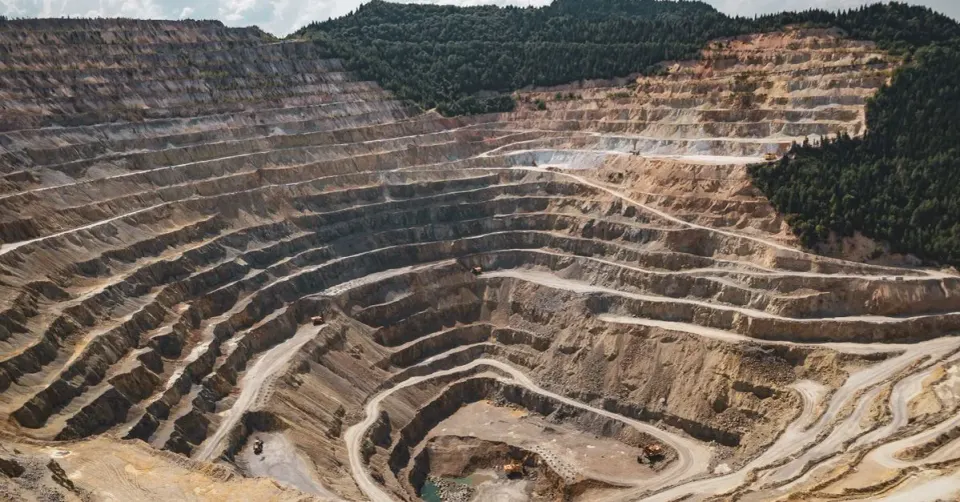
This story matters to the Iranian reader because it highlights the dark side of the global gold trade. As international regulations tighten, the premium on 'clean' gold rises, potentially affecting the liquidity of gold reserves in sanctioned economies. Furthermore, it serves as a grim reminder of how resource extraction, when decoupled from the rule of law, destroys the fundamental assets of a nation—its land and its people's health. The fight against illegal mining in South America is being lost, and the consequence is a permanent scar on the planet's biodiversity, driven by the same global hunger for 'safe' assets that dictates the price of an Emami coin in the Grand Bazaar.
Nuclear Shadows and Historical Narratives
In the realm of global geopolitics, the return of the HMS Vengeance to its base in Scotland after a record-breaking 217-day submerged deployment marks a significant moment in naval history. This Trident nuclear submarine's marathon patrol raises serious questions about the maintenance of aging fleets and the psychological toll on crews. While the UK celebrates this as a feat of endurance, critics point to the slow pace of naval upgrades as a sign of overstretched Western defense capabilities. This comes at a time when former IAEA chief Mohamed ElBaradei has publicly critiqued the history of Western military interventions, suggesting that past conflicts involving Iran were often built on a foundation of strategic misinformation.

These developments create a complex narrative for the Middle East. On one hand, the physical presence of nuclear deterrence remains a cornerstone of global power dynamics; on the other, the moral and logical justifications for such presence are being challenged by high-level former officials. For Iran, this discourse provides a diplomatic opening to challenge the 'maximum pressure' narrative, even as its own regional actions—such as the strikes on Bahrain—continue to draw international condemnation. The interplay between record-breaking military deployments and a shifting historical consensus suggests that the old rules of engagement are being rewritten in real-time.
Watch
Illegal mining threatens French Guiana forests and Indigenous communities • FRANCE 24 English
FRANCE 24 English
Frequently Asked Questions
Why did the USD drop in Iran despite the attacks on Bahrain?
What is the significance of the HMS Vengeance's 217-day deployment?
How does illegal gold mining in South America affect Iranian buyers?
Gold's Dual Role: Global Safe Haven and Local Economic Hedge
Gold has long been revered as a 'safe-haven asset,' a reliable store of value that investors flock to during times of economic uncertainty and geopolitical instability. When conflicts escalate, such as the recent tensions in the Gulf, the traditional expectation is for gold prices to rise as investors seek to protect their wealth from potential market downturns and currency depreciation. This flight to safety is a well-documented phenomenon, reflecting gold's perceived intrinsic value and its historical role as a universal medium of exchange.
However, the global gold market is a complex ecosystem influenced by multiple factors, not just geopolitical risk. While Gulf tensions might typically boost gold demand, other powerful forces can sometimes lead to a 'retreat' in global prices. A strong U.S. dollar, for instance, often makes gold more expensive for holders of other currencies, dampening demand. Similarly, rising interest rates or expectations of future rate hikes can make interest-bearing assets like bonds more attractive, reducing the appeal of non-yielding gold. These macroeconomic factors can occasionally override the safe-haven demand generated by regional conflicts.
The picture becomes even more nuanced when considering local markets, particularly in economies facing significant challenges. In countries like Iran, where the local currency (e.g., the Iranian Rial, or IRR) may experience substantial depreciation against major international currencies like the U.S. Dollar (USD), and inflation rates are high, gold takes on an additional, crucial role. For ordinary citizens, gold is not just a speculative asset but a vital hedge against the erosion of their purchasing power and a tangible store of wealth when confidence in the local financial system or currency wanes.
Therefore, while global gold markets might exhibit a temporary retreat due to broader economic dynamics, local demand for gold in volatile regions can remain robust or even surge. This dual function—serving as both a global safe haven for international investors during crises and a fundamental economic hedge for citizens in vulnerable economies—underscores gold's enduring significance. Understanding this interplay between global macroeconomics, geopolitical events, and local economic realities is key to comprehending gold's multifaceted behavior.
Topics
Related Articles

