Beyond the $65K Ceiling: How to Spot Real Value in a Stagnant Crypto Market
فراتر از سقف ۶۵ هزار دلاری؛ چگونه در بازار راکد کریپتو ارزش واقعی را تشخیص دهیم؟
With Bitcoin trapped in a tight range and gold prices dipping, learn how to distinguish between temporary market noise and long-term stores of value. We analyze institutional moves and geopolitical shifts to guide your next Toman-based investment.
At time of publishing
USD
187,600
Toman
Gold 18K
19.09M
Toman / gram
Bitcoin
$63,647
US Dollar
Tether
186,667
Toman
The Psychology of the Range-Bound Market
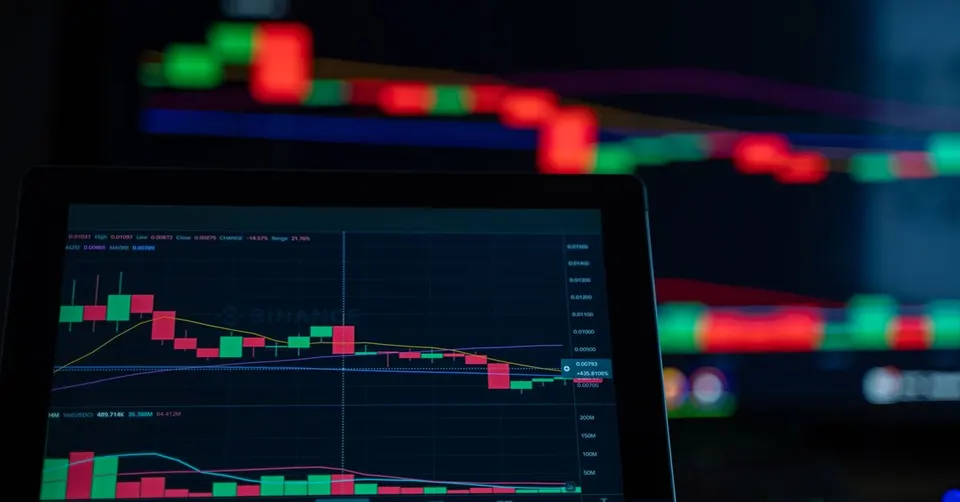
The current state of the global market is a profound test of patience for the Iranian investor. With Bitcoin currently oscillating in a narrow corridor between $62,500 and $65,000, a sense of paralysis has settled over many trading desks. This "sideways" movement often leads to impulsive decisions—either selling out of boredom or rotating capital into high-risk "shitcoins" in hopes of a quick pump. However, the real story today isn't the flickering price on the screen; it's the institutional infrastructure being built while the retail market sleeps.
Take, for instance, the recent news from South Korea where Mirae Asset is injecting another $35 million into the Korbit exchange. This follows their massive $91.5 million acquisition earlier this summer. For an investor in Tehran, this is a critical signal: while the daily candle for Bitcoin might look stagnant, the world’s largest financial institutions are securing their foothold. When evaluating whether a coin is a good store of value, you must look for who is building the underlying plumbing. If the "big money" is doubling down on infrastructure during a lull, it suggests that the current range is a period of accumulation, not exhaustion.
Filtering Noise from Signal: Lessons from Global Policy
In Australia, Prime Minister Anthony Albanese is currently navigating complex legislation regarding tech giants and gambling. While this may seem irrelevant to a crypto wallet in Iran, it highlights a universal truth for 2026: policy and regulation are the ultimate trend-setters. Albanese’s focus on shifting the "rules of the game" for digital platforms is a reminder that the assets which survive long-term are those that can adapt to a regulated world. In the crypto space, we see a parallel with the Blockchain Association backing Custodia’s bid for a Fed master account, aiming to put digital assets on equal footing with traditional banking.
When you evaluate a coin, ask yourself: is this asset fighting for a seat at the legal table, or is it trying to hide in the shadows? Assets that seek institutional integration eventually benefit from the "formation" effect. Much like the geese Eddie Jones uses to inspire the Japanese rugby team, market leaders move in a coordinated pattern. If a coin is flying solo without any institutional backing, developer activity, or legal advocacy, it is likely a speculative trap rather than a legitimate store of value. Today's market stability—with USD/IRR rising a mere 0.1% to 187,600—provides the perfect quiet environment to perform this due diligence.
Geopolitical Friction and the Safe Haven Myth
We often hear that Bitcoin is "digital gold," a hedge against war and instability. Yet, as we observe Israeli militants besieging homes in the West Bank and diplomatic rows between Japan and Russia over the Kuril islands, the price of BTC remains stubbornly flat. Why? Because in the short term, liquidity often trumps narrative. When global tensions rise, large players frequently liquidate risk assets to hold cash (USD), which explains why the US Dollar in Iran remains firm at 187,600 Toman while gold 18k has actually dipped 0.4% to 19,086,753 Toman per gram.

To evaluate a coin’s true value, you must observe its reaction to "bad news." If a coin crashes every time there is a geopolitical tremor, it hasn't yet reached "store of value" status; it is still a "risk-on" asset. For Iranians, hedging against currency depreciation means finding the balance between the immediate stability of the Dollar (USDT) and the long-term upside of assets like Bitcoin. Today's context shows that while gold is correcting slightly, the USD/IRR pair remains the most immediate shield against local volatility, even as institutional interest in crypto grows globally.
Actionable Steps for the Iranian Investor
First, stop checking the 1-minute charts. If Bitcoin is trapped in a $2,500 range, your time is better spent researching "total value locked" (TVL) or institutional inflow reports. Second, diversify your entry points. Instead of buying a lump sum when the market feels "hot," use the current stagnation to set limit orders at the bottom of the range ($62,500). The market is currently providing a rare window of low volatility—use it to accumulate assets that have proven institutional backing, rather than chasing ghosts.
Finally, remember that the "store of value" label is earned over years, not days. While Iranian officials like Abbas Araghchi claim France is guilty of "embarrassing hypocrisy" regarding international law, the global financial machine continues its march toward tokenization. Your goal is to stay liquid enough to survive local shocks while being invested enough to capture the next global leg up. Keep your USDT ready at the current 186,667 Toman rate, but don't ignore the coins that institutions like Mirae Asset are currently fighting to own.
Concept Diagram
Frequently Asked Questions
Why is Bitcoin not rising despite geopolitical tensions in the West Bank and Japan?
Is the $62,500 level a safe entry point for Iranian traders?
How does institutional investment like Mirae Asset's $35M affect my small portfolio?
Should I switch from Gold to USDT given today's 0.4% drop in gold?
Understanding "Store of Value" in Volatile Markets
The concept of a "store of value" is fundamental to understanding how assets retain their worth over time, especially in an unpredictable economic landscape. Simply put, a store of value is any asset, commodity, or currency that can be saved, retrieved, and exchanged at a later time without significant depreciation in its purchasing power. This characteristic is crucial for individuals and institutions looking to preserve wealth against inflation or currency devaluation, as highlighted by concerns around exchange rates like USD/IRR.
Historically, gold has been the quintessential store of value due to its scarcity, durability, fungibility, divisibility, and portability. Real estate and certain precious metals also fit this description. These assets are favored because they tend to maintain their intrinsic value even when traditional fiat currencies lose purchasing power. The ongoing interest in gold prices, for instance, reflects a continued reliance on these proven assets as hedges against economic uncertainty.
In recent years, cryptocurrencies, particularly Bitcoin, have emerged as a contender for the title of a digital store of value. Proponents argue that Bitcoin's fixed supply, decentralized nature, and resistance to censorship make it an attractive alternative, often dubbed "digital gold." However, its volatility, as seen in market fluctuations, presents a different risk profile compared to traditional assets. Evaluating its long-term viability as a store of value involves scrutinizing not just price action but also underlying infrastructure investments and broader adoption trends. Understanding these dynamics is key to spotting real value in a diverse and evolving investment landscape.