
Beyond the $80,000 Hype: How to Audit Your Crypto Portfolio for Long-Term Value in Iran
فراتر از هیجان ۸۰ هزار دلاری بیتکوین: راهنمای گامبهگام ارزیابی ارزش داراییهای دیجیتال در ایران
As Bitcoin tests the $80,000 psychological barrier, many Iranian investors are tempted by FOMO. This guide provides a clinical framework to evaluate if your crypto holdings are true stores of value or just speculative bubbles.
At time of publishing
USD
200,300
Toman
Gold 18K
21.78M
Toman / gram
Bitcoin
$80,382
US Dollar
Tether
200,780
Toman
The Transparency Trap: Lessons from Victoria
Before we dive into the mechanics of Bitcoin's $80,382 valuation, we must look at a recent lesson in financial transparency from Australia. The Victorian government recently scrapped a 'secret' public transport levy after admitting it failed the 'pub test'—a reminder that hidden costs and lack of transparency eventually lead to a collapse in trust. For the Iranian investor, transparency is the first metric of a store of value. In a market where the Toman remains volatile at 200,300 per USD, you cannot afford to hold assets with 'hidden' mechanics or centralized manipulation.
When evaluating a coin, ask yourself: is the supply transparently audited on-chain? The reason Bitcoin maintains its status while thousands of 'altcoins' fail is the absolute clarity of its issuance. Unlike the Victorian transport levy, which was hidden from the public for 18 months, Bitcoin’s ledger is open. If you are holding a token where the developers can 'secretly' mint more or change the rules, you aren't holding a store of value; you are holding a liability.
Analyzing Institutional Inflows vs. Retail Hype
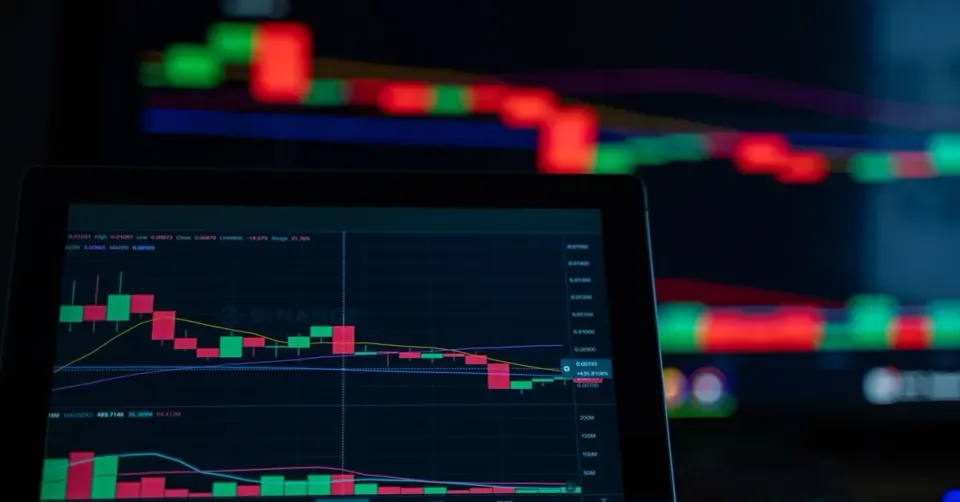
Today’s market data shows Bitcoin ETF inflows slowing to $232 million despite an eight-day winning streak. While BTC holds near $80,382, the slowing pace of institutional buying suggests we are entering a phase of consolidation. For an investor in Tehran, this is a critical signal. A 'good' store of value is one that institutions are willing to buy even at high prices, but one that retail investors often ignore until it is too late.
You must distinguish between 'smart money' accumulation and 'dumb money' FOMO. If you see massive inflows into spot ETFs while the price remains stable, it indicates a strong floor is being built. Conversely, if you see the price skyrocketing on low volume or primarily on offshore exchanges with high leverage, the 'value' is likely transient. Currently, with Gold 18k at 21,780,783 Toman (a 0.7% increase), the competition for safe-haven status is fierce. Your crypto must prove it can withstand a 20% correction without its fundamental thesis breaking.
The Three-Step Value Audit for Iranians
To determine if your purchase is a store of value, apply this three-step audit. First, check the Liquidity Depth. Can you exit a 1-billion Toman position into USDT without moving the market by more than 1%? If not, the 'value' is an illusion. Second, assess the Correlation Factor. Does the coin move purely with Bitcoin, or does it have its own ecosystem strength? In Iran, we use crypto to hedge against Toman depreciation; if your coin crashes harder than the Toman during a market dip, it has failed its primary job.
Third, evaluate the Regulatory Resilience. As we see in the recent FCA crackdown on financial firms in the UK regarding non-financial wrongdoing, the global regulatory net is tightening. A coin that relies on 'privacy' or 'shadowy' founders might seem attractive, but it faces an existential threat from global blacklisting. A true store of value, like Bitcoin or high-cap Ethereum, has already survived multiple attempts at prohibition. If your chosen coin hasn't faced a 'stress test' yet, you are the one being tested.
Why Gold Still Sets the Standard
Despite the digital revolution, the 0.7% rise in 18k gold today to 21,780,783 Toman reminds us why physical assets remain the benchmark. Gold has no 'founder,' no 'roadmap,' and no 'marketing budget.' It simply exists. When evaluating a coin, look for 'Gold-like' qualities: decentralization, scarcity, and universal recognition. If a coin requires constant 'updates' from a central team to maintain its price, it is a tech startup, not a store of value.
In the current context where USD/IRR is holding steady at 200,300, the urgency for a hedge is less about immediate collapse and more about long-term preservation. Whether you choose the Emami coin at 216,000,000 Toman or Bitcoin at $80,382, the goal is the same: purchasing power. If your digital asset cannot be explained to a non-technical person in two sentences, it probably relies too much on complexity rather than inherent value. Simplify your portfolio to amplify your security.
Concept Diagram
Frequently Asked Questions
Why should I care about Bitcoin ETF inflows if I live in Iran?
Is USDT a better store of value than Bitcoin right now?
What does the 0.7% rise in gold tell us about the crypto market?
Understanding 'Store of Value' in Volatile Economies
In financial terms, a store of value refers to any asset, commodity, or currency that can be held and exchanged for goods and services at a later date without significant depreciation in its purchasing power. Unlike perishable goods or rapidly depreciating assets, a good store of value is expected to maintain its worth over time, making it a crucial component for individuals and institutions looking to preserve wealth, especially during periods of economic uncertainty or high inflation.
Historically, precious metals like gold and silver, as well as real estate, have served as primary stores of value. Gold, in particular, has been revered for millennia due to its rarity, durability, and universal acceptance. Its limited supply and intrinsic value have allowed it to retain purchasing power across different civilizations and economic cycles, often performing well when traditional fiat currencies face devaluation or when geopolitical tensions rise, prompting investors to seek safe havens.
More recently, digital assets like Bitcoin have emerged as a contemporary contender for a store of value. Proponents argue that Bitcoin's decentralized nature, fixed supply cap (21 million coins), and resistance to censorship make it an attractive alternative to traditional assets, particularly in regions experiencing significant currency depreciation or capital controls. Its ability to be easily transferred across borders without intermediaries also adds to its appeal for those seeking to hedge against local economic instability.
However, the debate between traditional stores of value and newer digital alternatives continues. While gold boasts a long track record of stability and a relatively low correlation with other financial assets, Bitcoin's shorter history is marked by significant price volatility. Investors considering either must weigh these characteristics against their personal risk tolerance and investment horizons. Ultimately, the goal is to identify assets that can effectively preserve wealth against the erosion of purchasing power, a particularly pressing concern in economies where local currencies like the Iranian Toman face consistent depreciation.