Energy Hunger and War Drums: Why Tehran Gold is Outpacing the Dollar’s 1.3% Rise
عطش انرژی و طبل جنگ: چرا رشد طلا در بازار تهران از جهش ۱.۳ درصدی دلار پیشی گرفت؟
Tehran's markets are reeling from a double blow of regional military escalation and a global scramble for energy security. While the US Dollar rose 1.3% in 24 hours, Gold 18k surged by 2.5%, signaling a deep-seated fear that transcends simple currency devaluation.
At time of publishing
USD
193,700
Toman
Gold 18K
18.80M
Toman / gram
Bitcoin
$64,088
US Dollar
Tether
194,675
Toman
Key figures
US Dollar
193,700
Iranian Toman
↑ 1.31% todayBitcoin
$64,088
US Dollar
The 24-Hour Reality Check
As of Wednesday evening in Tehran, the market has clearly shifted into a high-volatility gear. The numbers tell a story of rapid capital flight into hard assets. The US Dollar (sell) climbed from 191,200 to 193,700 Toman, marking a 1.3% increase. However, the real story lies in the yellow metal. Gold 18k per gram jumped from 18,336,488 to 18,795,881 Toman—a significant 2.5% surge in just one day. This outperformance suggests that local traders are not just hedging against the Rial's weakness, but are reacting to a global gold rally where the ounce has now crossed the psychological $4,000 threshold ($4,004.80).
This surge is inextricably linked to the darkening geopolitical horizon. Reports of coordinated US and Saudi strikes on pro-Iran militias in Iraq have sent shockwaves through the regional exchange houses. While the Iraqi government has labeled these strikes a violation of sovereignty, the market interprets them as a signal of a widening conflict. When military coordination between Washington and Riyadh reaches this level, the "risk premium" in Tehran doesn't just tick upward; it leaps. The 2.2% rise in the Emami Coin to 188 million Toman is the market's way of pricing in a potential for further escalation.

The Bullish Case: A $6 Trillion Energy Vacuum
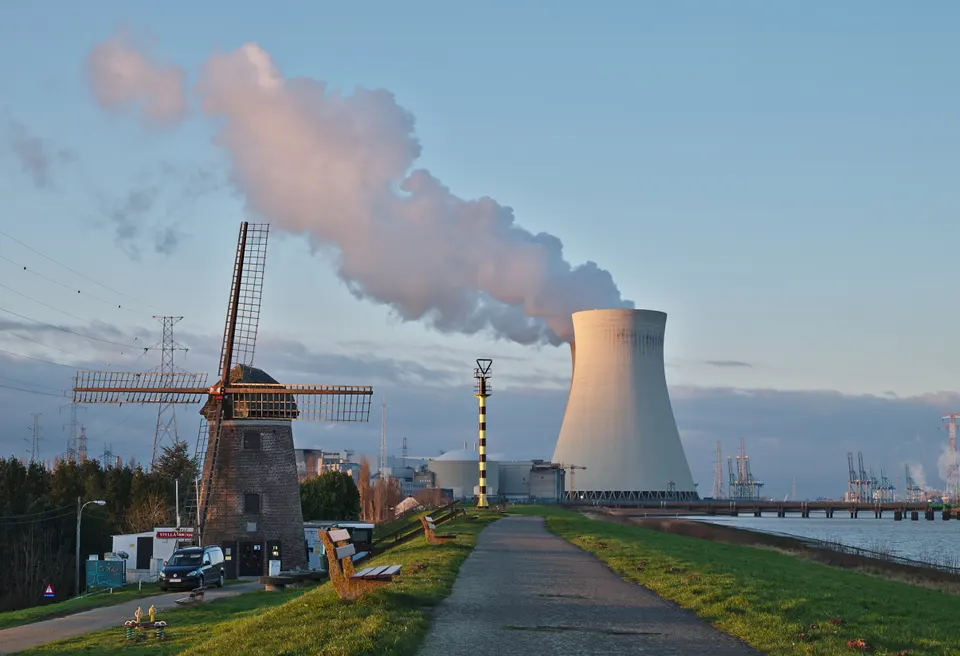
Beyond the immediate sound of explosions in Iraq, a massive structural shift is supporting higher asset prices globally and locally. The World Nuclear Association recently reported that a staggering $6 trillion in investment is required to meet 2050 nuclear capacity goals. This isn't just a climate story; it is an inflation story. As major economies like China and India accelerate their nuclear programs to power AI data centers and industrial growth, the demand for capital and raw materials will remain relentless. For an Iranian investor, this global hunger for energy security means that the era of cheap commodities is over, providing a long-term floor for gold and hard assets.
Furthermore, the domestic security narrative is tightening. The Iranian Intelligence Ministry's claim of dismantling "US-Israel-linked terrorist cells" in Sistan-and-Baluchestan adds to the atmosphere of a state under siege. Historically, when the government emphasizes internal and external threats simultaneously, the public's reflex is to exit the Rial. If the US-Saudi coordination in Iraq persists or escalates into more direct confrontations, the current 193,700 Toman level for the dollar might quickly be viewed as a "bargain" in hindsight. The technical momentum for Gold 18k is currently pointing toward the 19-million-Toman resistance level.
The Bearish Case: Overextension and Tactical Cooling
However, every vertical move invites a correction. From a bearish perspective, the 2.5% daily jump in gold is a classic sign of an overbought market driven by panic rather than sustainable demand. If the regional tensions see even a temporary diplomatic pause—or if the Iraqi government successfully de-escalates the friction between the US and local militias—the speculative froth could evaporate. We must also consider the role of global trade shifts; Taiwan’s recent decision to halt $800 million in LNG purchases from Papua New Guinea shows how quickly energy flows can be redirected, potentially easing some localized supply pressures and cooling the energy-driven inflation narrative.
Domestically, the Central Bank of Iran (CBI) has a history of aggressive intervention when the dollar approaches psychological round numbers. While the regime's official statements often lack transparency, their ability to dump hard currency into the market to break a rally should not be underestimated. If the CBI manages to inject significant liquidity or if the IRGC's "security successes" are used to project an image of stability, we could see the USD/IRR pair retreat toward the 190,000 support zone, dragging gold coins down with it as the immediate fear-premium subsides.
The Nuanced View: Opinion and Analysis
In my view, we are witnessing a fundamental decoupling where gold is becoming the primary vehicle for Iranian wealth preservation, leaving the dollar in second place. The fact that gold outpaced the dollar's growth by nearly double in the last 24 hours is a critical signal. It tells us that investors are more afraid of global instability and the $4,000/oz gold trend than they are of specific local currency fluctuations. The $6 trillion nuclear investment gap mentioned by the WNA acts as a macro-anchor; it ensures that even if regional peace is achieved, the global cost of energy and capital will keep gold prices elevated for years to come.

Ultimately, the interplay between the US-Saudi military alliance and Iran's regional posture will dictate the next 72 hours. While I lean toward a continued upward bias for gold due to the breach of the $4,000 global mark, the volatility makes "all-in" positions extremely dangerous. The market is currently pricing in a war that hasn't fully started yet; any sign that the conflict remains contained could lead to a sharp, painful correction for those who bought at today's peak. Uncertainty remains the only certainty in this environment.
Note: This analysis is based on current market data and geopolitical events. It is an opinion and does not constitute financial advice.
Frequently Asked Questions
Why is gold growing faster than the dollar in Tehran right now?
What does the $6 trillion nuclear investment report have to do with my savings?
Could the USD/IRR price drop back below 190,000 soon?
How does the US-Saudi coordination in Iraq affect the Rial?
Gold as a Safe-Haven Asset
In times of geopolitical turmoil and economic uncertainty, investors often seek refuge in assets perceived as stable and reliable. Gold, with its millennia-long history as a store of value, stands out as the quintessential "safe-haven asset." Unlike fiat currencies, which can be subject to inflation and government policy, or stocks, which are sensitive to corporate performance and market sentiment, gold's value is often seen as intrinsic and independent. Its appeal intensifies during crises, as investors flock to it to preserve wealth, leading to price surges even when other markets falter.
The recent surge in Tehran gold prices, alongside discussions of the USD/IRR exchange rate and broader Middle East energy security concerns, exemplifies this phenomenon. When a national currency faces depreciation due to sanctions, inflation, or internal economic pressures, citizens often turn to tangible assets like gold to protect their purchasing power. The "war drums" and regional instability mentioned in the headline further amplify this flight to safety, as geopolitical risks tend to boost gold's appeal, reflecting its role as a hedge against uncertainty and a universal medium of exchange that transcends national borders during times of crisis.
Historically, gold has demonstrated a low correlation with other financial assets, making it an effective diversifier in an investment portfolio. Its supply is finite, and its demand is driven not just by investment but also by industrial, jewelry, and central bank purchases. This combination of scarcity, diverse demand, and a perceived lack of counterparty risk solidifies its position as a preferred asset when trust in traditional financial systems or government stability wanes. The concept of gold as a safe haven isn't merely theoretical; it's an observable market reaction to fear, uncertainty, and the desire for financial security in turbulent times.