Geopolitical Tensions Escalate, Rattling Markets and Dampening Crypto Enthusiasm
تنشهای ژئوپلیتیکی تشدید شد؛ بازارهای مالی متزلزل و اشتیاق به رمزارزها کاهش یافت
This week saw a significant escalation in geopolitical tensions, with direct military exchanges between Iran and the US dominating headlines and spooking global markets. The ensuing uncertainty led to a sharp outflow from Bitcoin ETFs and a renewed focus on safe-haven assets, while the Iranian Toman experienced fluctuations.
At time of publishing
USD
191,900
Toman
Gold 18K
18.69M
Toman / gram
Bitcoin
$63,985
US Dollar
Tether
191,208
Toman
What Actually Happened
This past week was dominated by a dramatic escalation in geopolitical tensions, particularly involving Iran. The Islamic Revolution Guards Corps (IRGC) claimed to have destroyed US military residences and fighter jets in Jordan, and also targeted US assets in Erbil [16]. This marked a significant escalation, moving beyond proxy conflicts to direct claims of action against US military infrastructure. In response, the US and Iran traded further strikes in the Gulf, fueling fears of a wider regional conflict [7].
These developments had a palpable effect on financial markets. Bitcoin ETFs experienced their largest outflows in days, shedding $225 million as a seven-day streak of inflows was snapped [5]. This outflow suggests a broader risk-off sentiment gripping investors, who are likely seeking safer havens amidst the heightened geopolitical uncertainty. The price of gold, a traditional safe-haven asset, remained under pressure, hovering below $4,100 ahead of key central bank decisions [19]. Meanwhile, the Iranian Toman saw some fluctuation, closing the week with the USD sell rate at 191,900 Toman, a slight decrease of 0.8% from its opening on Friday [USD/IRR: 193,500 → 191,900 (-0.8%)]. This indicates a degree of pressure on the local currency, likely driven by regional instability.
---
Why This Matters: The Ripple Effect on Iran and Global Markets
The direct military exchanges, even if claimed by Iran, send shockwaves through regional stability and global markets. For Iran, such actions, whether retaliatory or preemptive, carry immense economic implications. Increased regional instability typically leads to heightened sanctions risks, disruptions to trade routes like the Strait of Hormuz, and potential impacts on oil prices [10]. The news of IRGC's actions [16] and the subsequent US-Iran strikes [7] directly contribute to this volatile environment. This uncertainty is precisely what caused investors to pull back from riskier assets like Bitcoin ETFs [5].
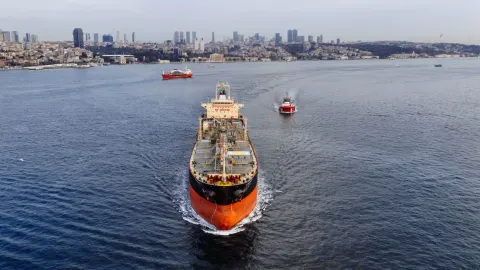
On a global scale, the escalation directly impacts oil markets. The disruption to key shipping lanes such as the Strait of Hormuz and Bab el-Mandeb is tightening global oil flows, increasing transport costs, and fueling expectations of oil prices returning to or exceeding $100 per barrel [10]. This has knock-on effects for inflation worldwide, potentially forcing central banks like Australia's Reserve Bank to consider further interest rate hikes [6]. The geopolitical situation also complicates efforts to manage trade relations, as seen with the ongoing debate around tariffs, with accusations that they are being used as a pretext for economic protectionism [9].
---
The Bigger Picture: Sanctions, Energy, and Investor Confidence
Iran's call for BRICS nations to condemn aggression [15] underscores its diplomatic efforts to garner international support amidst heightened tensions. This aligns with broader geopolitical maneuvers, such as Iran's foreign minister meeting with counterparts from China, Kyrgyzstan, and Uzbekistan on the sidelines of the SCO conference [17]. These diplomatic engagements are crucial for Iran as it navigates a complex international landscape, potentially seeking to mitigate the impact of sanctions and bolster its economic ties.
The energy market remains a critical nexus. Saudi Arabia's Red Sea crude exports have seen a significant decline since March [4], highlighting the logistical challenges and risks associated with the ongoing regional instability. This rerouting and potential disruption directly influences global supply and prices, making energy security a paramount concern for economies worldwide. The narrative around oil prices, especially with the dual disruption of key straits, suggests that the current rally might be far from over [10].
Investor confidence is clearly fragile. The outflows from Bitcoin ETFs [5] are a strong indicator of this. Beyond crypto, the broader market sentiment is shaped by the interplay of geopolitical risk, potential inflation from energy price hikes, and the policy responses from central banks. The continued focus on tariffs [9] and the potential for economic decoupling add another layer of uncertainty, making it challenging for businesses and investors to plan long-term. The situation underscores how interconnected global markets are, with events in one region having immediate and significant repercussions elsewhere.
Looking Ahead
Next week, all eyes will remain on the geopolitical chessboard. Any further escalation or de-escalation between Iran and the US will be closely watched. Investors will also be keenly focused on central bank decisions, particularly regarding interest rates, and how they might respond to inflationary pressures driven by energy costs. The performance of Bitcoin and other cryptocurrencies, especially in relation to the USDT's stability against the Toman, will be a key indicator of risk appetite. Furthermore, developments regarding trade policies and sanctions will continue to shape the economic outlook.
Frequently Asked Questions
What was the main driver of market volatility this week?
How did the geopolitical tensions affect Bitcoin and cryptocurrencies?
What is the outlook for oil prices following these events?
How did the Iranian Toman perform this week?
What should investors watch for next week?
The Allure of Safe-Haven Assets Amidst Geopolitical Turmoil
When geopolitical tensions escalate, as seen with recent developments involving Iran and the US, financial markets often react with heightened volatility. In such times of uncertainty, investors typically seek refuge in what are known as safe-haven assets. These are investments that are expected to retain or even increase in value during periods of market turbulence or economic downturns, offering a perceived shield against broader market declines and currency devaluations. The instinct to move towards these assets is driven by fear and the desire to preserve capital when the future seems unpredictable.
Historically, gold has been the quintessential safe-haven asset. Its enduring appeal stems from its long history as a store of value, its limited supply, and its universal acceptance. During crises, demand for gold often surges, driving up its price as investors flock away from riskier assets like equities or vulnerable national currencies. For instance, the Iranian Toman, like many currencies in regions experiencing significant geopolitical pressure, can face severe depreciation due to sanctions, inflation, and capital flight, making the contrast with gold's stability stark.
While not a safe-haven asset itself, oil prices are profoundly sensitive to geopolitical events, especially those in major producing regions like the Middle East. Tensions in these areas can threaten supply lines, leading to immediate spikes in oil prices. This surge in a critical global commodity can further destabilize economies, increase inflation, and add another layer of uncertainty for investors, amplifying the flight to traditional safe havens rather than offering a refuge.
Newer assets like Bitcoin, despite some proponents advocating for their safe-haven potential due to decentralization, often struggle to maintain this status during major geopolitical shocks. As seen with the "dampened crypto enthusiasm" mentioned in the headline, Bitcoin's relatively nascent market and its current correlation with broader risk assets mean it frequently declines alongside other volatile investments when global stability is threatened. This highlights that while its long-term role is still evolving, traditional safe havens remain the primary choice for capital preservation during acute geopolitical crises.